
Starting a dropshipping business in India offers a low-cost entry into e-commerce, allowing you to sell products without holding inventory.
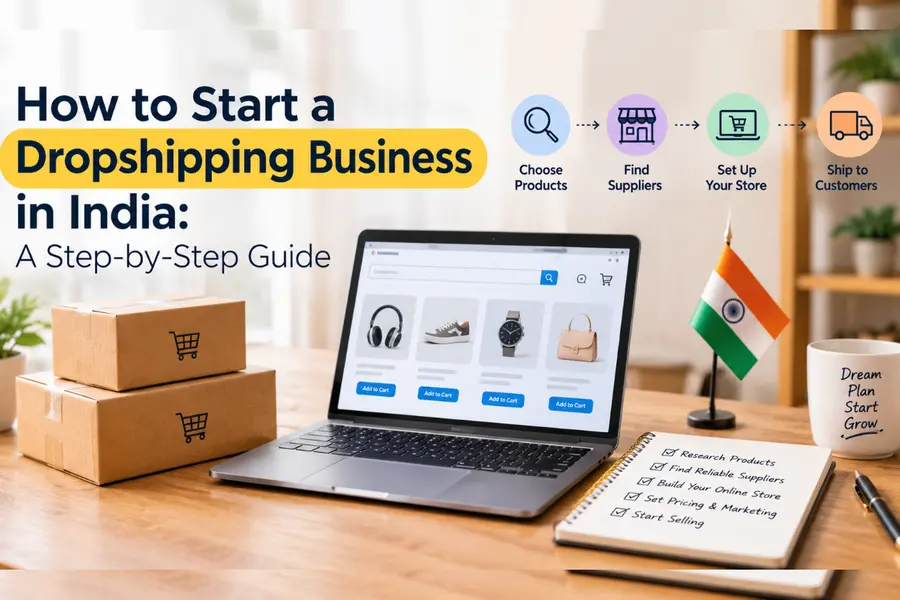
To start a dropshipping business in India, founders need to select a niche, research suppliers, establish a sales channel, consider registration, apply for GST, and develop store policies. The model allows a seller to list products online without the need to keep inventory in stock. Each order is packed and shipped from a third-party supplier, straight to the customer.
The dropshipping industry is booming rapidly. Grand View Research estimates that the dropshipping market in India was valued at USD 34.3 billion in 2025. The market is expected to grow to USD 191.3 billion by 2033. This guide explains how to start dropshipping in India legally and build a business that lasts.
What is a Dropshipping Business and How Does It Work?
A dropshipping business is a retail model wherein the retailer does not directly manage inventory. The customer purchases a product from the retailer's shop at the retail price. The seller passes the order to the supplier and pays the wholesale price. The supplier then ships it to the customer. The difference is the seller's margin.
Common dropshipping examples in India include print-on-demand T-shirts, mobile accessories, home decor, kitchen gadgets, and personal care products from domestic manufacturers.
Drop Shipping Pros and Cons
Capital is the first factor to consider when evaluating drop shipping pros and cons. The initial capital investment is small, and there is no need to store unsold products or maintain a warehouse. Many products can be tested rapidly by a seller, and the business can be conducted from anywhere.
The obstacles of the business are also very real. Sellers compete on price, and often margins are thin. Delivery dates are also dependent on the supplier. On top of that, the risk of a cash-on-delivery order being returned to origin is very high. Most importantly, the seller is liable to the customer for the quality of the goods, returns, and refunds, even if the goods are sent by another party.
How to Start Dropshipping in India: Detailed Steps
Here is how to do a dropshipping business in India, step by step:
Step 1: Select a Niche
Start by choosing a niche that has stable demand, decent profit, and limited regulatory hassles. For instance, lightweight and non-fragile products help you save on shipping costs and damage claims. However, some categories have additional licensing needs: an FSSAI license for food products and BIS certification, such as the Toys (Quality Control) Order for toys, and BIS registration under the Compulsory Registration Scheme for notified electronics.
Step 2: Find and Vet Reliable Suppliers
After this, you should shortlist suppliers through trusted sourcing channels:
- B2B marketplaces like IndiaMART connect sellers with domestic manufacturers and wholesalers.
- Dedicated dropshipping platforms like Baapstore offer ready catalogs, store integration, and order fulfillment.
Before you onboard a supplier, check that their legal name, GSTIN, and bank details match their records. Also, place a sample order to see how they pack products and how quickly they ship. Once you are satisfied, put the terms in writing, covering dispatch timelines, returns, and who pays for defective goods.
Step 3: Choose the Sales Channel
Opt for an independent site or an online marketplace:
- Platforms like Shopify and WooCommerce provide sellers with complete control of branding, pricing, and customer information.
- Marketplaces like Amazon and Flipkart have high traffic but charge commissions.
A large number of sellers begin on one channel and expand later on.
Step 4: Complete Dropshipping Business Registration
Pick a structure that matches the founders’ liability and funding needs:
- The least complicated to establish is a sole proprietorship. However, the proprietor is personally liable.
- To create a separate legal entity with limited liability, some sellers prefer Pvt Ltd company registration. It also allows equity funding, which helps a dropshipping brand finance ad spend and new product lines.
- LLP registration gives partners limited liability with fewer annual filings than a company. It suits lean dropshipping teams that want to keep compliance costs low.
A registered entity also establishes trust with payment gateways, marketplaces, and suppliers.
Step 5: Secure GST Registration
In most scenarios, get a GSTIN before the first sale:
- Sellers supplying goods on the marketplaces must register under Section 24 of the CGST Act, irrespective of their turnover, unless they qualify for the exemption under Notification 34/2023-Central Tax.
- Registration is also required for inter-state sales of goods from an independent website.
- Small sellers may qualify for an exemption from GST registration under Notification No. 34/2023-Central Tax if they sell goods exclusively within one state through e-commerce marketplaces and remain below the applicable turnover threshold. They must also obtain a GST enrolment number before making supplies.
Marketplaces collect 0.5% GST TCS and deduct 0.1% income-tax TDS. Both amounts are creditable when returns are filed on time.
Step 6: Publish Compliant Store Policies
Follow the Consumer Protection (E-Commerce) Rules, 2020 right from the outset:
- Appoint a grievance officer and display their contact details.
- Acknowledge grievances within 48 hours and address them within one month.
- Provide full price, country of origin, return and refund policy, and shipping information.
- Don't post fake reviews or false product claims.
Packaged goods also require Legal Metrology declarations like MRP, net quantity, manufacturer information, etc.
Dropshipping Requirements: A Quick Checklist
Here is a quick checklist of the dropshipping requirements in India:
- Obtain PAN and a current bank account for the business.
- Register as an LLP, private company, or a proprietorship.
- Get GSTIN before the first sale/activity on a marketplace or inter-state.
- Have signed contracts with all suppliers.
- Post details of the grievance officer, return policies, and privacy policies.
- Obtain IEC, BIS and/or FSSAI approval (if applicable),
- File GST and income tax returns on time.
Conclusion
Dropshipping lowers the cost of entering e-commerce, but it does not lower your responsibility to customers. Your store’s success depends on reliable suppliers, the right business structure, timely GST compliance, and clear store policies. If you establish these fundamentals early, you can concentrate more on growth rather than conflicts.
Frequently Asked Questions (FAQs)
Is dropshipping business legal in India?
Yes, dropshipping is fully legal in India. You must follow GST law, the Consumer Protection (E-Commerce) Rules, 2020, and any product-specific rules, such as FSSAI licensing for food.
Is a dropshipping business profitable in India?
It can be profitable, but profit depends on execution. Your margin must cover ad spend, payment gateway fees, shipping, and RTO losses. Choosing a focused niche, negotiating firm supplier terms, and pushing prepaid orders all help protect your margin.
Do I need to register my dropshipping business?
You can start as a sole proprietor without incorporating a separate entity. However, GST registration is compulsory if you sell goods through marketplaces or ship across state lines. Registering an LLP or a private limited company also shields your personal assets from business liabilities.
How to register a dropshipping business in India?
First, choose your business structure to start a dropshipping business in India. Companies are incorporated through the MCA’s SPICe+ form, and LLPs through Form FiLLiP. After incorporation, open a current account in the business name and apply for a GSTIN before your first sale.
What do you need to start a dropshipping business?
You need a niche, a vetted supplier, and a sales channel such as a website or marketplace account to start a dropshipping company. On the compliance side, you need a PAN, a current bank account, a GSTIN, and published store policies covering returns and grievances.
Is dropshipping good for beginners?
Yes, a dropshipping business needs little capital and no warehouse, so beginners can test products with limited risk. Budget time for supplier checks, GST filings, and customer support, though, since you remain responsible for every order.
Published: 29 Oct 2026, 01:17 pm IST
Related Topics
Disclaimer: Kindly avoid objectionable, derogatory, unlawful and lewd comments, while responding to reports. Such comments are punishable under cyber laws. Please keep away from personal attacks. The opinions expressed here are the personal opinions of readers and not that of Mathrubhumi.
