
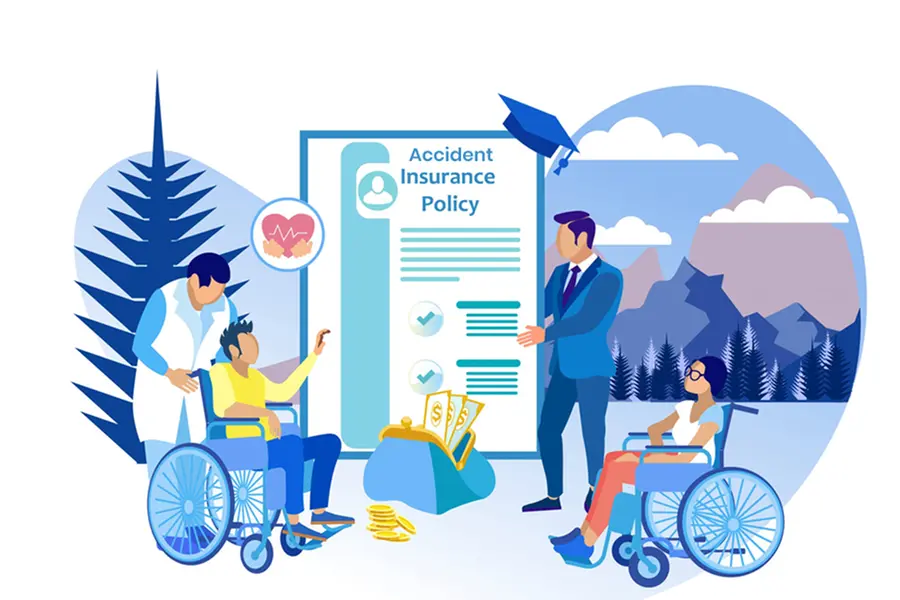
Government workers face unique occupational risks in the course of their duties, ranging from daily travel to fieldwork in high-risk zones. To ensure financial security and peace of mind, group personal accident policies serve as an effective form of accident insurance. These policies are designed to provide comprehensive coverage in the event of accidental injury, disability, or death, specifically tailored for employees working in public sector roles.
What is group personal accident insurance?
Group personal accident insurance is a type of policy that covers a group of individuals—typically employees of an organisation—against unforeseen accidents. For government workers, such a scheme is either employer-sponsored or subsidised, offering protection during official duties and, in many cases, beyond working hours. This coverage is particularly crucial in public service environments where travel, field inspections, and emergency response roles increase exposure to physical risk.
Key benefits of group personal accident insurance for government employees
The coverage offered through group accident insurance is both financial and service-oriented. The benefits extend to the insured employee’s family and support recovery from incidents that may otherwise cause severe economic disruption. Key advantages include:
Financial compensation for accidental death
In the unfortunate event of death due to an accident, the nominee receives a pre-specified lump sum amount. This compensation acts as an immediate financial relief for the deceased employee’s family, helping them cope with the sudden loss of income.
Coverage for permanent total disability
If the insured employee suffers a permanent total disability that results in the loss of employment capacity, group personal accident insurance provides financial assistance equal to the sum insured. This helps to manage long-term care costs and rehabilitation needs.
Coverage for permanent partial disability
This benefit applies to partial impairments such as the loss of a limb, sight in one eye, or mobility restrictions. Compensation is offered in proportion to the severity of the disability, ensuring financial support that reflects the scale of the impact.
Reimbursement of medical expenses
Some group accident insurance schemes include coverage for medical treatment, hospitalisation costs, and post-accident care such as physiotherapy. This reduces the burden of out-of-pocket expenses during recovery.
Daily cash allowance for hospitalisation
Certain plans may include a daily cash benefit if the insured is hospitalised due to an accident. This allowance helps manage non-medical expenses like food, transport, and caregiver costs during the period of hospital stay.
Coverage beyond working hours
For many government employees, especially those in emergency services, law enforcement, or rural development roles, risk exposure continues even beyond normal working hours. Group personal accident insurance often extends coverage on a 24/7 basis, providing round-the-clock protection.
Affordable premiums and simplified enrolment
Since the risk is spread over a large group, group policies offer more affordable premiums compared to individual accident insurance. Government schemes further subsidise or fully cover premiums, making the insurance accessible to all employees regardless of their income level.
Additional advantages unique to government worker schemes
Coverage continuity and ease of renewal
Government-backed schemes usually offer annual auto-renewals or long-term coverage durations. This ensures continuous protection without requiring individual reapplication each year.
Inclusion of temporary disability benefits
Some plans offer income replacement or a fixed amount for a specified number of weeks if the employee is temporarily unable to perform their duties. This provides short-term financial stability during recovery periods.
Benefits for families and dependants
In case of fatal accidents, dependent children or spouses may receive additional educational or survival assistance, helping them cope during emotionally and financially difficult times.
No medical underwriting or exclusions for pre-existing conditions
Group accident policies typically do not require detailed medical screening. Unlike health insurance, accident insurance focuses solely on injuries caused by external, visible, and violent events—making coverage easier to obtain regardless of health history.
Factors to consider when evaluating a group personal accident policy
While group accident insurance provides significant protection, it’s important to be aware of key factors that may influence coverage effectiveness:
Sum insured: Ensure the insured amount is sufficient based on the nature of the work and potential financial responsibilities.
Scope of coverage: Confirm whether the policy offers protection during travel, field visits, and outside office hours.
Exclusions: Understand what types of injuries or situations are not covered, such as self-inflicted harm or accidents under the influence of alcohol.
Claims process: A streamlined claim settlement process is crucial, especially in government setups where dependants may need urgent financial aid.
Portability and extension: Some policies allow conversion to individual coverage upon retirement or resignation, offering long-term security.
Conclusion
Group personal accident insurance plays a critical role in safeguarding the lives and livelihoods of government workers who often operate in high-risk or unpredictable environments. With wide-ranging benefits such as death compensation, disability support, hospital allowances, and easy enrolment, these schemes ensure that public servants and their families are financially protected in times of crisis. By offering structured and affordable accident insurance, governments demonstrate their commitment to employee welfare, empowering workers to serve with confidence and security.
Published: 17 Jun 2025, 08:29 pm IST
Related Topics
Disclaimer: Kindly avoid objectionable, derogatory, unlawful and lewd comments, while responding to reports. Such comments are punishable under cyber laws. Please keep away from personal attacks. The opinions expressed here are the personal opinions of readers and not that of Mathrubhumi.
