

Discover Fugdo, the Kudumbi community's vibrant folk dance rooted in Goan tradition and reimagined in Kerala
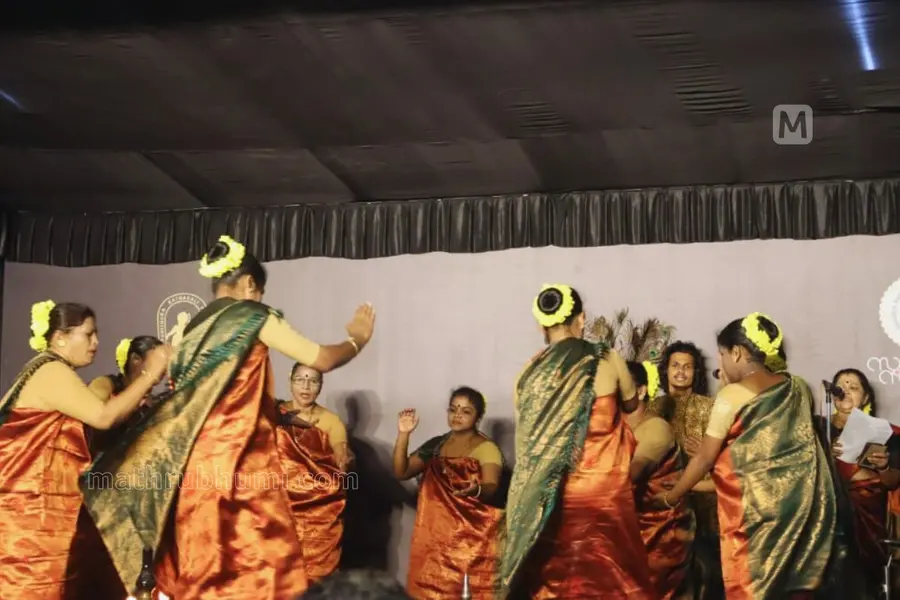
The rhythmic chant of ‘Champagada Fugda... Champagada Fugda…’ wafts as women of the Kudumbi community form a circle to dance, their movements perfectly in sync with the beat of traditional drums. The dance shifts between energetic rhythms and gentler melodies, accompanied by Konkani songs that range from the lyrical to the deeply expressive. Together, they embody the raw spirit and narrative richness of a time-honoured oral tradition. Meet Fugdo, a vibrant, earthy folk dance rooted in Goa’s cultural heritage, now preserved and carried forward by Kudumbi settlers in Kerala.
In a conversation with Mathrubhumi, Maya P S, who leads one of the few remaining Fugdo troupes in Kerala, shared how this folk tradition endures through the collective efforts of the community, even as it grapples with dwindling interest and scarce resources.
Folk legacy reimagined on Kerala soil
According to Maya, Fugdo is believed to have evolved from Fugudi, a folk dance of the Kunbi community in Goa. When the Kudumbi people migrated to Kerala, the dance gradually transformed, its name changed, and its style acquired distinctive regional characteristics.
While Fugudi reflects Portuguese influences from Goa’s colonial history, the Kerala version has preserved uniquely Kudumbi elements rooted in agrarian life and ritual practices.
Fugdo has always been more than just a performance; it is a vibrant celebration of life, land and labour. Traditionally performed in the days following Shivaratri, the dance served both as a devotional offering and a means of communal relaxation.
“It was a form of relaxation after a day’s hard work," Maya recalls. The Kudumbi community is also credited with pioneering pokkali rice cultivation and inland fishing in Kerala, further testament to their deep-rooted connection with the land.
Where words move with rhythm
An oral tradition, Fugdo weaves together song and movement as inseparable elements. Its themes reflect the everyday realities of rural life, capturing the joys and struggles of farming, prayers, childbirth, food, rituals, and the cyclical rhythms of nature.
Historically, Fugdo’s lyrics were laced with earthy metaphors and playful double meanings, celebrating fertility, nature, and physical vitality.
“Fertility was central to a farming community,” Maya explains, adding, “References to physical traits symbolised life and productivity.”
In today’s context, many of those once-bold expressions have been toned down to align with evolving social sensibilities. “Sometimes, even I miss the double meanings!” Maya laughs, pointing to the cultural shift in how the lyrics are now understood.
Over time, the dance evolved into several variations, some performed after childbirth, others during weddings or community festivals, each marked by unique songs and movements. Dancers traditionally wear the ghusli, a Kudumbi saree known as thodop, draped around the body without a blouse.
Keeping the essence alive in a fast-paced world
Fugdo performances typically conclude with a segment called moroli, which symbolises the victory of good over evil. The peacock, a recurring motif in this final act, embodies grace and beauty and portrays this ideology.
While Fugdo was once performed for several hours, modern renditions are shorter due to time constraints and logistical challenges. Large traditional drums have been replaced by more accessible instruments like the dholak, yet the spirit and essence of the dance remain intact.
Passing the rhythm on
In the Thundiparambu neighbourhood of Fort Kochi, Maya P S and her husband R Sadanandan lead one of the few surviving Fugdo troupes, Sri Kurumba Konkani Kala Samskarika Vedi.
Comprising mostly women, the group practises regularly and performs at festivals and cultural events to raise awareness about the tradition. Children and a few men also take part, with men typically supporting the vocals and percussion.
Despite facing resource constraints, the troupe remains dedicated to preserving Fugdo through continued performance and community engagement.
Oral traditions in peril
Maya expresses a growing concern. “Many in the community today show little interest in learning their native language or traditional art forms,” she says. With the widening generational gap, Fugdo faces the risk of fading away unless younger Kudumbi members take the initiative to carry it forward.
With knowledge passed mainly by word of mouth, Fugdo’s survival depends on a generational handover. Maya strongly believes in involving the youth. “If younger generations don’t engage now, we may lose more than just a dance; we may lose a vital link to our community’s story.”
For the Kudumbi people, Fugdo is not just an art form; it is a collective memory of agricultural life, harvest rituals, fertility celebrations, and communal resilience. And for Maya and her troupe, every performance is a step toward cultural preservation.
Published: 26 Jul 2025, 10:59 am IST
ABOUT THE AUTHOR
Related Topics
Disclaimer: Kindly avoid objectionable, derogatory, unlawful and lewd comments, while responding to reports. Such comments are punishable under cyber laws. Please keep away from personal attacks. The opinions expressed here are the personal opinions of readers and not that of Mathrubhumi.