
With the recent heatwave, these spots, complete with changing rooms and lockers, have seen up to 1,200 visitors daily.
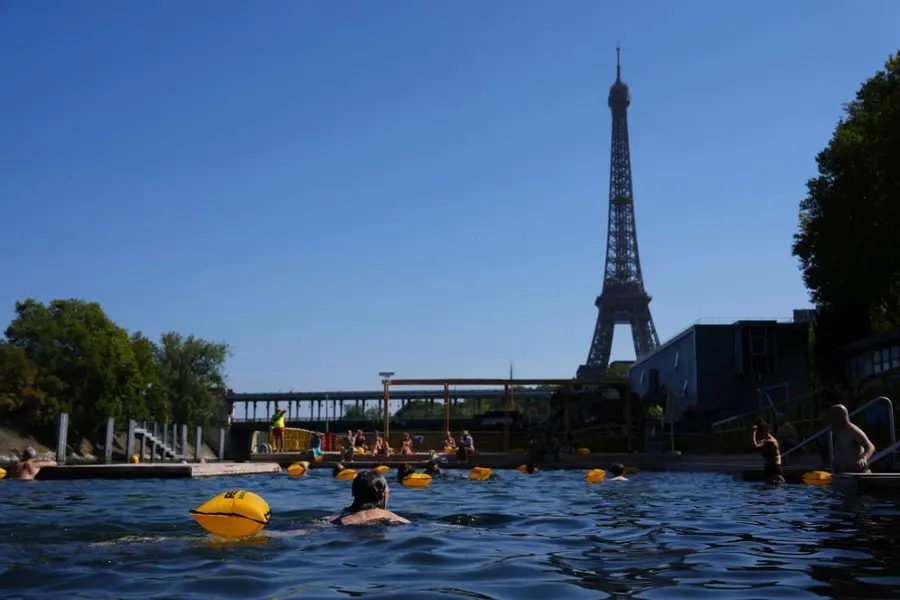
Paris: Swimming in the Seine River in Paris has become a popular attraction for both tourists and Parisians this summer, marking the first opportunity to swim in the river in over a century. Since the opening of three public bathing sites on July 5, 2025, thousands have enjoyed dips in the Seine, a practice made possible by a €1.4 billion cleanup effort that greatly improved water quality to meet European standards and made the river suitable for Olympic competitions in 2024.
The three designated swimming areas are located at Grenelle, with views of the Eiffel Tower; Bras Marie near the Île Saint-Louis; and Bercy in the 12th arrondissement. These areas offer supervised swimming zones delimited by buoys, equipped with access pontoons, changing rooms, showers, and lockers. Swimming is free at scheduled times until the end of August, available to people aged 10 or 14 and older, depending on the location. For safety, swimmers must wear a yellow buoy attached to their waist, and lifeguards monitor the sites closely.
With a heatwave hitting the Paris region and temperatures reaching up to 38°C (100°F), these spots have become especially popular. On August 11, the water temperature was recorded at 22°C (71°F), described by swimmers as pleasantly warm, warmer than the sea. The number of visitors at the Grenelle site ranges from 800 to 1,200 daily, with a maximum of 200 swimmers allowed simultaneously.
Water quality is tested daily to ensure safety, and closures are possible following heavy rains, which can increase pollution upstream. Paris Deputy Mayor Pierre Rabadan reported that over 40,000 people had visited the swimming sites since they opened, highlighting the initiative’s success in reconnecting Parisians with their river. Lifeguards note that swimming in the Seine differs from pool swimming due to the river current, limited visibility because of murky water, and depth ranging from three to five meters (10 to 16 feet).
This project is part of Paris’s ongoing legacy from the 2024 Olympics and a broader ecological effort to revitalise the Seine as a recreational space, joining other European cities that have opened their rivers for public swimming. Visitors enjoy unique experiences such as swimming with views of iconic landmarks and sharing the water with small fish, all within a setting closely monitored for safety and environmental standards.
With inputs from AP
Published: 12 Aug 2025, 03:23 pm IST
Related Topics
Disclaimer: Kindly avoid objectionable, derogatory, unlawful and lewd comments, while responding to reports. Such comments are punishable under cyber laws. Please keep away from personal attacks. The opinions expressed here are the personal opinions of readers and not that of Mathrubhumi.
