
From ancient traditions to practical everyday wear, India’s many saree drapes tell stories of culture, history and regional life
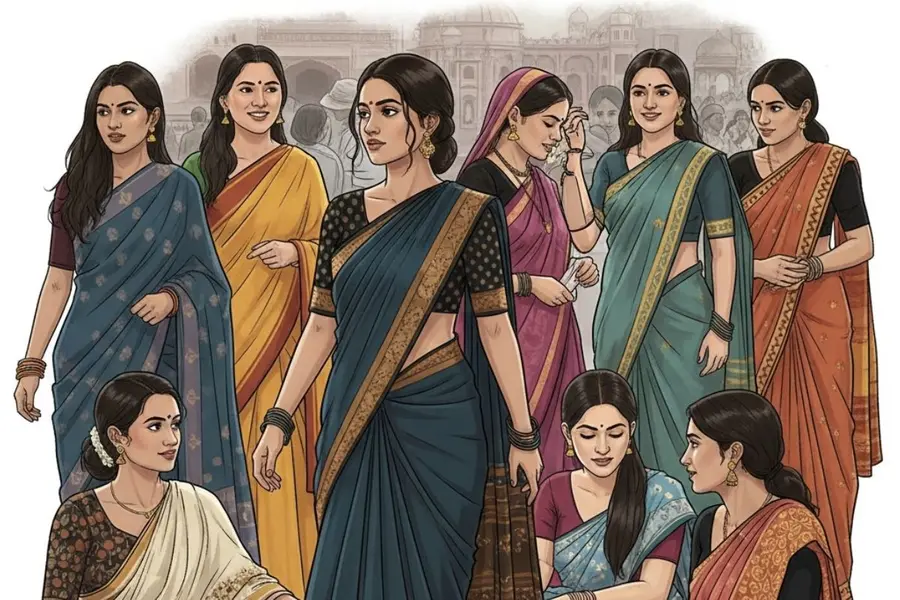
Across India, the saree is worn in many ways, each drape shaped by climate, work, rituals and local traditions. Some styles are widely recognised, while others remain quietly rooted in regional life. On this World Saree Day, here is a look at both familiar and lesser-known saree drapes from different parts of the country, each telling its own story.
Mundum Neriyathum saree drape from Kerala
Mundum neriyathum reflects one of the oldest ways of draping cloth in India, without a blouse. It is Kerala’s traditional two-piece attire, made up of a lower garment called the mundu and an upper cloth known as the neriyathu, usually bordered with gold.
The neriyathu is draped gracefully over the upper body and left shoulder. This style evolved from ancient Indian garments such as the antariya and uttariya and was especially associated with Nayar women.
It gained wider prominence through royal patronage in Balaramapuram and became an essential part of rituals, including weddings. The drape was famously depicted in the paintings of Raja Ravi Varma.
Its history also carries a powerful social movement. During the Channar Revolt, lower-caste women fought for the right to wear the upper cloth, making the mundum neriyathum not just a garment, but a symbol of dignity and resistance.
Pin Kosuvam saree drape from Tamil Nadu
The Pin Kosuvam, also known as Pinkosu, is a traditional drape known for its back pleats. Popular in villages and temple rituals, it is valued for being cool, practical and comfortable. It is often worn without a petticoat, with thick cotton sarees secured using clever knots at the hips.
Historically, this drape was common among women engaged in manual labour such as farming, as it allowed free movement throughout the day. The name itself refers to the pleats at the back. Though it became less common over time, the style has been revived in recent years for its understated elegance and functionality, especially when worn with coarse cotton fabrics.
Coorgi saree drape from Karnataka
The Coorgi, or Kodagu, drape is a distinctive style worn by Kodava women in Karnataka. In this drape, all the pleats are neatly tucked at the back of the waist instead of the front. The pallu is brought from behind, taken over the shoulder and often secured with a knot at the front.
The drape blends mythology with practicality. A popular legend links its back-pleated style to sage Agastya and his wife Cauvery.
When Cauvery transformed into the river, the force of the water is said to have pushed the pleats from front to back. Over time, this style became ideal for life in hilly terrain, allowing ease of movement while working or walking on slopes.
Nivi saree drape from Andhra Pradesh
The Nivi drape is the most recognisable saree style across India today. It features neatly arranged pleats tucked into the front of the waist, with the pallu draped over the left shoulder. Paired with a blouse and petticoat, it offers a structured look while allowing easy movement.
This style has ancient roots, visible in sculptures and historical art. Its modern form, however, was popularised in the 19th century by Jnanadanandini Devi Tagore. She adapted the saree with a blouse and petticoat to balance Indian tradition with Victorian ideas of modesty. This allowed women to move comfortably in public spaces during colonial times while holding on to their cultural identity.
Kappulu saree drape from Andhra Pradesh
The Kappulu drape is often worn by older women and stands out for its reverse style. The saree is draped from left to right, unlike the usual direction. It has thin pleats tucked at the back and two soft cascades of fabric wrapped around the body.
This creates a distinctive look that some compare to classical Greek clothing. The drape is practical for daily wear, offering comfort and ease of movement. Its story came to light through the work of a researcher, highlighting the depth of regional traditions and hinting at possible Greek influences in local textile history.
Atpoure saree drape from Bengal
The Atpoure drape is one of Bengal’s most recognisable saree styles. It features broad, loose pleats at the front waist and a flowing pallu draped over the left shoulder. The pallu may be pleated or left open, giving the drape a relaxed and elegant feel.
This style is especially popular during festivals such as Durga Puja and is often seen with classic white sarees bordered in red.
The drape was introduced in the 19th century by Jnanadanandini Devi, during the Bengali Renaissance. Inspired by Parsi and English clothing styles, she created a practical saree drape with blouses and petticoats that allowed women greater mobility while preserving tradition.
Halaki Vokkaliga saree drape from Karnataka
The Halaki Vokkaliga drape comes from tribal agricultural communities in the Western Ghats of Karnataka. It uses a nine-yard saree worn without a blouse or petticoat. Multiple hidden pleats around the waist allow freedom of movement, making it ideal for physical work.
The pallu is wrapped across the chest and secured over the shoulder. This drape reflects a lifestyle closely connected to nature, built around comfort, simplicity and daily labour.
Kunbi saree drape from Goa
The Kunbi drape is traditionally worn by women of the Goan Kunbi tribe. It uses a short, knee-length cotton saree, usually in red and white checks, tied with a knot over the shoulder. The shorter length makes it practical for working in paddy fields.
Made using natural dyes such as iron ore and rice starch, the saree is worn without a blouse and reflects a resourceful, earth-bound way of life.
Over time, its use declined, especially after Portuguese influence in Goa. In recent years, the drape has seen a revival, championed by designer Wendell Rodricks, and is now celebrated as an important symbol of Goan heritage.
Published: 21 Dec 2025, 02:09 pm IST
Related Topics
Disclaimer: Kindly avoid objectionable, derogatory, unlawful and lewd comments, while responding to reports. Such comments are punishable under cyber laws. Please keep away from personal attacks. The opinions expressed here are the personal opinions of readers and not that of Mathrubhumi.
