
Around four in ten women feel a twinge when they ovulate, and most have no idea why.
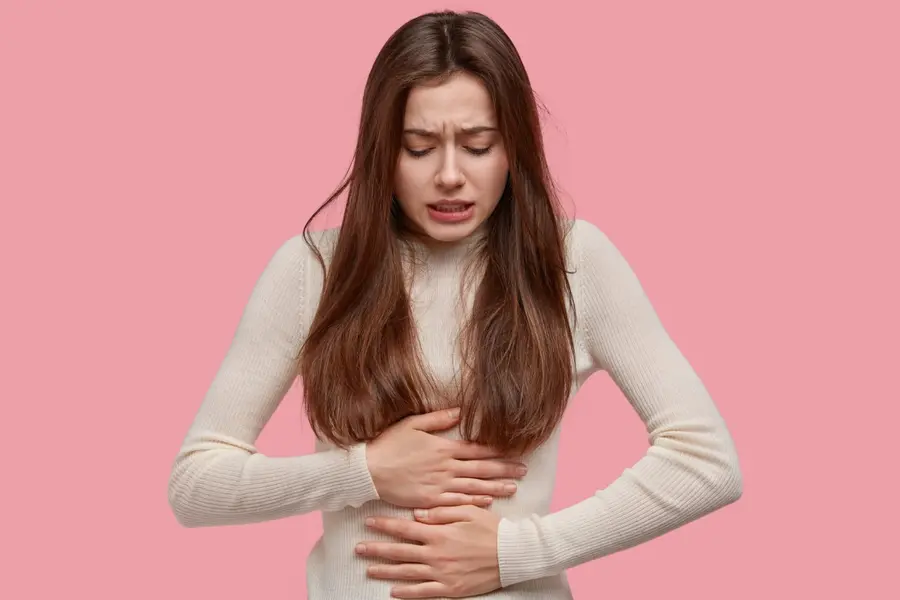
Most people expect some discomfort around their period. Fewer expect a twinge in the middle of the cycle, roughly two weeks before it. Yet around four in 10 women feel something when an egg is released. The experience even has its own name, mittelschmerz, which is German for "middle pain".
If you have ever felt a sudden pang low on one side of your tummy and wondered what on earth it was, this guide explains what is happening and when it is worth getting checked.
What is going on inside your body?
At the start of each cycle, the ovaries prepare a batch of about twenty egg-containing sacs called follicles. Usually only one wins the race. That lead follicle swells as its egg matures, and at the midpoint of the cycle it bursts open and sends the egg off along the fallopian tube.
Also Read: The Ovulation and Pregnacy truths nobody told you
Nobody knows precisely why this causes pain in some people, but there are a few likely explanations:
- The ovary stretches as the follicle grows, then the follicle splits to let the egg out.
- The fallopian tube tightens in small contractions to move the egg along.
- Fluid released from the follicle may irritate the lining of the pelvis and abdomen.
The egg survives for only about 12 to 24 hours after release. If sperm reaches it in that window, pregnancy can follow. If not, the egg breaks down and leaves the body along with the lining of the womb at the next period.
How does it feel?
There is no single description. Some women feel a dull ache, others a cramp, and others a brief, sharp stab. It can be barely noticeable or properly unpleasant. A little light spotting or a change in vaginal discharge can come along with it.
Because only one ovary releases an egg in a typical cycle, the pain tends to sit on one side. It may appear on the left one month and the right the next, though the ovaries do not take neat turns, so a run of several months on the same side is perfectly normal.
As for timing, ovulation generally falls about 14 days before the next period begins. An online ovulation calculator can give you a rough window to watch for. The discomfort itself can last anything from a few minutes to a couple of days, although most people find it fades within a day.
Also Read: What is an incomplete miscarriage? signs, causes explained
Some women notice it every month, while others feel it only now and then, and plenty never feel anything at all. It also tends to appear a few years after a girl's first period, once her cycles have settled into a regular ovulating pattern.
Could it be something else?
Implantation, when a fertilised egg settles into the womb lining, can cause similar cramping. It happens six to twelve days after ovulation, so the timing is different, even if the sensation is not.
Easing the discomfort
Mild pain that passes quickly rarely needs any action. When it is more troublesome, these simple measures often help:
- A hot water bottle or heat pad on the lower abdomen
- A long, warm bath
- Gentle massage around the pelvis
- Yoga positions aimed at the pelvic area, such as Happy Baby
If those are not enough, over-the-counter painkillers such as paracetamol or ibuprofen can take the edge off. Check with a doctor first to make sure they suit you.
The combined contraceptive pill is another route, because it stops ovulation and therefore stops the pain. That said, doctors do not usually prescribe it purely for this reason.
When to seek help
A little mid-cycle discomfort is common and usually harmless. However, strong pain in the same part of the cycle can point to a different problem, including:
- Ovarian cysts
- Ectopic pregnancy
- Endometriosis
- Pelvic inflammatory disease
- Appendicitis
Contact a doctor if you have severe abdominal pain lasting several days, a fever, heavy bleeding outside your period, difficulty breathing, pain when passing urine, vomiting or diarrhoea. Severe sudden pain on one side should be treated as urgent.
Also Read: 10 things you probably didn’t know about breasts and breastfeeding
Ovulation pain is simply a sign that your body is doing what it is meant to do. Knowing when it is likely to strike, and what is normal, takes much of the worry out of it. If the pain ever feels out of proportion or comes with other symptoms, trust your instincts and get it looked at.
(Disclaimer: This article is for general information and education only. It is not medical advice and should not replace consultation with a doctor or other qualified healthcare professional)
Published: 05 Oct 2026, 12:43 pm IST
ABOUT THE AUTHOR

Related Topics
Disclaimer: Kindly avoid objectionable, derogatory, unlawful and lewd comments, while responding to reports. Such comments are punishable under cyber laws. Please keep away from personal attacks. The opinions expressed here are the personal opinions of readers and not that of Mathrubhumi.