

As the world rediscovers the Indian tiffin, is it celebrating an innovation or finally recognising what was there all along?
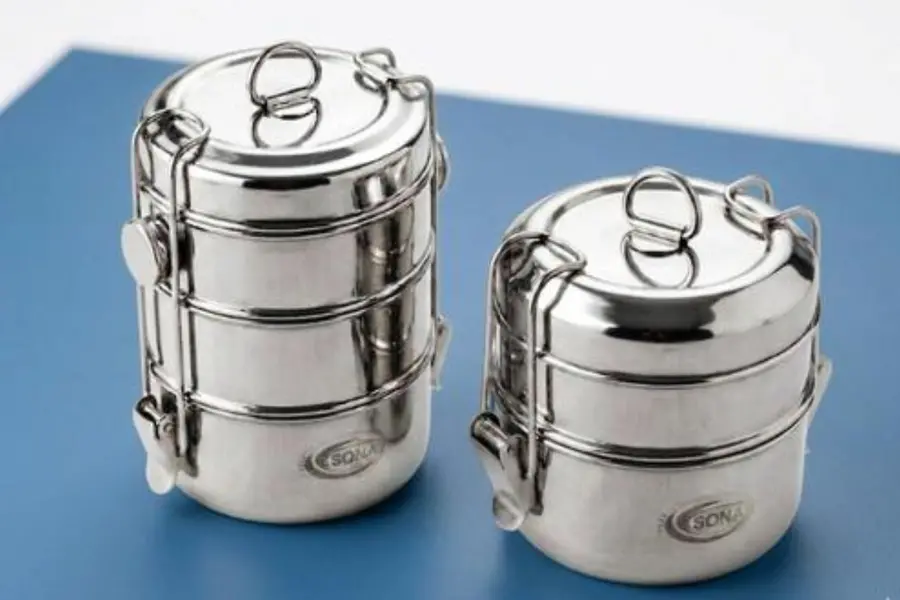
The first time you realise an everyday object has been rebranded, it feels strangely personal.
Not because the object changed. It rarely does. The thing remains exactly where it has always been: in your kitchen drawer, your grandmother's cupboard, your school bag, your daily life. What changes is the gaze. Suddenly, the world looks at something familiar and announces that it is beautiful, innovative, sustainable, and worthy of admiration.
The Indian tiffin box is having that moment.
Across social media, stainless steel lunch carriers are appearing as lifestyle objects. Designers celebrate their durability. Wellness creators frame them as symbols of intentional living. Young audiences discover them with the excitement usually reserved for a new invention. Among them is Lily Baria, whose videos documenting the daily ritual of opening her tiffin have drawn viewers from around the world.
Yet for millions of Indians, there is nothing new about the tiffin. It has carried meals across classrooms, train compartments, office buildings and factory floors for generations. Long before sustainability became a marketing category. Long before anti-consumerism became an aesthetic. Long before anyone thought to photograph lunch before eating it.
The tiffin has always been more than a lunchbox.
For many Indians, childhood can be recalled through a sound of metallic click of a latch releasing, the lid lifting, and the rush of aromas escaping before the food becomes visible. Lemon rice. Potato fry. Quarter folded chapatis. Coconut chutney. Leftovers transformed into something entirely new.
Lunch was never merely food. It was identity packed into stainless steel.
And identity, particularly during adolescence, can feel complicated.
Many South Asians remember a time when their lunch felt unusually visible. The contents looked unfamiliar to outsiders and the steel containers sat beside brightly coloured plastic lunchboxes covered in cartoon characters. The discomfort was rarely about the food itself. It was about what the food revealed. A tiffin announced where you came from before you had decided whether you wanted that information to be public.
Years later, many adults still remember opening lunchboxes discreetly, eating quickly, or avoiding questions. What felt personal was often part of a larger cultural experience- the pressure to blend in and the subtle message that some cultures appeared more modern than others.
Even the word "tiffin" carries traces of history. Though it feels unmistakably Indian today, the term originated in British colonial slang and referred to a light meal. Over time, the word was absorbed, adapted and transformed. Across India it came to mean different things, a lunchbox, a midday meal, or even evening snacks until it became something entirely its own.
That transformation is perhaps most visible in Mumbai, where the humble tiffin became the centre of one of the world's most remarkable delivery systems.
Every morning, thousands of lunchboxes travel across the city through an intricate network of bicycles, handcarts and local trains. Prepared in homes, collected by dabbawalas, sorted through a coded system of colours and symbols, and delivered directly to office desks, the process has operated with extraordinary efficiency for more than a century.
Business schools study it. Supply-chain experts marvel at it. Yet for the people who depend on it, the miracle arrives quietly every afternoon. Like many everyday wonders, its brilliance has long hidden in plain sight until the algorithm discovered it.
Social media has a habit of rediscovering things that never disappeared. Videos showcasing daily tiffin lunches now attract millions of views. It wasn't designed for content or trends. It simply works.
There is a familiar pattern here. Many objects travel outward, acquire new language and new validation, then return carrying enhanced cultural value. Yoga, turmeric and handloom textiles followed this same path. Today, in Britain, independent retailers and design stores increasingly present them as thoughtful alternatives to disposable lunch culture. In the United States, lifestyle brands describe them using the language usually reserved for artisanal homeware, emphasising craftsmanship, sustainability and timeless design.
The irony is difficult to miss.
For generations of Indians, their durability was never revolutionary. Their reusability was not a lifestyle statement. It was simply practical. Sustainability was built into the object long before sustainability became a branding strategy.
Which raises a quiet question beneath the current revival: why do we sometimes need external validation before appreciating what was already ours?
The answer is larger than any single trend. For centuries, dominant cultures have held disproportionate influence over what is considered modern, desirable or sophisticated. Objects associated with everyday life elsewhere are often dismissed as traditional or niche until they are reframed and presented through a different cultural lens.
The tiffin did not suddenly become beautiful. People simply began looking at it differently. And perhaps that is what makes its revival meaningful.
A steel lunchbox is more than sustainable design or a social media trend. It carries stories of migration and memory, of Mumbai's dabbawalas, of parents packing meals before sunrise, and of generations learning to take pride in what once felt ordinary. When we remember those layers, the tiffin regains its depth. It stops being a trend and becomes what it has always been: a vessel carrying much more than lunch.
Some things do not become valuable when the world notices them. They were valuable all along and recognition simply catches up.
Published: 17 Jun 2026, 07:31 pm IST
ABOUT THE AUTHOR
Related Topics
Disclaimer: Kindly avoid objectionable, derogatory, unlawful and lewd comments, while responding to reports. Such comments are punishable under cyber laws. Please keep away from personal attacks. The opinions expressed here are the personal opinions of readers and not that of Mathrubhumi.