
From using an extra spin cycle to improving airflow, these easy monsoon laundry tips will help your clothes dry quicker without relying on sunshine.
Monsoon showers may bring welcome relief from the heat, but they also make drying laundry a daily challenge. High humidity, frequent rain and limited sunlight can leave clothes damp for hours, often resulting in unpleasant odours and mildew if they are not dried properly.
Fortunately, you do not need bright sunshine to get your laundry dry. A few practical changes to the way you wash, hang and dry clothes can significantly reduce drying time while keeping fabrics fresh. Here are some effective tips to help your clothes dry faster during the rainy season.
- Improve airflow instead of relying on sunlight: Good airflow is often more effective than direct heat when it comes to drying clothes. During the monsoon, hang your laundry in a well-ventilated room, covered balcony or any sheltered space where air can circulate freely. Open windows and doors whenever the weather allows to create cross-ventilation, which helps carry moisture away from the fabric. It is also important to place your drying rack away from walls so that air can reach both sides of the garments, allowing them to dry more quickly.
- Remove as much water as possible before drying: Reducing the amount of water left in clothes after washing can significantly shorten drying time. Run an extra spin cycle in your washing machine to remove as much moisture as possible. If the fabric care label permits, use the highest recommended spin speed for better results. You can also wrap damp garments in a clean, dry towel and press them gently to absorb excess water before hanging them out to dry.
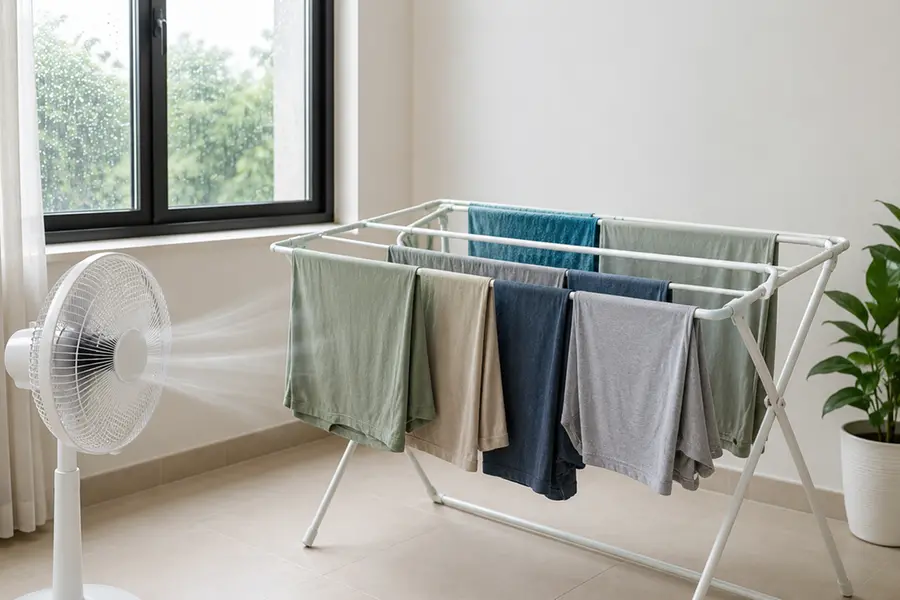
- Use fans or air conditioning to speed up drying: Improving air circulation with household appliances can help clothes dry much faster on humid monsoon days. Place a pedestal or table fan near your drying rack to increase airflow and speed up evaporation. Running an air conditioner can also reduce indoor humidity, allowing moisture to evaporate more efficiently. If you have a dehumidifier, use it in the room where you are drying clothes. It removes excess moisture from the air, helping laundry dry more quickly while also preventing dampness, condensation and musty odours indoors.
- Hang clothes correctly: How you hang your laundry can have a significant impact on drying time. Leave enough space between garments to allow air to circulate freely around each item instead of overcrowding the drying rack. Use hangers for shirts, tops and dresses, as they expose more of the fabric to moving air and help the clothes retain their shape. For thicker garments such as hoodies and jeans, turn them inside out before hanging so that trapped moisture in the inner layers can evaporate more quickly.
- Separate heavy and light fabrics: Different fabrics retain moisture differently, so drying them together can slow down the entire load. Wash and dry heavier items such as towels, blankets, sweatshirts and denim separately from lightweight clothing, as they take longer to dry. It is also a good idea to do laundry in smaller batches, giving each garment enough space for better airflow and more even drying.
- Take advantage of gentle heat: A small amount of targeted heat can help clothes dry faster without having to warm the entire house. If possible, place your drying rack at a safe distance from the warm air released by your air conditioner's outdoor unit. However, never cover or block the unit, as this can affect its performance and pose a safety risk. Heated clothes airers and heated towel rails are also useful alternatives, as they provide direct warmth to laundry while typically consuming less energy than heating a whole room.
- Choose quick-drying fabrics during the rainy season: The type of fabric you wear can make a noticeable difference during the monsoon. Lightweight materials, such as polyester blends and other quick-dry fabrics, tend to dry much faster than heavier fabrics like cotton or denim. If rain is expected, choosing clothes made from quick-drying materials can make laundry easier to manage and ensure your garments are ready to wear sooner.
- Iron suitable clothes while slightly damp: For fabrics that can be ironed safely, ironing while they are still slightly damp helps remove remaining moisture and leaves garments ready to wear sooner.
Drying clothes completely helps to prevent musty odours
Drying clothes thoroughly is essential to prevent unpleasant smells and mildew during the monsoon. Avoid leaving wet laundry inside the washing machine once the wash cycle is complete, as trapped moisture can quickly lead to musty odours. Before folding or storing your clothes, ensure they are completely dry to keep them fresh and prevent mould from developing.
Published: 08 Jul 2026, 12:34 pm IST
Disclaimer: Kindly avoid objectionable, derogatory, unlawful and lewd comments, while responding to reports. Such comments are punishable under cyber laws. Please keep away from personal attacks. The opinions expressed here are the personal opinions of readers and not that of Mathrubhumi.
