
During the Bondi Beach attack, a bystander risked his life to stop a shooter. Experts explain what to do in such situations and when staying safe is the best choice
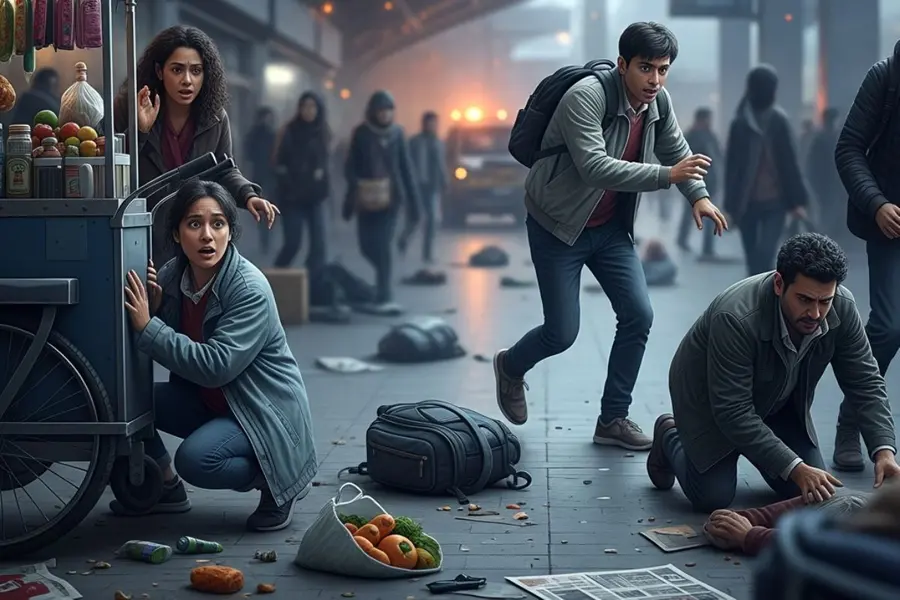
On Sunday, during the tragic attack at Sydney’s Bondi Beach, a man was filmed approaching one of the gunmen and wresting a weapon from his hands. The act of bravery, which resulted in the man being shot twice, drew widespread attention. He was later identified as 43-year-old Ahmed al Ahmed, a local fruit shop owner.
While Ahmed’s courage undoubtedly prevented further loss of life, the incident raises important questions about the risks and effectiveness of bystander intervention in violent events.
Incredible bravery, but are there risks?
It is impossible to know exactly how many additional lives were saved by Ahmed’s actions. However, it almost certainly prevented further casualties.
The moment recalls a similar incident during the Bondi Junction shopping centre attack in 2024, when a bystander intervened at great personal risk.
When acts of courage like these occur, they are rightly commended. Yet they also prompt difficult questions: what drives ordinary people to take selfless, high-risk action? Is stepping in the right choice, or does it contradict official guidance during mass violence events?
Two types of bystander effect
Many people are familiar with the “bystander effect,” in which the presence of others discourages someone from intervening during an emergency, assault, or crime.
However, decades of research show that in genuinely dangerous, unambiguous situations, the classic bystander effect is often weakened and can even reverse.
In other words, violent attacks are precisely the moments when people may be more likely to act.
One reason is that clear danger highlights responsibility. When a situation is obviously life-threatening, people respond faster and are less likely to wait for social cues or reassurance from others.
Analysis of over 100 suicide attacks in Israel demonstrates that bystander intervention can significantly reduce casualties. While intervention rarely stops an attack completely, it frequently disrupts the attacker’s control over timing and location, reducing harm.
At the same time, these actions often come with a direct personal cost to those intervening.
Bystander behaviour can take many forms and occur at different stages, including:
- Noticing and reporting concerning behaviour in advance of an attack
- Guiding others to safety or sharing information during the event
- Providing assistance and coordination after the event
- Official guidance and public safety campaigns
- Active intervention, however, is not included in Australia’s official safety advice.
The Australia–New Zealand Counter-Terrorism Committee recently launched a national public safety campaign. It acknowledges that Australia is generally safe, but warns of the risk of weapon attacks in crowded places and highlights how knowing how to respond can save lives.
The campaign introduced the guidance “Escape. Hide. Tell.”
- Escape: move quickly and quietly away from danger, but only if it is safe
- Hide: stay out of sight and silence your mobile phone
- Tell: call police by dialling Triple Zero (000) when it is safe
The goal is to help people respond in the critical moments before police arrive, make informed decisions, and increase their chances of staying safe. The official Australian advice does not recommend confronting an attacker.
By contrast, US guidance, such as the FBI’s “Run. Hide. Fight”, does include a fight step as a last resort when escape or hiding is impossible and life is in immediate danger.
Practical advice for surviving violent incidents
Previous research using computer modelling and controlled experiments with real crowds has identified strategies to improve survival in crowded environments:
- Move quickly away from danger rather than slowly.
- Avoid hesitation, such as gathering information or filming the incident.
- Stay agile, scanning surroundings and adjusting direction as new information appears.
- When moving with family or friends, travel in a single-file formation rather than side by side to reduce congestion and improve flow.
Be prepared for crowded spaces
The events at Bondi Beach are a stark reminder that violent risks in crowded places remain real. Whether motivated by terrorism or other reasons, crowded spaces are vulnerable.
Public messaging must be evidence-based, nuanced, and widely accessible to ensure people understand risks and know how to respond. With major public events and large gatherings approaching, including New Year’s Eve celebrations, awareness and vigilance are more important than ever.
Published: 15 Dec 2025, 12:48 pm IST
Related Topics
Disclaimer: Kindly avoid objectionable, derogatory, unlawful and lewd comments, while responding to reports. Such comments are punishable under cyber laws. Please keep away from personal attacks. The opinions expressed here are the personal opinions of readers and not that of Mathrubhumi.
