
Deepinder Goyal's Temple wearable claims to track brain blood flow through a sensor placed near the temple, but doctors have questioned its scientific basis and accuracy.
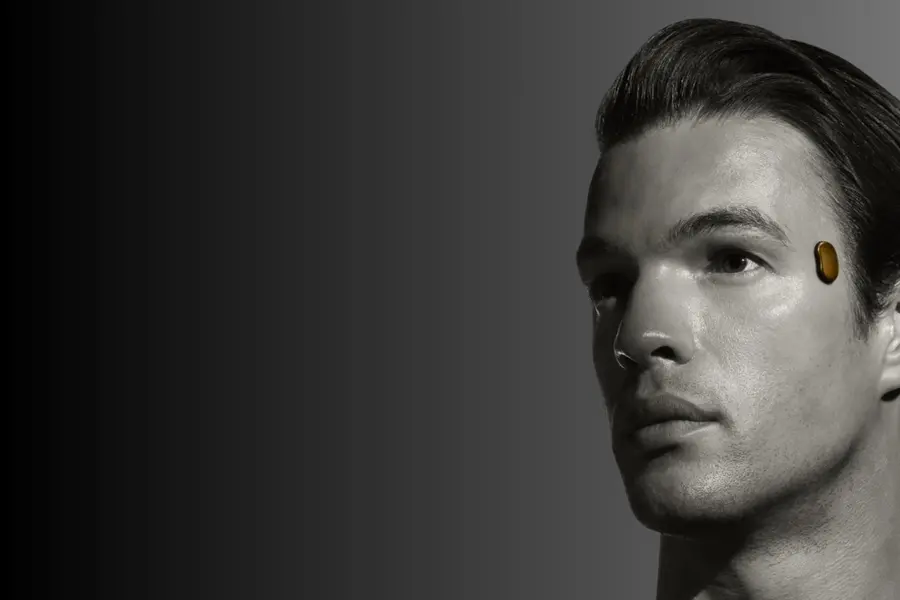
Despite the name, this has nothing to do with religion. Temple is a wearable gadget, made by Temple Private Limited, a company founded by Deepinder Goyal, and the device is worn on the side of the head near the temple.
Goyal says it tracks a measure called Brain Flow, which he describes as a stand-in for blood flow through the brain. The device attaches with an adhesive.
How it started
Most people first noticed the device in November 2025. Photos from a Children’s Day event that Goyal posted on LinkedIn showed a small white patch on his head, and he explained it was an experimental device to measure brain flow continuously and in real time. He also said he had been wearing it for about a year as part of internal research.
Around the same time, he put forward what he called the Gravity Ageing Hypothesis. The idea is that gravity may speed up ageing by constantly stressing the heart, which has to push enough blood upward to the brain. After the idea drew heavy reaction, he admitted he had explained it too dramatically, and said it is an open scientific question, not a proven theory. Critics noted that he offered no peer-reviewed studies to back it.
The first round of criticism
The argument got louder after Goyal wore the device on a podcast hosted by Raj Shamani. An AIIMS Delhi physician called it a “fancy toy” with no scientific standing.
Other doctors raised more specific points. Specialists told South First that no peer-reviewed trials, regulatory approvals or published evidence supported the claims, and that MRI and Doppler imaging remain the standard ways to check brain blood flow. One doctor argued that the brain is mainly supplied by the internal carotid artery, so a sensor on the temple area would not directly reflect circulation inside the brain.
Goyal’s reply at the time was that the criticism was early. He said there had been no public commercial announcement and no official benchmarking data, and that the company would share the science if and when it decided to sell the device.
The hiring post
A separate row came from a job advertisement. Goyal’s hiring post for Temple said applicants must take fitness seriously and have body fat below 16 percent for men and 26 percent for women. Critics called this discriminatory, while supporters said it promoted a fitness culture.
Big claims and a public showdown
Things escalated when the device went on sale. The first batch is priced at ₹85,000, with delivery expected in about three months, and the website struggled under heavy traffic on pre-order day. Each unit is made only after an order is placed.
Just before pre-orders opened, Goyal claimed a heart-rate edge over rival products. He said Temple beat the Apple Watch Series 12, Garmin FR970, Fitbit Air and Whoop, based on the company’s own study.
The catch, as BusinessToday noted, is that Temple Private Limited funded, ran and analysed that study itself. It has not been peer reviewed.
Then the sharpest attacks arrived. Doctors, including hepatologist Dr Cyriac Abby Philips, known online as The Liver Doc, questioned Temple’s scientific claims and usefulness.
Philips argued the device reads a superficial artery outside the skull that supplies the face and scalp, so it cannot measure the brain, and he called it a scam. That is his allegation. Goyal rejects it.
Goyal’s defence
On 5 November, Goyal replied to what he called “Concerned Indian Doctors”. His main points, as reported:
- Temple offers a 14-day, no-questions-asked return, so a product that did not work would be found out quickly.
- The company has spent $30 million on Temple, $20 million of it his own money, which he says selling a few thousand devices would barely recover.
He stepped down as Eternal CEO to work on Temple, and says pre-prints are coming ahead of peer-reviewed publications.
He also added a clarification: Temple is a fitness tracker and wellness device, not a medical device, and if any of its metrics are clinically validated he will say so.
Where things stand
The fight comes down to one question: does Temple measure what it says it measures? Goyal has shared some early data.
One preprint reported a correlation of around 0.8 between Temple’s Brain Flow reading and blood velocity in a major brain artery, and Goyal called it an initial step with more validation to come. Critics say that is not enough for a product at this price. As of today, independent validation is still missing, and the dispute is unresolved. The device will not be in buyers’ hands until early next year, so real-world feedback will take time.
Published: 06 Nov 2026, 10:13 am IST


ABOUT THE AUTHOR

Related Topics
Disclaimer: Kindly avoid objectionable, derogatory, unlawful and lewd comments, while responding to reports. Such comments are punishable under cyber laws. Please keep away from personal attacks. The opinions expressed here are the personal opinions of readers and not that of Mathrubhumi.