
Experts note that self-reported surveys reflect lifestyle habits rather than strict gym routines, highlighting how accessible, low-friction movement defines Indian fitness.
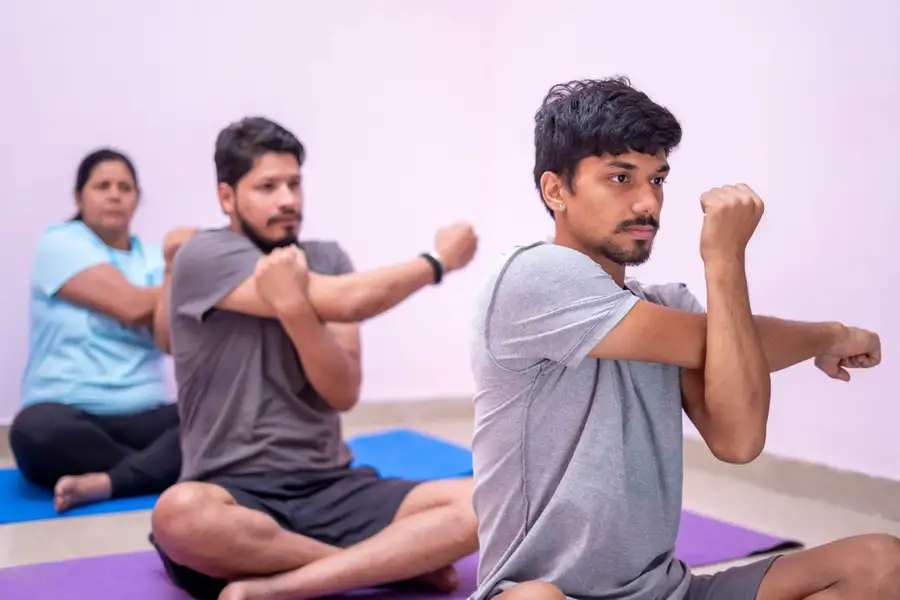
Roll out a yoga mat in a neighbourhood park at dawn, lace up for a brisk walk along a tree-lined promenade, or join a lively evening group stretch—movement in India has long lived outside conventional fitness clubs. That everyday relationship with motion shows up vividly in the 2025 Worldviews Survey by the Worldwide Independent Network of Market Research (WIN), which polled 34,946 people across 39 countries.
What Counts as "Exercising Often" in Indian Daily Life?
When a survey asks whether someone exercises often, people answer through the lens of their own routines. In India, fitness rarely begins and ends on a treadmill. Morning walks in local parks, breathing exercises, yoga flows, bodyweight stretches, and quick "exercise snacks" squeezed between work calls all feel like part of a regular rhythm.
At the same time, commercial gym culture is still growing from a small base. Industry data on India's fitness sector shows that paid fitness-facility membership covers less than 1% of the population (around 0.8%, or roughly 12.3 million members in 2024, even as the market expands rapidly). Put those two numbers together, and a clear lifestyle story emerges: Indians don't need a pricey gym membership to feel like regular movers. Free public spaces, home workouts, mindful movement, and structured walking habits do a lot of heavy lifting.
How the Rest of the World Compares
Surveys like this often upend tidy assumptions about which countries are "sporty." While Finland leads Europe at 61%, followed by France (55%) and Spain (54%), other countries post numbers that surprise readers:
- Standing out near the top: Australia and Morocco tie for fourth at 56%, with Paraguay (53%) and Ireland (51%) also clearing the halfway mark.
- Across North America: Mexico (50%) is the only surveyed country there where at least half of respondents report exercising often, ahead of Canada (45%) and the U.S. (43%).
- Right around the global average (43%): Vietnam, Greece, and South Korea sit right at 43%, while Pakistan and Japan sit just behind at 42%.
| Country / Benchmark | Share Reporting Frequent Exercise (%) |
| India | 73% |
| China | 68% |
| Finland | 61% |
| Australia / Morocco | 56% |
| France | 55% |
| Spain | 54% |
| Mexico | 50% |
| U.S. / Global Average | 43% |
| Indonesia / Chile / Slovakia / Thailand | 25% |
Self-Reported Exercise vs. Real-World Activity
Lifestyle researchers treat self-reported exercise frequency as a window into habits and identity, not a complete measure of cardiorespiratory fitness or total daily movement. A person might walk briskly every morning and call that exercising often, while another gets hours of movement through commuting, physical work, or chores without labelling it a "workout."
Thailand illustrates that gap well. It sits near the bottom of the exercise-frequency list at 25%, yet 2026 national data show 68.2% of Thais meet physical activity guidelines once broader daily movement is counted.
A Slower, Steadier Shift Worldwide
Zooming out from 2018 to 2025, WIN's data show the share of people reporting regular exercise globally climbed from 37% to 43%—a six-percentage-point rise over seven years. Even with that progress, fewer than half of respondents overall report exercising often.
For India, the takeaway is less about chasing intense fitness fads and more about protecting what already works: keeping movement accessible, low-friction, and woven into everyday life, whether that happens on a park path, a living-room mat, or a neighbourhood street.
Published: 29 Nov 2026, 12:06 pm IST


Related Topics
Disclaimer: Kindly avoid objectionable, derogatory, unlawful and lewd comments, while responding to reports. Such comments are punishable under cyber laws. Please keep away from personal attacks. The opinions expressed here are the personal opinions of readers and not that of Mathrubhumi.
