

In a culture that celebrates constant productivity, learning to embrace stillness may be one of the healthiest habits we can rediscover
Most people don't realise how rarely they do absolutely nothing. While waiting for the milk to boil, standing in a supermarket queue or waiting for a YouTube ad to end, almost without thinking, the hand reaches for the phone. Not because there is something important to check but because, the mind starts searching for something to fill that space.
Doing nothing has quietly become one of the hardest things to do. Every empty moment now feels like an opportunity that is slipping away. If time is not being used well, it begins to feel wasted.
It was not always like this. There was a time when afternoons stretched endlessly. People sat on balconies watching sunsets without feeling guilty. Children stared out of bus windows instead of at screens. Nobody called it mindfulness. Nobody called it self care. It was simply life.
Perhaps that is why doing absolutely nothing feels surprisingly luxurious today. Somewhere along the way, being busy became a personality.
Ask almost anyone how they have been lately and the answer usually begins the same way.
"So busy."
Busy has become a badge of honour. It suggests ambition, importance and purpose. Even weekends have become tiny projects that need managing. There is grocery shopping, meal prep, gym sessions, catching up with friends, side hustles, online courses and somehow finding time to "recharge". Ironically, recharging itself has become another task on the list.
Even leisure has become productive. Reading is meant to improve vocabulary. Walking should hit a fitness goal. Holidays are expected to produce beautiful photographs. Hobbies often turn into businesses before they have the chance to remain hobbies. Every moment seems expected to justify itself.
So when there is genuinely nothing to do, many people feel slightly anxious. “Shouldn't there be something more useful happening?”
The guilt of an empty afternoon
There is a particular kind of guilt that arrives when someone spends an afternoon lying on the sofa, staring at ceilings or listening to the fan spin overhead.
The voice appears almost instantly.
"You could be doing something."
“Something” is always waiting. The wardrobe could be organised. The messages could be answered. That book could finally be finished. ‘Duolingo’ has sent three reminders already. Could finally binge watch the series...
Resting now comes with performance targets. Sleep trackers score the night. Meditation apps congratulate users for streaks. It becomes surprisingly difficult to simply exist without recording, measuring or improving the experience.
The brain actually needs empty space
Interestingly, science suggests that these empty moments are far from useless.
Neuroscientists once assumed the brain was simply "resting" when people were doing nothing. They now know the opposite is true. In the early 2000s, neuroscientist Marcus Raichle and colleagues identified what is now called the Default Mode Network (DMN)
During quiet moments, a network of brain regions called the Default Mode Network becomes highly active, helping people process memories, reflect on life and even stumble upon creative ideas that would never appear while rushing through a to do list.
That explains why solutions often appear in the shower or while folding laundry rather than while staring intensely at a laptop.
Psychologists have also found that periods of wakeful rest can improve memory consolidation and support emotional processing. Simply allowing the mind to wander gives it a chance to organise thoughts that constant stimulation keeps interrupting.
In other words, doing nothing is not empty. It is quietly productive in ways that cannot be measured.
Children know something adults have forgotten
Observe children. They can spend a long time watching birds and cats outside or doing the same thing with their cars or dolls.
They invent shapes and stories from clouds. It is often adults that interrupt these moments with statements like "Aren't you bored?". The child usually was not. Until someone suggested they should be.
Boredom has always been closely linked to imagination. UK-based psychologist Sandi Mann, who has spent years studying boredom, argues that boredom pushes the brain inward, encouraging daydreaming and creative thinking.
"When we're bored, our brains start searching internally for stimulation. That's when mind wandering and daydreaming begin."
One of her experiments found that participants asked to complete a deliberately boring task later generated more creative ideas than those who hadn't been bored first.
Without immediate entertainment, the mind begins entertaining itself. Ideas appear. Questions emerge. Creativity quietly wake up from naps.
The pressure to always capture the moment
There is another reason stillness feels unfamiliar. Many experiences now come with an invisible expectation that they should be documented.
A beautiful rainbow is quickly photographed. When food arrives at the café, phones appear before conversations do. Concerts are watched through camera screens. Even peaceful moments sometimes become content like 'sunday reset' or 'make coffee with me'.
One famous experiment by psychologists Timothy D Wilson discovered something rather revealing.
Many participants found sitting quietly with their own thoughts more uncomfortable than researchers expected. Some participants even chose to give themselves mild electric shocks rather than sit quietly with nothing happening.
It says a great deal about modern life that stillness itself has become something many people instinctively avoid. Instead of fully living an experience, part of the mind begins observing it from the outside. How will this look? Should this be posted? Is this worth sharing?
We always tend to realise that sometimes the most memorable moments are the ones that never appear online. The chai enjoyed during a rainy evening. The time spent talking on the terrace. An unexpected nap while watching YouTube. Nobody else sees them. That is precisely what makes them special.
There is a quiet beauty in ordinary days
Life is mostly ordinary. Not every day contains life changing news or unforgettable adventures. There are chores to finish. Laundry waiting to be folded. The smell of food from the kitchen. A dog sleeping without the slightest concern for tomorrow. These moments rarely appear in highlight reels. Yet they quietly become the memories people miss years later. Doing nothing often creates room to notice them.
Rest does not need to be earned
Perhaps one of the biggest myths modern life has created is that rest comes only after enough work.
Finish everything first. Then relax. The problem is that “everything” is never really finished. There will always be another email. Another notification. Another room that could be cleaner. Another skill worth learning. Waiting for permission to rest often means never resting properly at all.
Recent neuroscience shows that periods of wakeful rest help the brain consolidate memories. Those quiet 10 minutes after lunch may not look productive, but the brain is quietly organising experiences, strengthening memories and making sense of information gathered throughout the day.
Something we should accept is that human beings were never designed to operate at full speed every waking hour. Even nature understands rhythm. The sea comes in and goes out. Trees shed leaves before growing new ones. The sky changes colour every evening without asking anyone for approval. Nothing in nature apologises for slowing down.
Doing nothing isn't laziness
Many psychologists distinguish rest from passive distraction. There is a difference between switching off and being constantly distracted. Endless scrolling can leave the brain just as busy as work.
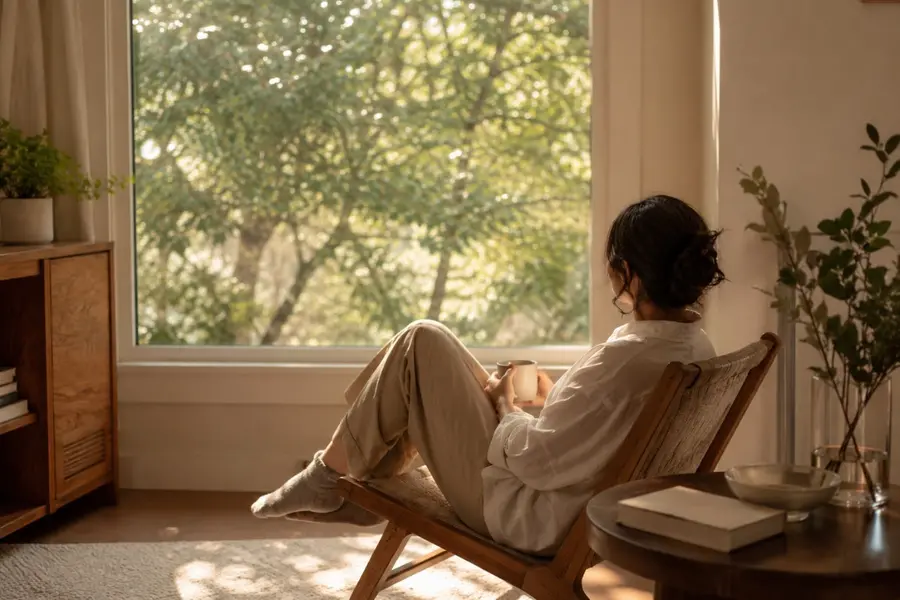
Real rest often looks far less exciting and doing nothing does not necessarily mean staring at a wall. It is found in slow walks without headphones, long showers, watching rain from a window without opening another app or simply letting thoughts wander without interruption.
There is comfort in remembering that the world survived before constant connectivity. One unread message is unlikely to change everything. One afternoon without productivity will not erase years of hard work. One quiet evening spent doing absolutely nothing is not laziness.
It is recovery. It is space. It is permission to exist without constantly proving worth.
Perhaps that is the real joy of doing nothing. Not because nothing is happening. But because, for a little while, nothing is being demanded.
Published: 10 Jul 2026, 12:57 pm IST
ABOUT THE AUTHOR
Related Topics
Disclaimer: Kindly avoid objectionable, derogatory, unlawful and lewd comments, while responding to reports. Such comments are punishable under cyber laws. Please keep away from personal attacks. The opinions expressed here are the personal opinions of readers and not that of Mathrubhumi.