
Pioneering IVF technique reduces risk of inherited mitochondrial diseases, offering hope for families.
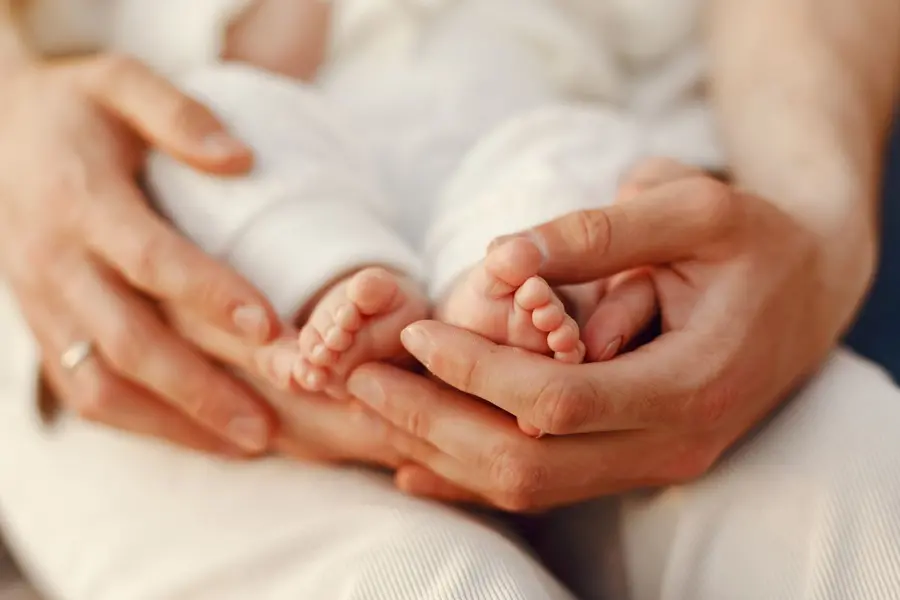
Eight healthy babies have been born in the United Kingdom using a pioneering IVF technique designed to significantly reduce the risk of inheriting debilitating genetic diseases from their mothers. The results of this world-first trial, released on Wednesday, are being hailed as a major breakthrough in reproductive medicine.
The findings offer renewed hope for women carrying mutations in their mitochondrial DNA, potentially enabling them to have children without passing on severe or even deadly conditions.
Mitochondrial diseases, which affect approximately one in every 5,000 births, are currently untreatable and can manifest with symptoms such as impaired vision, diabetes, and muscle wasting.
'Three-parent' technique shows promise
In 2015, Britain became the first country globally to approve this innovative in-vitro fertilisation (IVF) technique. The procedure involves using a small amount of healthy mitochondrial DNA from the egg of a donor, combined with the mother's egg and the father's sperm.
While some have controversially labeled the resulting offspring "three-parent babies," researchers dispute the term, noting that only about 0.1 percent of the newborn's DNA originates from the donor.
The much-anticipated results of the UK trial were published across several papers in the prestigious New England Journal of Medicine. Out of 22 women who underwent the treatment at the Newcastle Fertility Centre in northeast England, eight babies were successfully born -- four boys and four girls -- who now range in age from under six months to over two years old.
The research indicates that the amount of mutated mitochondrial DNA, which causes disease, was reduced by an impressive 95-100 percent in six of the babies. For the remaining two newborns, the reduction was between 77-88 percent, well below the threshold that typically causes disease.
One of the studies concluded that this clearly demonstrates the technique was "effective in reducing transmission" of diseases from mother to child.
Health monitoring and ongoing ethical debate
All eight children are currently reported to be healthy, although researchers noted that one baby experienced a heart rhythm disturbance which was successfully treated. Their health will continue to be closely monitored in the coming years to observe any potential long-term issues.
Among those under close observation are three children who exhibited signs of "reversal," a phenomenon where the proportion of abnormal mitochondria increases after birth despite initial success.
Nils-Goran Larsson, a Swedish reproductive expert not involved in the research, lauded the outcome as a "breakthrough," calling the new technique a "very important reproductive option" for families grappling with "devastating" mitochondrial diseases.
Despite these promising results, mitochondrial donation remains a subject of considerable debate and has not received approval in many countries, including the United States and France.
Opponents, including some religious leaders, have voiced concerns over the destruction of human embryos involved in the process, while others fear it could open the door to genetically engineered "designer babies."
Danielle Hamm, director of the UK's independent Nuffield Council on Bioethics, emphasized that an ethical review conducted by the council was "instrumental" in enabling this new research.
Peter Thompson, head of the UK's Human Fertilisation and Embryology Authority (HFEA) which approved the procedure, stressed that eligibility for the treatment would be strictly limited to individuals with a "very high risk" of transmitting a mitochondrial disease.
French mitochondrial disease specialist Julie Stefann highlighted the risk-benefit ratio, stating that "for a mitochondrial disease, the benefit is obvious," but questioned its use for infertility where the benefit has "not been proven."
Oxford University reproductive genetics expert Dagan Wells acknowledged that "some scientists will be a little disappointed that so much time and effort has, so far, only led to the birth of eight children."
Published: 17 Jul 2025, 03:08 pm IST
Related Topics
Disclaimer: Kindly avoid objectionable, derogatory, unlawful and lewd comments, while responding to reports. Such comments are punishable under cyber laws. Please keep away from personal attacks. The opinions expressed here are the personal opinions of readers and not that of Mathrubhumi.
