
The trial, conducted at Waipapa Taumata Rau, University of Auckland, demonstrated that the ultra-thin implant, when placed directly over the site of spinal injury in rats, could significantly aid recovery by delivering precise electrical stimulation.
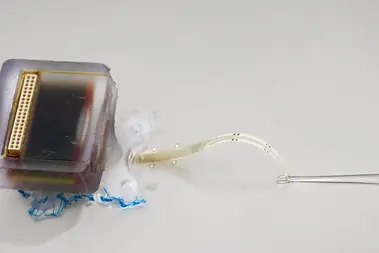
In a groundbreaking achievement, Australian researchers have developed an implantable electronic device that has successfully restored movement in animals with spinal cord injuries, offering fresh hope for treating similar injuries in humans and even pets.
The trial, conducted at Waipapa Taumata Rau, University of Auckland, demonstrated that the ultra-thin implant, when placed directly over the site of spinal injury in rats, could significantly aid recovery by delivering precise electrical stimulation.
“Unlike a skin wound that heals naturally, the spinal cord has a limited ability to regenerate,” said Dr Bruce Harland, senior research fellow at the University’s School of Pharmacy. “Our implant is designed to sit directly on the spinal cord and deliver controlled electrical currents to stimulate healing.”
Published in the journal *Nature Communications*, the study showed that animals receiving daily electric field treatment for four weeks exhibited marked improvements in movement and sensation compared to untreated subjects. They also responded more rapidly to gentle touch over the 12-week study period.
“This suggests recovery of both motor function and sensory response,” Harland noted. “Equally important, our tests confirmed that the treatment did not trigger inflammation or further damage, underscoring its safety.”
The implant is part of the university’s CatWalk Cure Programme, led by Professor Darren Svirskis, aimed at advancing spinal cord repair technology. The research team is now focusing on optimising the electrical stimulation parameters, including intensity, frequency, and duration, to enhance therapeutic outcomes.
Professor Maria Asplund of Chalmers University of Technology, a collaborator on the project, added, “Our ultimate goal is to translate this technology into a medical device for people living with life-altering spinal cord injuries.”
The breakthrough brings renewed optimism to a field long constrained by the complexity of spinal cord regeneration and limited treatment options.
Published: 29 Jun 2025, 02:24 pm IST
Related Topics
Disclaimer: Kindly avoid objectionable, derogatory, unlawful and lewd comments, while responding to reports. Such comments are punishable under cyber laws. Please keep away from personal attacks. The opinions expressed here are the personal opinions of readers and not that of Mathrubhumi.
