
Doctors at Manipal Hospital perform a world-first robotic pancreatic surgery on a 1-month-old infant. Read how advanced technology saved a life. Book an appointment.
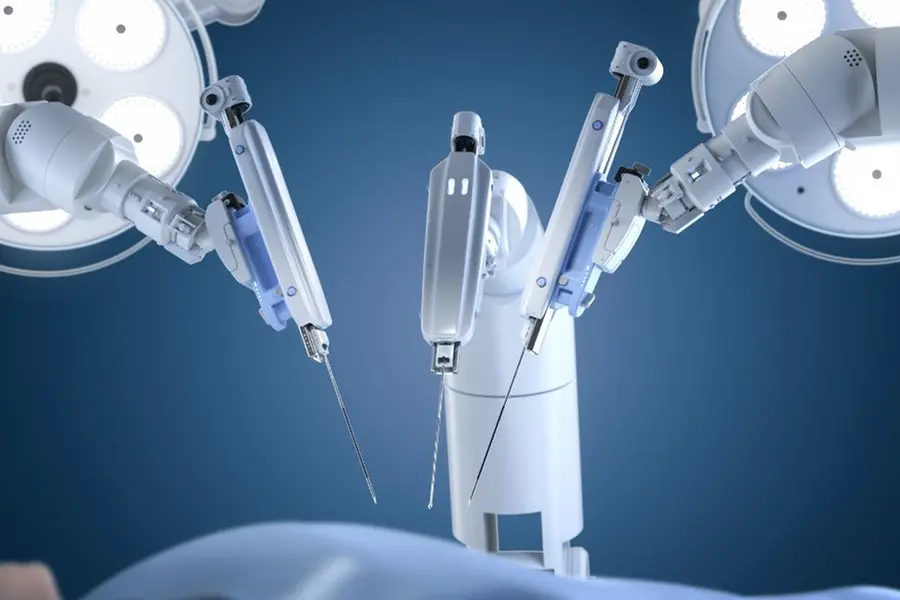
Bengaluru: Surgeons at Manipal Hospital Whitefield have successfully performed a life-saving robotic pancreatic surgery on a one-month-old infant. Weighing just 4.6 kg, the baby girl is believed to be the youngest patient globally to undergo such a complex robotic procedure, marking a monumental milestone for Indian healthcare.
The infant, Baby Inaya, was diagnosed just 16 days after birth with Congenital Hyperinsulinism, a rare and life-threatening condition where the pancreas produces excessive insulin. This caused her blood sugar to plummet to dangerously low levels, putting her at immediate risk of irreversible brain damage.
While robotic surgery is becoming more common in adults, performing it on a neonate is exceptionally rare due to the fragility of the organs and the confined surgical space. Dr. Manjunath Haridas, Consultant in GI & Robotic Surgery, noted that while his team has completed over 800 robotic surgeries, this specific case is unprecedented. "There are very few reports of robotic pancreatic surgery in infants, and none of robotic pancreatic surgery in a one-month-old child. To our knowledge, this is the first such case reported worldwide," he stated.
The success of the surgery relied on extreme diagnostic precision. Because the brain of a newborn depends almost entirely on glucose for energy, Dr. Kavitha Bhat (Pediatric Endocrinology) emphasised that every hypoglycemic episode was a "silent damage." To find the exact source of the insulin spike, the team utilised a specialised 18F-DOPA PET/CT scan, an advanced imaging technique available at only a few centres globally. The scan revealed a tiny 0.5 cm lesion, allowing the surgeons to target only the diseased tissue rather than removing the entire pancreas.
The results were near-instantaneous. Remarkably, the infant's blood sugar levels stabilised while she was still on the operating table, immediately ending her dependency on intravenous glucose. After nine days of monitoring in the Neonatal Intensive Care Unit (NICU), she was discharged on oral feeds.
Published: 21 Mar 2026, 06:39 pm IST
Related Topics
Disclaimer: Kindly avoid objectionable, derogatory, unlawful and lewd comments, while responding to reports. Such comments are punishable under cyber laws. Please keep away from personal attacks. The opinions expressed here are the personal opinions of readers and not that of Mathrubhumi.
