
A new study from Japan’s Shibaura Institute of Technology suggests that flavanols, compounds found in dark chocolate and berries, may enhance memory and reduce stress.
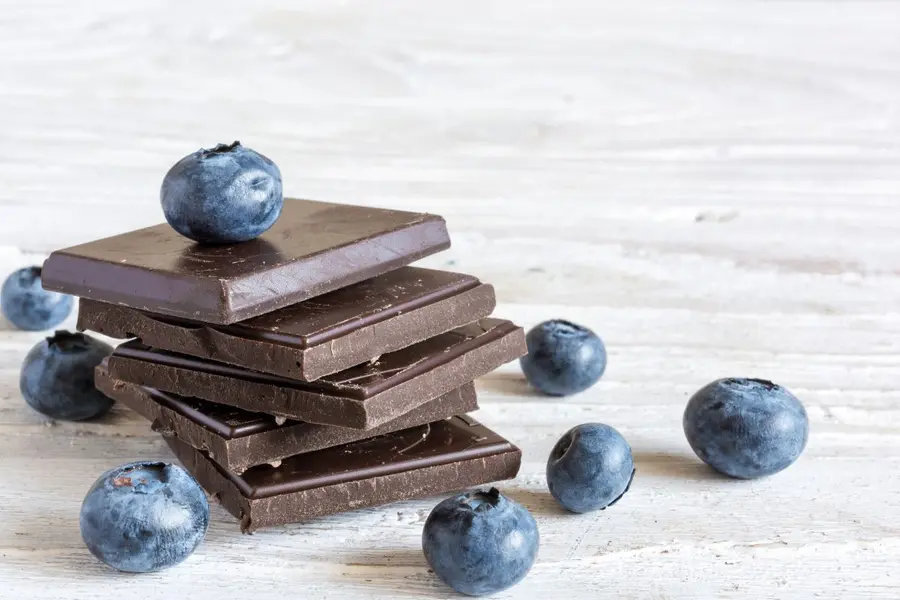
New Delhi: Struggling with memory and stress issues? A bite of dark chocolate or a handful of berries may help boost your memory levels and also cut down stress, according to an animal study.
The improved memory and cognition may be due to flavanols, found abundantly in cocoa and berries, said the team from Shibaura Institute of Technology, Japan.
The study, published in the journal Current Research in Food Science, demonstrated that flavanol intake can trigger wide-ranging physiological responses resembling those induced by exercise - functioning as a moderate stressor that activates the central nervous system and enhances attention, arousal, and memory. Flavanols also protect against neuronal damage.
“Stress responses elicited by flavanols in this study are similar to those elicited by physical exercise. Thus, moderate intake of flavanols, despite their poor bioavailability, can improve the health and quality of life,” said Dr. Yasuyuki Fujii from the Shibaura Institute.
In the study, the team investigated how flavanols affect the nervous system through sensory stimulation. They tested the hypothesis that the astringent taste - a dry, puckering, rough, or sandpapery sensation in the mouth - of flavanols may act as a direct signal to the brain.
The researchers conducted experiments in 10-week-old mice, administering flavanols orally at doses of 25 mg/kg or 50 mg/kg body weight, while control mice received only distilled water.
Behavioural tests showed that flavanol-fed mice exhibited greater motor activity, exploratory behaviour, and improved learning and memory compared to controls.
Flavanols enhanced neurotransmitter activity across several brain regions. Dopamine and its precursor levodopa, norepinephrine, and its metabolite normetanephrine were elevated in the brain immediately after the administration.
These chemicals regulate motivation, attention, stress response, and arousal.
Furthermore, enzymes critical for noradrenaline synthesis (tyrosine hydroxylase and dopamine-beta-hydroxylase) and transport (vesicular monoamine transporter 2) were upregulated, strengthening the signalling capacity of the noradrenergic system.
In addition, biochemical analysis revealed higher urinary levels of catecholamines - hormones released during stress - as well as increased activity in the hypothalamic paraventricular nucleus (PVN), a brain region central to stress regulation. IANS
Published: 01 Nov 2025, 02:24 pm IST
Related Topics
Disclaimer: Kindly avoid objectionable, derogatory, unlawful and lewd comments, while responding to reports. Such comments are punishable under cyber laws. Please keep away from personal attacks. The opinions expressed here are the personal opinions of readers and not that of Mathrubhumi.
