

Always online and constantly compared, Gen Z is quietly struggling with depression triggered by peer pressure, social validation and the fear of being left behind.
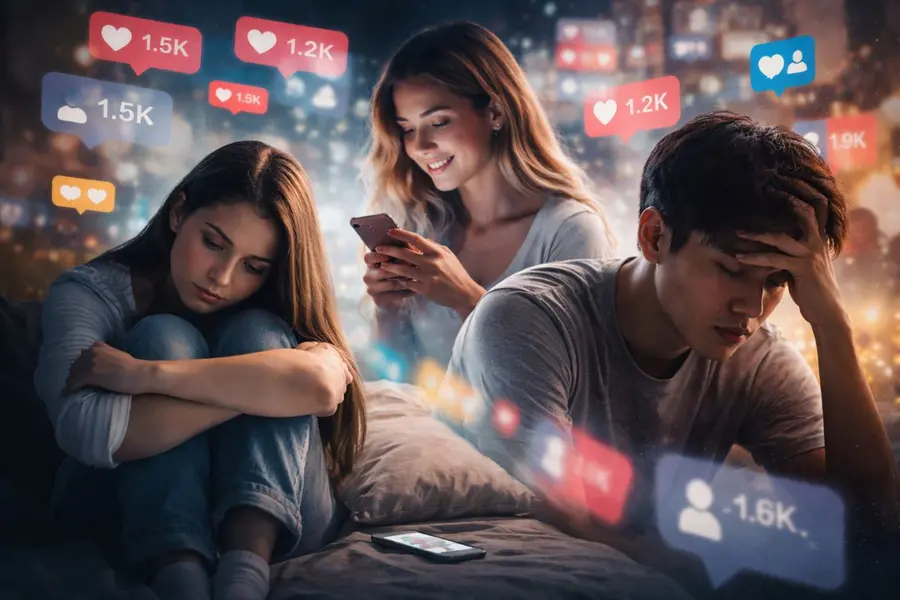
Always online, constantly connected, yet emotionally isolated — mental health experts warn that peer pressure has become a key driver of depression among Gen Z, unlike anything previous generations experienced.
According to the World Health Organization, nearly one in five adolescents globally lives with a mental health condition, with anxiety and depression leading the list. Several studies also show that Gen Z reports higher levels of stress, loneliness, and burnout than Millennials or Gen X, despite unprecedented access to digital connections and information.
A real-life snapshot: ‘Everyone else looked happier’
A 17-year-old student from Kerala (Seeking anonymity), currently preparing for competitive exams, describes waking up each morning and scrolling through social media before school. “Everyone looked happier, more confident, more successful. Even on days I studied hard, I felt like I was falling behind,” she says.
Over time, the constant comparison led to panic attacks, withdrawal from friends, and sleepless nights, not because anyone directly pressured her, but because peer pressure now arrives silently, through screens. Mental health professionals say this experience is increasingly common.
“It’s not peer pressure in school corridors anymore, it’s 24/7 in their pocket”
Speaking to Mathrubhumi, Dr Shruti Khare, Psychologist, Psychotherapist, and Founder of Prakash Welfare Foundation, explains that the mental health landscape for adolescents has fundamentally changed.
“We are having a complete change in the mental health landscape, especially for adolescents and youngsters. It is no longer about ‘teen angst’. We deal with a reality that is hyper-connected, with high pressure on comparison through social media, academic and career pressures, and the fear of being left out.” She explains how peer pressure today is constant and invisible.
“It’s not the peer pressure in the hallway of schools anymore; it’s 24/7 in their pocket. Every notification, snap, reel, and like is constantly watching who’s popular, prettier, happier, more successful — often edited, filtered, and unreal.”
“Loneliness in a hyperconnected world and low self-worth are common.” Dr Khare points out two dominant emotional patterns.
“They have countless virtual friends yet feel totally alone. Genuine connection is scary because it requires one to be imperfect.” She adds: “Low self-worth is extremely common. Today’s teens often feel not good enough, even when they’re doing everything ‘right’. They feel replaceable, unseen, and constantly behind.” “High anxiety, burnout and avoidance behaviours are rising sharply.”
“High anxiety, burnout and avoidance behaviours are rising sharply”
Psychiatrist Dr Shailesh Umate, speaking to Mathrubhumi, says Gen Z patients show distinct behavioural responses to peer pressure.
“We are seeing high rates of anxiety, depression, and burnout. Loneliness, avoidance, and self-harm behaviours are increasingly reported.” He notes that while Gen Z is more open about mental health, coping is often digital.
“They seek help from professionals, use mental health apps and online resources, and express themselves openly on online platforms. However, many cope through avoidance behaviours like ghosting or quitting, and avoid confrontations.”
What parents can do: ‘Sometimes love isn’t enough’ Experts stress that parental support must adapt to modern realities.
“Start by validating their reality. The pressure to stay relevant is exhausting,” says Dr Khare. “Model, don’t lecture. Put your phone down first — they’re watching you.”
Her strongest advice is clear: “This generation is navigating pressures we never faced. Sometimes love isn’t enough — get professional help early.”
Published: 29 Dec 2025, 11:19 am IST
ABOUT THE AUTHOR
Disclaimer: Kindly avoid objectionable, derogatory, unlawful and lewd comments, while responding to reports. Such comments are punishable under cyber laws. Please keep away from personal attacks. The opinions expressed here are the personal opinions of readers and not that of Mathrubhumi.