
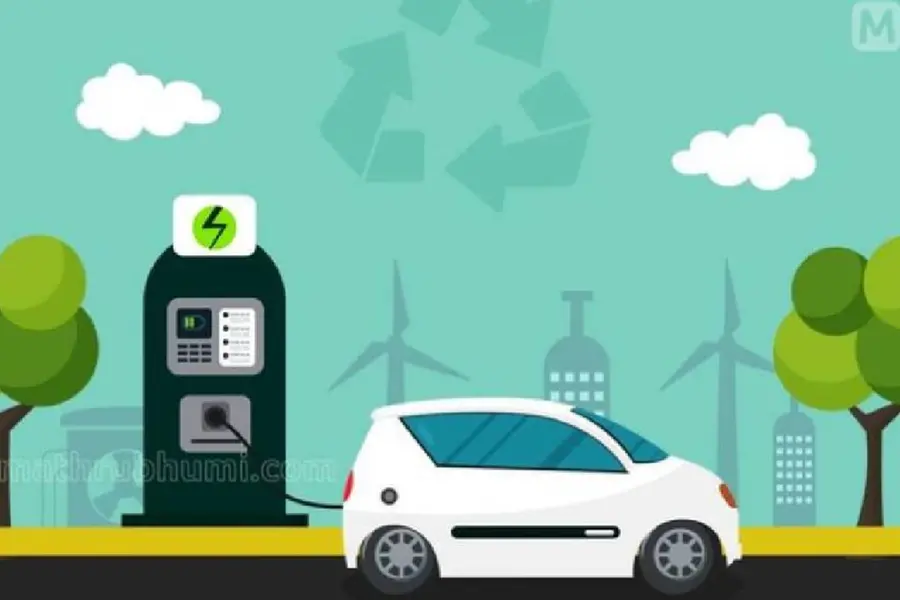
The Indian government has announced that an indigenously developed wireless charger for electric vehicles (EVs), capable of charging up to 90% in just three hours, will soon be commercialized. This breakthrough comes from the Ministry of Electronics and Information Technology (MeitY), which confirmed the charger’s efficiency on Monday.
Developed under the National Mission on Power Electronics Technology (NaMPET), the 1.5 kW wireless charger was created by the Centre for Development of Advanced Computing (C-DAC) in Thiruvananthapuram, in collaboration with the Visvesvaraya National Institute of Technology (VNIT) in Nagpur.
Designed to operate on a standard 230V, 50Hz AC single-phase power supply, the charger can power a 4.8 kWh onboard battery pack at 48V using 30A current. The wireless charger has achieved an impressive maximum efficiency of 89.4% even with a coil separation of up to 12.5 cm.
As part of India’s ongoing push for indigenous solutions in electric vehicle infrastructure, the MeitY has highlighted this development as a significant step toward advancing 'Make in India' innovations. The charger includes advanced safety features, such as short-circuit and open-circuit protection, and uses Silicon Carbide-based MOSFETs operating at 88 kHz.
The technology transfer (ToT) for this charger has been assigned to M/s Global Business Solution Private Limited, which will oversee its commercial production.
In addition to this milestone, a Memorandum of Agreement (MoA) was signed between C-DAC and Indian Railways' Chittaranjan Locomotive Works, along with three industry partners. This agreement aims to develop an Indian-made propulsion system for electric locomotives, aligning with Indian Railways' target of achieving full electrification by 2030.
In another initiative focused on green energy, a Memorandum of Understanding (MoU) was signed between C-DAC and the Kerala Development and Innovation Strategic Council (K-DISC) for the deployment of a 48V Low Voltage Direct Current (LVDC) system.
The move is expected to reduce energy consumption by 20-30 per cent and supports Kerala’s Carbon Neutrality Roadmap 2050 as well as India’s Net Zero 2070 mission.
Speaking at the event, Secretary Krishnan emphasised the importance of indigenous technology in power electronics, especially in areas like EV charging, rail transportation, and renewable energy. IANS
Published: 08 Apr 2025, 09:54 am IST
Related Topics
Subscribe to our Newsletter
Disclaimer: Kindly avoid objectionable, derogatory, unlawful and lewd comments, while responding to reports. Such comments are punishable under cyber laws. Please keep away from personal attacks. The opinions expressed here are the personal opinions of readers and not that of Mathrubhumi.
