
Advocates to rename Vizhinjam Port as Ayyankali International Port, honoring Kerala`s anti-caste revolutionary and a symbol of human rights and equality.
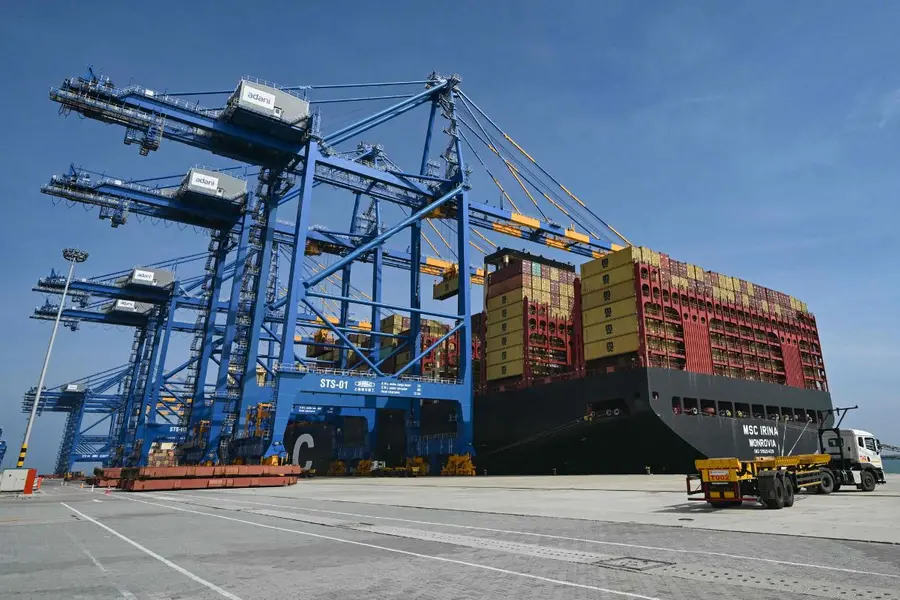
A modern society is judged not only by what it builds, but by whom it chooses to honour. Streets, ports, airports, museums and public institutions are not neutral objects; they are monuments of memory. Through them, a society declares its moral lineage. Who shaped it, who sacrificed for it, and whose legacy guides its future. Kerala now stands at a pivotal moment to make such a declaration: Vizhinjam International Port should be named as Ayyankali International port, the legendary anti-caste revolutionary who was born and lived in Venganoor, a village adjacent to Vizhinjam itself.
To name the port after Ayyankali is not an act of symbolic charity. It is an act of historical rectification restoring to the public sphere a titan whose memory caste society want to erase.
The Toussaint Louverture of Kerala
Even geography has its rebels. Haiti has Toussaint L’ ouverture, the revolutionary genius of the first successful anti-slavery revolution in world history. Kerala has Ayyankali, a man born in the shadow of caste slavery who overturned it with an audacity that shook the foundation of Kerala’s caste society.
Toussaint rose from bondage to command armies, to rewrite the political grammar of race, liberty and equality. In the classic The Black Jacobins, CLR James writes of Toussaint Louverture as the “first Black man to rise to the status of world historical figure”, a man who broke the spine of slavery through courage, political intelligence, and revolutionary ferocity. Toussaint was born enslaved, forbidden literacy, stripped of name and dignity – yet he re-named himself, re-invented himself and re-made his people. Haiti’s (Saint-Domingue) revolution in world history, was a luminous correction to the double – speak of European modernity.
If one reads James closely, one begins to see starting parallels in another corner of the world – Venganoor, Kerala, India – where Ayyankali, born into Pulaya enslavement, lived a life whose arc uncannily echoes Toussaint’s: the rise of a man from the lowest rung of an inhuman hierarchy to the status of a People’s emancipator.
Like Toussaint, Ayyankali was born into a world where his people were not allowed to walk on roads, not allowed to cover their upper body, not allowed into markets, not allowed to enter schools, not allowed to speak in certain registers of language, not allowed to use dignified personal names, and above all even the dream of being human beings was forbidden.
And like Toussaint, he fought not merely for reforms but to shatter the theology of caste that declared whole populations polluted by birth. If Toussaint broke the sugar plantation, Ayyankali broke the caste plantation that sprawling, invisible architecture that turned entire communities into land – bound, birth – bound, ritual – bound property of the upper – castes.
Toussaint rode a horse, Ayyankali rode a bullock cart into the forbidden road, an act that had the explosive energy of a slave uprising. Toussaint opened schools for Black children: Ayyankali led the historic agricultural strike demanding the rights of Pulaya children to attend school. The first agricultural strike in Kerala history that lasted an entire year 1907-1908. This strike led by Ayyankali – was not for higher wages, not for shorter hours, not for any economic benefits, it was a fight for the right to send their children to school, the right to be treated as human beings, the right to step into the world of humanity that has been denied to them for millennia. It was the first strike in Kerala’s agrarian history whose primary goal was not economic but civilisational – yet, EMS Namboodiripad the much celebrated patriarch of Kerala communism, reduces this world-historical revolt to an ‘agrarian agitation’, erasing its unprecedented moral and political significance (EMS Namboodiripad, A history of Kerala, National Book Centre, 1980, Ch. 26). Thus the revolutionary fight for human rights was domesticated into a peasant dispute - an unforgivable diminishment.
In Black Jacobins, James writes that the enslaved of Haiti “made themselves the equal of their masters”. Ayyankali did the same, he made equality walk on Kerala’s soil for the first time. His bullock cart ride was the declaration of humanity by a people denied humanitarian for 3000 years.
When Ayyankali rode his cart through the public roads forbidden to his caste people, it was as explosive as the storming of the Bastille. It was the revolt of a slave caste longing for dignity – a dignity carried on the winds of British legal reforms and missionary education, which first whispered into dalit ears that they, too, were human.
The Nairs who attacked him were not accidental villains, they were the ritual mercenaries of caste, the armed custodians of Hindu apartheid, whose historical role was to enforce the boundaries that kept lower castes subhuman.
Ayyankali broke that boundary. Like Toussaint, he reconfigured the political horizon of his land. If Toussaint made the Black Atlantic a site of revolutionary possibility, Ayyankali made the mind of Kerala a stage where the oppressed first stood erect as citizens – to come.
Why Vizhinjam must carry his name
Vizhinjam stands adjacent to Venganoor, Ayyankali’s birthplace. The soil beneath the port is the soil that bore him, fed him, and witnessed his defiance. What greater geographical legitimacy can one demand?
Wherever major ports in the world stand, they honor their greatest children. Haiti’s Toussaint Louverture International Airport honors the emancipator of the Haitian people. South Africa’s Oliver Tambo International Airport honors the anti-apartheid revolutionary. Nelson Mandela International Airport (Cape verge) stands honouring the international icon of anti-apartheid struggle.
Nations name ports, airports and major infrastructural projects after those who fought for freedom. Only in India has the habit of naming slipped into dynastic loyalty or upper – caste appeasement, rather than recognition of historic anti-caste revolutionaries
Kerala celebrates itself as India’s most egalitarian society yet the state’s greatest fighter for equality has no monument proportionate to his contribution. So Kerala’s biggest infrastructural institution must be named after him.
Kerala’s modernity did not burst forth from temple lamps or palace corridors. It did not emanate from the perfumed clubs and self-adoring literary parlours of the upper castes; it rose from the mud, sweat and spilled blood of the oppressed. It sprang from the flaming footsteps of revolutionaries like Ayyankali who carved the first human pathways to dignity on this soil.
Ayyankali was not simply a person. He was the symbol of the uprising of a people long denied humanity. He epitomizes the struggles of a people through school, the book, the cart and fearless will, no sanatana racist could crush.
To name a port after Ayyankali is the return of the oppressed, a tidal acknowledgement that Kerala’s modernity was born from its most despised children.
Let the Vizhinjam waves carry his name. Let the ships that arrive and depart carrying the name of its greatest son to faraway shores. A port bearing the name of this great son would be a monumental reminder that the true architects of justice were those who fought without glory.
Published: 12 Dec 2025, 12:48 pm IST
Related Topics
Disclaimer: Kindly avoid objectionable, derogatory, unlawful and lewd comments, while responding to reports. Such comments are punishable under cyber laws. Please keep away from personal attacks. The opinions expressed here are the personal opinions of readers and not that of Mathrubhumi.
