
The Indian Air Force retires the legendary MiG-21 after 62 years. Explore its combat history, technological evolution, and what its departure means for India`s aerospace future.
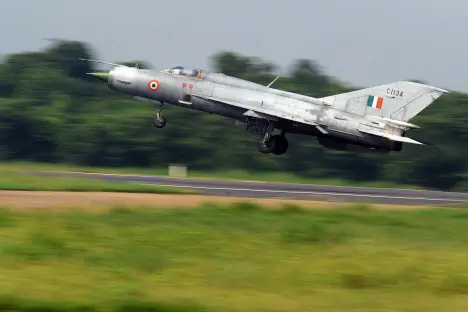
As the sun sets on the MiG-21's remarkable journey with the Indian Air Force today, we witness more than just the retirement of an aircraft—we see the closing of a defining chapter in India's defence story. Over 62 years, the IAF operated nearly 900 MiG-21s across multiple variants, making it one of the largest operators of this legendary fighter outside the Soviet Union.
The numbers tell a compelling story of India's aerospace evolution. Starting with the basic MiG-21F-13 interceptor in 1963, India progressively acquired more advanced variants. The MiG-21FL (Type 77), with over 200 units built locally by HAL, marked our first serious foray into licensed production. The MiG-21M brought improved high-altitude performance, while the MiG-21MF and Bis variants added sophisticated avionics and weapons systems. The crown jewel was the MiG-21 Bison upgrade program of the 2000s, which transformed 125 aircraft with Israeli radars, modern avionics, and beyond-visual-range missile capability—extending their service life by decades.
These technical specifications weren't just numbers on paper—they represented real combat capability. The MiG-21's Tumansky R-25 engine (in later variants) generated over 7,000 kg of thrust, pushing the aircraft to speeds exceeding 2,500 kilometers per hour—more than twice the speed of sound. Its compact 7-meter wingspan and delta-wing design made it incredibly agile, capable of pulling 8.5G in combat maneuvers and climbing at rates of up to 235 meters per second. Armed with everything from 23mm cannons to R-77 missiles on the Bison variant, these jets packed serious punch in a small package weighing just 10,400 kg when fully loaded.
But what truly defines the MiG-21's legacy is its blood-soaked combat record across multiple conflicts. In the 1965 war with Pakistan, MiG-21s scored their first kills, downing Pakistani Sabres and establishing air superiority over key sectors. The 1971 Bangladesh Liberation War saw MiG-21s in their prime—they not only shot down Pakistani F-86s and F-104 Starfighters but also conducted ground attack missions, including the famous bombing of the Governor's house in Dhaka that helped force Pakistani surrender in East Pakistan.
The Kargil conflict of 1999 showcased the MiG-21's versatility in high-altitude warfare. Operating from forward bases, these fighters provided crucial air cover and ground support in the treacherous mountain terrain where every sortie was a test of pilot skill and aircraft capability. Most dramatically, during the February 2019 Balakot crisis, Wing Commander Abhinandan Varthaman's MiG-21 Bison shot down a Pakistani F-16—a fourth-generation fighter—proving that with skilled pilots and smart upgrades, even older platforms could punch above their weight.
What strikes me most about this combat record is how it reflects India's strategic patience and adaptability. Each variant upgrade wasn't just about keeping old jets flying—it was about extracting maximum value from proven platforms while building indigenous capabilities. When HAL produced nearly 600 MiG-21s under license, it wasn't just assembling foreign designs. Indian engineers learned to manufacture complex jet engines, avionics, and weapons systems. This knowledge transfer created the foundation for today's Tejas program and future indigenous aircraft projects.
The technical evolution from the basic F-13 to the sophisticated Bison tells a deeper story about India's growing technological confidence. The early variants required Soviet support for major maintenance. By the Bison era, Indian engineers were integrating Israeli radars, French missiles, and indigenous systems into a coherent combat platform. This wasn't just modification—it was systems integration at a level that few air forces worldwide could manage.
For the common indian citizen, these specifications and combat records translate into real security benefits. The MiG-21's 1,600-kilometer combat radius meant it could reach deep into enemy territory. Its quick turnaround time—as little as 30 minutes between sorties—provided operational flexibility during crises. The fact that we operated nearly 900 of these aircraft meant we could maintain continuous combat air patrols along our vast borders while keeping reserves for emergency deployment.
But let's be honest about the challenges too. The MiG-21's demanding flight characteristics, while building excellent pilots, also contributed to a significant accident rate over six decades of service. The aircraft's relatively short range and limited payload compared to modern fighters highlighted the need for newer platforms. As threats evolved from conventional warfare to include precision strikes, electronic warfare, and beyond-visual-range combat, even upgraded MiG-21s faced limitations.
The timing of this retirement, with IAF strength dropping to just 29 squadrons, creates both challenges and opportunities. The capability gap left by retiring nearly 50 MiG-21 squadrons over the past decade cannot be filled overnight. However, the transition to indigenous Tejas Mk-1A fighters represents more than just fleet modernization—it's India's declaration of technological independence in aerospace.
As we bid farewell to the MiG-21, we must remember that its greatest victory wasn't any single combat engagement. It was proving that India could operate, maintain, upgrade, and eventually improve upon sophisticated military technology. The pilots who mastered its challenging flight envelope, the engineers who kept aging airframes flying, and the strategists who deployed it across multiple conflicts—all contributed to building the institutional knowledge that now powers India's indigenous defence programs.
The MiG-21's retirement should serve as both celebration and commitment. We've proven we can operate 900 complex fighters across six decades of service. We've shown we can upgrade Soviet-era jets with cutting-edge Israeli and European systems. Now we must prove we can build better indigenous alternatives faster and more efficiently than ever before.
The sky warrior's greatest legacy won't be its impressive kill-to-loss ratio or its record-breaking service life. It will be the confidence it gave India to reach even higher in the aerospace domain.
The author is an award-winning science communicator and a Defence, Aerospace & Geopolitical Analyst.
Published: 26 Sept 2025, 10:56 am IST
Related Topics
Disclaimer: Kindly avoid objectionable, derogatory, unlawful and lewd comments, while responding to reports. Such comments are punishable under cyber laws. Please keep away from personal attacks. The opinions expressed here are the personal opinions of readers and not that of Mathrubhumi.
