
CP died on 26 September 1966 in London. In his last 20 years he lived in a state of cushioned obscurity—holding academic posts, giving lectures, and so on, but never again in proximity to real power
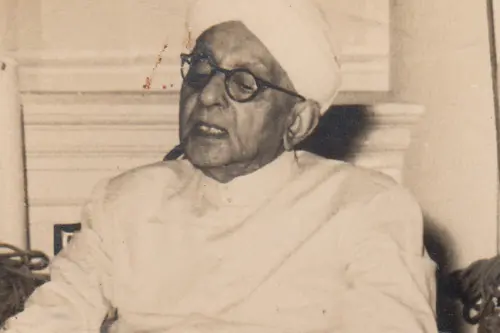
To examine the legacy of Sir CP Ramaswami Iyer on his 60th death anniversary is to investigate a fascinating but mixed record. To his admirers, CP—as he was popularly known—remains a technocratic hero. Under him, Kerala established its first university, inviting Albert Einstein to lead it. He was the force behind major industrial ventures, including FACT. He recognised the strategic value of Travancore’s monazite sands, which is particularly salient given present-day conversations around rare earth elements. And thanks to his stewardship, the state’s financial position grew so stout as to cause its then maharajah, Chithira Tirunal, to harbour ill-fated hopes of independence when the British departed India’s shores.
If success were measured purely by good statistics and sturdy economics, CP would have been the ideal political leader. Except that the business of governing is a little more complicated. The same CP was also an authoritarian, who repressed an already restrained press. For instance, if in 2026 Donald Trump is preventing certain media outlets access to the White House, 80 years ago CP followed a similar policy towards papers he didn’t like. Under his authority, thugs disrupted anti-government gatherings of the State Congress, leading Rabindranath Tagore to equate CP’s rule to a “regime of fascism”. To paraphrase the historian Sreedhara Menon, CP was talented and able. But with his dictatorial propensities, he was also his own greatest enemy.
Born in 1879 into a well-established Tamil Brahmin family, CP was originally a star of the legal fraternity in Madras. A British official would grudgingly describe him as one of the “cleverest men in India”, and he’d serve in various positions under the colonial state, working closely with assorted governors and viceroys. By his 40s, he was a prominent public figure, knighted as “Sir” CP, and would go onto represent India in forums such as the League of Nations. While he had been involved in legal matters concerning the Travancore government, in the late 1920s CP’s association with the state—and specifically, its royal family—grew deeper. Indeed, this would propel him to the apogee of his career and reshape the history of the region itself.
From the beginning CP was a man of controversy in Travancore. The state then was under the rule of Maharani Sethu Lakshmi Bayi. Her nephew Chithira Tirunal was a minor, and as per imperial policy, was to come to power in mid-1932. The maharajah’s mother, Maharani Sethu Parvathi Bayi, resented the long wait, especially because her relations with Sethu Lakshmi Bayi were strained. CP entered the picture at this time as a votary of the maharajah’s mother, in her quest to enthrone Chithira Tirunal sooner than planned. The British had rejected all her efforts, until in 1931 Lord Willingdon—who was close to CP—became viceroy. Cutting short Sethu Lakshmi Bayi’s rule by nine months, Chithira Tirunal was installed as ruler.
In other words, it was a palace feud that created CP’s first major opening in Travancore. He was never popular. Some of this was because of his friendship with the maharajah’s mother—as far back as 1929, Delhi had ordered an investigation into this. Once Chithira Tirunal came to power in 1931, CP became his “Legal and Constitutional Adviser”, a post in which he not only earned a higher salary than the Dewan but was also effectively able to veto the latter. Two Dewans would quit in frustration before CP himself was admitted to the post in 1936. Hereon until the assassination attempt against him eleven years later, it was this Madras Brahmin who occupied the most powerful office in Thiruvananthapuram.
As Dewan there is no doubt that CP was unusually bold. While the Temple Entry Proclamation was largely a response to Ezhava mobilisation and royal fears that a large segment of Hindus would convert, in pushing it through CP made history. He may not have had much faith in democracy, but he did have a vision that won him many admirers—he hoped to transform Travancore not just into the best ruled Indian state, but a respected kingdom globally. Under his watch, British interference in Travancore’s internal affairs was shrewdly kept in check. And if the viceroy Lord Wavell felt the state’s achievements were exaggerated, he conceded that CP was nonetheless in a league of his own. Or as he put it, Travancore was a “one man show”.
The problem with such personalities, however, is that power and overconfidence in their own abilities can breed arrogance. There was a time in Travancore where Dewans would not even sit in the ruler’s presence. With Chithira Tirunal, his own brother wrote of how CP once flung a file contemptuously at the maharajah who swallowed the insult in silence. As a firm advocate of Hindu consolidation, CP was hostile to the Christian community; he actively encouraged the collapse of a bank led by powerful Christian figures. And in perhaps his worst moment, he deployed excessive force in Punnapra Vayalar. It would lead to rivers of blood but also sounded the death knell of the very monarchy he served.
Handsome, charismatic, and learned, CP was an impressive man. And for all his power, he was also a loyal servant. As early as 1938 a colonial official noted how CP tended to absorb criticism for bad policies that were really promoted by the maharajah’s mother. Even the blame for the attempt to keep Travancore independent in 1947 is today often laid at CP’s door, when in fact its origins lay chiefly in the palace. Even after his departure, never did CP point a direct finger at his royal bosses, though in 1958 he would claim disingenuously that his quest was merely for “autonomy” not independence. That said, he was disappointed when a bust of his was removed from a public building—the maharajah looked the other way and this hurt the ex-Dewan.
CP died on 26 September 1966 in London. In his last 20 years he lived in a state of cushioned obscurity—holding academic posts, giving lectures, and so on, but never again in proximity to real power. His story in, many ways, is a lesson: in how talent and ability are great qualities but can mutate into something unseemly if not tempered by humility. It is a tale of how intelligent and great human beings end up on the wrong side of history. Indeed, at one point CP looked positively unassailable in Travancore. Yet in the end, he had to leave the state in humiliation and disgrace. His is a life arc almost cinematic in its scope. But equally, it is a warning against hubris—a warning seemingly invincible leaders in our own time would do well to heed.
Published: 26 Sept 2026, 02:42 pm IST
Related Topics
Disclaimer: Kindly avoid objectionable, derogatory, unlawful and lewd comments, while responding to reports. Such comments are punishable under cyber laws. Please keep away from personal attacks. The opinions expressed here are the personal opinions of readers and not that of Mathrubhumi.
