

From Bharatanatyam to hip-hop, dancer and actor Sarangi Shyam reveals the story behind her viral Michael Jackson tribute that crossed 19.9 million views.
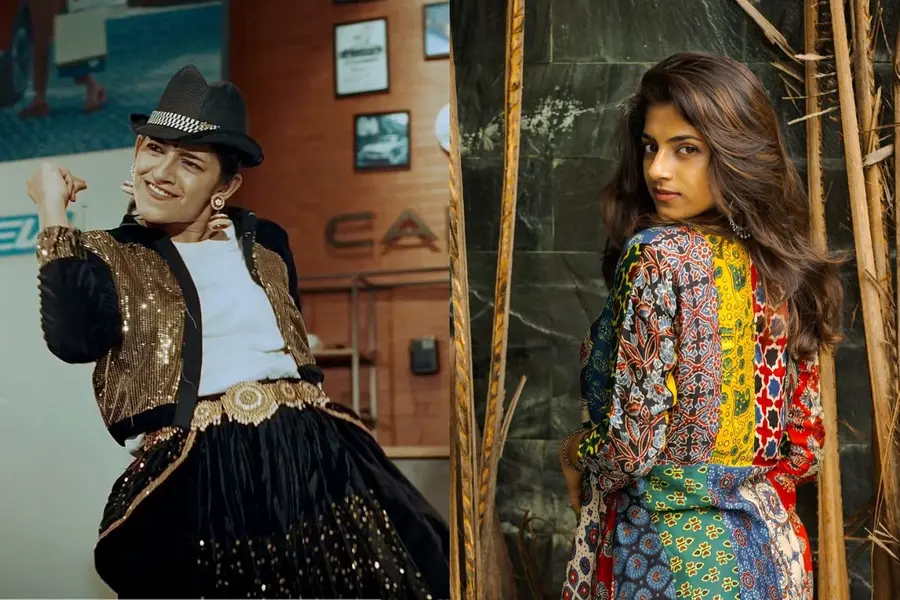
Dancer and actor Sarangi Shyam, who has spent years training and performing across classical and contemporary dance forms, recently found herself in the global spotlight after one of her fusion performances resonated with audiences around the world.
The Thiruvananthapuram-based artiste recently became an internet sensation after a dance video set as a tribute to Michael Jackson’s iconic 'Billie Jean' amassed more than 19.9 million views online. The performance, which blended the elegance of Bharatanatyam with the energy of hip-hop, struck a chord with viewers far beyond the dance community, drawing praise from audiences in India and overseas.
For Sarangi, however, the viral success was years in the making. Having trained in classical dance forms from childhood before later immersing herself in Western dance styles, she gradually developed a distinctive artistic identity built around bringing seemingly contrasting traditions together.
A journey that began at six
Dance entered Sarangi’s life at an early age.
“I started dancing at the age of six. I started with classical dance forms like Bharatanatyam, Mohiniyattam, and Kuchipudi. Then, around my 11th or 12th standard, I started pursuing hip-hop at dance studios in Trivandrum. My body was able to adapt to both western and classical styles, so I began doing fusion choreographies.”
Her artistic journey evolved further during her time at Madras Christian College, where she was a member of both Eastern and Western dance teams. Training extensively in both disciplines helped her become comfortable switching between contrasting movement styles, eventually leading her to develop a fusion approach that has now become her signature.
Performing ‘Street O Classical’
The style Sarangi performs has a name of its own.
“Yes, the style I pursue is called ‘Street O classical,’ which is a fusion of street styles like hip-hop, locking, and light feet with classical dance forms.”
One of the dancers who helped shape her creative vision was Swetha Warrier.
“Swetha Warrier is one of my inspirations. I saw her on India's Best Dancer Season 1; she introduced the style, and it was very similar to my ideology.”
Sarangi embraced and developed her own approach to Street O Classical, using it as a platform to bring together the traditions she had trained in and the contemporary forms she later explored.
Paying tribute to the King of Pop
The idea behind the viral 'Billie Jean' performance emerged from a personal connection to the song.
“After watching the movie 'Michael', I developed a personal attachment to that song because I loved the entire picturization in the movie. So I wanted to pay a tribute to the king of pop in my own style.”
The concept came together remarkably quickly.
“The entire concept and costume design took about a week. However, the actual choreography, practice, and shoot took only two to three days.”
Balancing two different worlds
Bringing together classical dance and hip-hop is not without challenges. According to Sarangi, the most difficult aspect is ensuring smooth transitions between two fundamentally different forms.
“The most challenging thing is the transition from one style to another. During college, I was in both the Western and classical teams, practising both for hours daily, so my body became flexible enough to adapt to both simultaneously. For the Michael Jackson tribute, there was no common ground because they are contrasting styles; the challenge was mixing that MJ swag with classical grace. I don't think I faced any clashes or anything because the song was so good that I had to do justice to it as well.”
For her, technical precision and respect for both traditions remain central to every performance.
“You should understand and respect both cultures and justify them. The transitions are the essence; when people say the transition is seamless, that is the greatest reward for me. I focus more on the techniques than just the mindset.”
Designing a costume that tells the story
The visual presentation of the performance was as carefully planned as the choreography itself. Sarangi personally designed the costume to reflect the duality of the dance style, combining visual elements associated with Michael Jackson and Bharatanatyam.
“I divided the body into two parts: the upper half and the lower half. I was confused about whether I should incorporate my MJ style into the lower half or the upper half. But then the shiny jacket stood out more. So I thought, okay, the upper half would be Michael Jackson style and the lower half would have the culture and tradition of Bharatanatyam. The shoes were the challenging part because shoes are one of the most important aspects of Michael Jackson's dance choreographies, but in Bharatanatyam we can't use them because it's considered disrespectful. So we tried to incorporate no-show socks on top of white socks because we were wearing ghungroo (chilanga). That's how I came up with the costume.”
Responding to critics of fusion
While many viewers have embraced her approach, Sarangi acknowledges that not everyone supports blending classical art forms with contemporary styles. Her response is direct.
“My choreographies are not meant for that kind of audience, very frankly speaking, because it's all about uniqueness and innovation, like trying out new things. I think that's what an artist should do. We should have the freedom to explore and try out new things, not just hold on to old, already established rules. I am open to constructive criticism, but if you can't accept that, you don't have to watch, because it's not meant for that kind of audience.”
What would Michael Jackson think?
Asked what Michael Jackson might appreciate most about the performance, Sarangi pointed to the creative blending of styles.
“I think the choreography would be the highlight, I guess, because of how I've fused these two styles. I think that would have created an impression.”
The 'Billie Jean' tribute is only one example of Sarangi’s unconventional creative thinking. She has also experimented with concepts such as 'Shakuntala and Shakira' and conducted workshops built around similarly inventive themes.
Her ideas often emerge from an intense relationship with music.
“I am addicted to music and listen to it 90% of my day. When I hear certain songs, my body starts grooving automatically. I try to bring fresh, unique concepts, like incorporating mythological characters into this era. That's how I came up with ‘Shakuntala and Shakira’.”
Stepping into cinema
Alongside dance, Sarangi has also ventured into acting. Her breakthrough screen opportunity came through social media when her dance content caught the attention of filmmakers behind 'United Kingdom of Kerala'.
“The audition call came through Instagram after they saw one of my dance videos. I initially auditioned for a character role but was selected as the heroine. There were ups and downs, and the film actually helped in shaping me personally in my character development.”
Despite her presence in cinema, her primary passion remains unchanged. When asked whether she is more drawn to dancing or acting, her answer was brief:
“Dancing.”
Family, future, and new directions
Sarangi credits much of her success to a family deeply rooted in the arts.
“My family is my strength. My father is a singer, my mother used to dance, and my brother is also in a creative field. They are all very artistically creative people. So they've been very supportive from the beginning itself and they're still there for everything.”
Away from dance and acting, she enjoys playing badminton and is working on developing a regular reading habit.
Looking ahead, she says several opportunities are under discussion, though nothing has been finalised. She is also increasingly interested in directing, having already taken charge of her own dance videos.
Published: 14 Jun 2026, 02:50 pm IST
ABOUT THE AUTHOR
Related Topics
Disclaimer: Kindly avoid objectionable, derogatory, unlawful and lewd comments, while responding to reports. Such comments are punishable under cyber laws. Please keep away from personal attacks. The opinions expressed here are the personal opinions of readers and not that of Mathrubhumi.