
Former Chief Election Commissioner S.Y. Quraishi speaks about SIR, large-scale voter deletions, the independence of the Election Commission, delimitation, women’s reservation, One Nation One Election and electoral reforms.
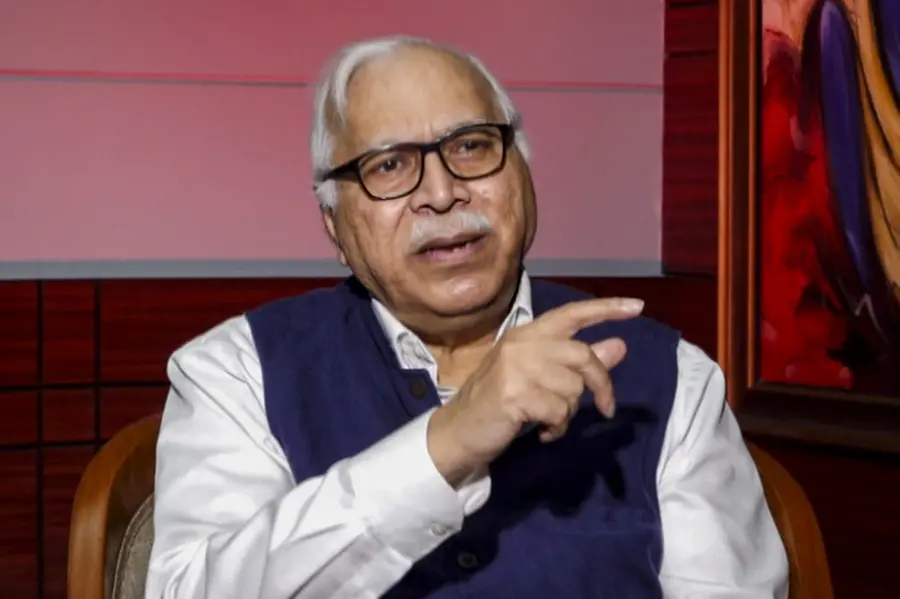
SY Quraishi served as India’s Chief Election Commissioner from 2010 to 2012. Known for his interventions to uphold the independence and constitutional role of the Election Commission, Quraishi introduced National Voters Day during his tenure. His latest book, India and I: A Hundred Memories, Not a Memoir, reflects on his years in public service and his experiences with India’s political and electoral system.
Quraishi has also emerged as a vocal critic of the ongoing Special Intensive Revision (SIR) of electoral rolls, raising concerns over the exclusion of legitimate voters and the need to protect voting rights.
In a conversation with Mathrubhumi’s Delhi Bureau Chief Correspondent, Quraishi speaks about the SIR exercise, the independence of the Election Commission and the importance of protecting the right to vote.
You revealed in your new book that, in 2012, former PM Dr Manmohan Singh issued a sharp warning over ministers making loose talk about the functioning of the ECI. It was during the UP assembly elections, and Union Minister Salman Khurshid was censured for allegedly violating the MCC; he locked horns with the then CEC, SY Qureshi. Now, another UP assembly election is nearing, and in the name of SIR, huge voter deletions are going on in the entire country. In Uttar Pradesh alone, 2.8 crore existing voters have reportedly been deleted. Does this raise concerns about the Election Commission’s credibility and impartiality? What is your assessment of the situation?
The incident I have narrated from 2012 has a lesson for today. There was a serious confrontation between the Election Commission and some Union Ministers during the UP elections. But what impressed me was Prime Minister Manmohan Singh’s instinctive concern that the independence and dignity of the Election Commission should not be undermined by his own ministers. Whatever the political inconvenience, the constitutional institution had to be respected.
The figure of 2.89 crore deletions in Uttar Pradesh was from the draft roll; after claims and corrections, the final net deletion was about 2.05 crore. But even that is an enormous number. When crores of existing voters disappear from a roll, the burden is on the Election Commission to explain, transparently and convincingly, how and why this happened.
The electoral roll is the foundation of an election. If a genuine voter is wrongly excluded, everything that follows — the EVM, polling station, counting and result — becomes irrelevant for that citizen. My concern is therefore not merely about numbers. It is about public confidence. The Election Commission has always derived its real power not from Article 324 alone but from the trust people repose in its impartiality. Once that trust is shaken, restoring it becomes the Commission’s most urgent task.
You were the Chief Election Commissioner, who made lots of reformations in ECI. In your opinion how should be the functioning of ECI and especially CEC?
I have always believed that the Election Commission must be fiercely independent, transparently neutral and visibly fair. Neutrality is not enough; neutrality must also be seen.
I recently described the philosophy quite simply: the ruling party needs regulation; the Opposition needs reassurance. The Election Commission must provide both. A government already possesses enormous administrative and political power. The Opposition needs confidence that the referee is genuinely independent of the player in power. The CEC should therefore be accessible, communicative and fearless. Every important decision should be explained. Questions should be answered rather than treated as attacks on the institution. Political parties are stakeholders in the electoral process, not adversaries of the Commission. The Election Commission is also a three-member constitutional body. Its strength should come from institutional decision-making, not from the personality of any one individual.
Ultimately, a CEC should remember one simple thing: the Commission’s authority increases when governments are occasionally unhappy with it, but everyone trusts it.
The present CEC, Gyanesh Kumar, always says that free and fair elections require purified electoral rolls and therefore SIR is a constitutional duty. How do you react?
Nobody can disagree with the objective of a clean electoral roll. I spent six years in the Election Commission, including as CEC, and we constantly worked on the health of the rolls — removing the dead and duplicates, correcting errors, enrolling missing women and young voters, studying age cohorts and elector-population ratios. But purification cannot become a synonym for deletion. An electoral roll has two kinds of possible errors: inclusion of an ineligible person and exclusion of an eligible citizen. Both are errors. In a democracy, excluding a genuine voter is an extremely serious error because Article 326 says that every eligible citizen “shall be entitled to be registered as a voter.” The law already provides several methods — continuous updating, summary revision, intensive revision and even special revision of a constituency or part of it. Section 21(3) of the Representation of the People Act, 1950 specifically allows a special revision for a constituency or part of a constituency, with reasons to be recorded. My question has always been: why was it necessary to virtually reopen the entitlement of millions of existing voters who had voted in elections conducted only months earlier? If an extraordinary exercise is undertaken on this scale, the reasons must be equally extraordinary and transparently stated. A clean roll is essential. But a clean roll means every eligible citizen in and every ineligible person out — not simply the maximum number of deletions.
Now, the 3rd phase of SIR is going on. You vehemently opposed the SIR, but even in West Bengal, it was done with the Judicial concurrence of the highest Judicial body. Now, nobody in the opposition is reacting with that much intensity against the mass voter deletions. What do you think? May the voter deletions lead to the denial of a level playing field? What do you think?
Judicial scrutiny must, of course, be respected. The Supreme Court upheld the legal power of the Commission to conduct an intensive revision. But that does not mean that every deletion made under an otherwise lawful exercise automatically becomes correct. West Bengal actually demonstrates the importance of this distinction. A very large number of cases
went before the appellate tribunals. Among the first 82,782 appeals decided, more than 91 per cent resulted in inclusion or restoration. That is a remarkable statistic. If nine out of ten decided cases result in the voter coming back onto the roll, surely it raises questions about the quality of the original exclusion. Nor does the silence or reduced intensity of political opposition validate an administrative process. Constitutional rights do not depend upon how loudly political parties protest. The level-playing-field issue is very serious. If wrongful exclusions occur disproportionately in particular constituencies, communities or social groups, they can potentially affect electoral outcomes. Even where there is no deliberate targeting, errors on such a gigantic scale can distort representation. The purity of an election begins with the purity of the electoral roll — and purity requires protection against wrongful exclusion as much as wrongful inclusion.
Do you think electoral rolls without SIR are foolproof?
Certainly not. No electoral roll anywhere in the world is foolproof. People die, migrate, change residence and attain voting age every day. Duplicates arise. Errors occur. That is precisely why electoral rolls are living documents and why the law provides continuous updating and periodic revision. The choice is therefore not between SIR and a perfect voter list. The real question is whether imperfections should be corrected through continuous, evidence-based revision or by treating millions of already registered voters as though their eligibility must be established afresh. My preference has always been: identify the problem, target the problem and correct it. If a particular constituency or part has abnormal data, investigate it intensively. But do not presume that the entire electoral roll is junk merely because imperfections exist.
BJP leaders and top ministers, especially the Home Minister, are always defending SIR, even when the concern within society is increasing more and more. In West Bengal, the SIR process is not yet completed even now. The narrative is that wiping out the infiltrators is the main reason behind the purification process. Is it the duty of the ECI to check the voters' citizenship? Does the Constitution mandate this?
This requires an important distinction. Under Article 326, only an Indian citizen is entitled to be registered as a voter. Therefore, the Election Commission and Electoral Registration Officers certainly have a responsibility to ensure that a non-citizen is not enrolled. The Supreme Court has also recognised the Commission’s power to examine citizenship insofar as it relates to eligibility for the electoral roll. But the Election Commission is not the country’s citizenship tribunal, NRC authority, police force or deportation agency. Where citizenship itself is genuinely disputed, the final determination belongs to the competent authority under the Central Government. Deletion from a voter list does not by itself terminate somebody’s citizenship. This distinction is crucial. The rhetoric of “infiltrators” also makes safeguards especially important. Electoral administration cannot proceed on communal presumptions. Every individual case has to be decided according to law and evidence. I oppose aspects of the exercise on constitutional, legal and electoral grounds. That argument is strong enough without attributing motives for which we have no evidence.
The government is seeking to implement delimitation based on the 2011 Census data. The Opposition has alleged that the delimitation exercise in Assam has favoured the BJP and that it has affected the level playing field. The BJP has now said that women’s reservation should be implemented by increasing the total number of Lok Sabha seats. Do you consider this a genuine proposal, and how do you view the argument behind it?
I strongly support women’s reservation. What I question is the proposition that we must enlarge the Lok Sabha in order to give women representation. Why should women be given additional chairs? They are entitled to one-third of the chairs already there. I have argued that 543 should remain 543. One-third of the existing seats can be reserved for women. If population growth requires more representatives for day-to-day governance, State Assemblies can be enlarged, because most matters directly affecting citizens — roads, water, schools, hospitals, policing, municipal administration and land — fall primarily within the State sphere. The government has repeatedly argued that if the Lok Sabha is enlarged by, say, 50 per cent, seats will be increased proportionately among the States. That sounds reassuring, but Parliament does not vote in percentages; it votes in actual numbers. Today Uttar Pradesh has 80 MPs and Tamil Nadu 39 — a gap of 41. If both were increased by roughly 50 per cent, UP would have about 120 and Tamil Nadu about 59. The gap would then become about 61. So even when the proportion remains broadly similar, the absolute difference in parliamentary power increases substantially. That is the federal issue that cannot be wished away by the word “proportionate”. The government’s proposal contemplated increasing the Lok Sabha strength substantially while undertaking delimitation. I remain unconvinced that such an enlargement is either necessary or desirable. Assam should also make us cautious. There have been serious allegations that the delimitation altered the political weight of particular communities and regions, and subsequent election results have intensified that debate. I would not pronounce upon partisan motives without evidence, but delimitation must never acquire the appearance of gerrymandering. Constituency boundaries determine political power. Therefore, the process has to command exceptional public confidence. Women’s representation is a constitutional imperative. Increasing the Lok Sabha is a political choice. The two should not be confused.
What is your view on One Nation, One Election?
From the Election Commission’s administrative point of view, simultaneous elections are actually easier. The voters are the same, polling stations are largely the same, and much of the machinery is common. With sufficient EVMs and security forces, the Commission can conduct them. My concerns are democratic and constitutional rather than administrative. India is a Union of States, each with its own political cycle. Governments fall. Coalitions collapse.
Assemblies can lose their majority. What happens then? Do we extend an Assembly beyond its
mandate? Curtail another Assembly’s legitimate term? Hold an election only for the remainder of a five-year cycle? There is also the danger that a massive national campaign will overshadow State and regional issues. Lok Sabha and Assembly elections ask different political questions. Federal democracy benefits from voters being able to judge governments separately. The original idea also spoke about all three tiers, including local bodies. That has subsequently been diluted. I am not doctrinaire about simultaneous elections. India had them in the early years of the Republic. But such a fundamental restructuring of our parliamentary and federal system should come through broad national consensus, not by imposition. Administrative convenience cannot be the overriding principle of constitutional design.
How do you view the recent Gen Z protests and growing frustration among young people?
I see an important democratic message in what has happened. Young people demonstrated that peaceful public pressure can still produce accountability. Whether one agrees with every demand or every method of the movement is secondary. Governments listening and citizens protesting peacefully are not signs that democracy has failed; they are signs that democracy is functioning. There is clearly a deeper frustration among young Indians over competitive examinations, paper leaks, unemployment, the quality of education and uncertainty about the future. India repeatedly speaks of its demographic dividend. But a demographic dividend can become a demographic anxiety if educated young people feel that opportunities are shrinking or that institutions are not treating them fairly.
The farmers’ agitation earlier demonstrated the same democratic principle: sustained peaceful mobilisation can compel governments to reconsider. The lesson for governments should not be to fear young people. It should be to listen before frustration becomes agitation. At the same time, youth movements will retain their moral strength only if they remain peaceful, constitutional and focused on accountability rather than hatred.
You, along with several prominent Muslim scholars, recently met RSS chief Mohan Bhagwat. There are allegations that the RSS’s larger objective is to transform India from a secular republic into a Hindu Rashtra, and that the SIR exercise, being carried out in the name of identifying and removing illegal immigrants, could also serve such an agenda. Against this backdrop, why did the scholars place their trust in the RSS leadership and engage in dialogue with them? What was discussed during the meeting, and what did Mohan Bhagwat tell you?
First, a factual clarification. The principal meeting with Mohan Bhagwat that I have written about took place in August 2022, not recently. It has attracted fresh attention because I have discussed it
in my new book. And we did not go there because we had suddenly developed “trust” in the RSS. Almost the opposite. We were deeply disturbed by lynchings, hate speeches, bulldozer politics and the growing
insecurity among Muslims. We felt that instead of speaking only among ourselves, we should go to what we considered the fountainhead of this discourse and complain directly. Dialogue does not mean endorsement. You normally need dialogue most with people with whom you disagree.
Mr Bhagwat listened patiently. He told us, among other things, that he could not imagine a Hindu Rashtra without Muslims and that Hindu-Muslim reconciliation was necessary for India’s progress.
We also discussed terminology, hate speech and several grievances of the Muslim community. The dialogue continued subsequently and, in my view, it has been useful. Whether statements translate into action is, of course, the real test. I remain a strong believer in dialogue because the alternative is permanent hostility. As for linking SIR to an RSS plan to exclude Muslims, I would not make an allegation for which I
do not have evidence. I have been strongly critical of SIR, including the danger of disproportionate exclusion, but I prefer to challenge it on demonstrable facts and constitutional principles.
Based on your experience as Chief Election Commissioner, and in light of the experiences and observations shared in your new memoir, how would you compare the leadership styles and approaches of Prime Minister Narendra Modi and former Prime Minister Dr Manmohan Singh?
I would be cautious about making a personal comparison because I had direct institutional dealings with Dr Manmohan Singh when I was Chief Election Commissioner, whereas Narendra Modi became Prime Minister after I had left the Election Commission. What I can speak about first-hand is Dr Singh. The 2012 episode described in my book left a deep impression on me. Some senior ministers were publicly attacking the Election Commission over its enforcement of the Model Code. When the matter reached the Prime Minister, his concern was that his government’s actions should not create an impression that it was undermining the Commission. His reaction demonstrated a particular conception of institutional propriety: governments may disagree with constitutional bodies, but they must preserve their independent space. With Prime Minister Modi, I can comment only on the public institutional record, like any other citizen and former CEC. I have expressed concerns about the declining trust between the Election Commission and sections of the Opposition and about the system of appointment of Election Commissioners. For me, the test of any Prime Minister is very simple. A constitutional institution proves its independence not when it agrees with the government, but when it can disagree with the government without fear of consequences. Prime Ministers will come and go. The institutions must outlive all of them.
At the beginning of every election, the Election Commission enforces the Model Code of Conduct (MCC) to ensure a free and fair electoral process. Despite this, violations of the MCC and attempts to influence the democratic process remain widespread. In this context, do you think the MCC should be strengthened with more stringent and enforceable provisions?
My position on this has remained remarkably consistent since I was CEC. I do not favour making the entire Model Code of Conduct statutory. The MCC is effective precisely because the Election Commission can act immediately. I used to describe it as a fire brigade —when a fire starts during a campaign, you have to put it out immediately. If every MCC violation becomes a statutory offence requiring litigation, appeals and prolonged court proceedings, the election may be over long before the case is decided. The violator would have already enjoyed the benefit of the violation. That does not mean serious misconduct should go unpunished. Provisions of the Representation of the People Act and other criminal laws dealing with hate speech, bribery, communal appeals, intimidation and other electoral offences should be strengthened where necessary, penalties should be realistic, and enforcement must be swift. But the biggest problem is often not lack of law. It is consistency of enforcement. The Commission must act against a ruling-party star campaigner with exactly the same speed and firmness with which it acts against an Opposition candidate. The MCC already has teeth. What matters is the willingness to bite — impartially and in time.
Published: 19 Sept 2026, 03:12 pm IST
Related Topics
Disclaimer: Kindly avoid objectionable, derogatory, unlawful and lewd comments, while responding to reports. Such comments are punishable under cyber laws. Please keep away from personal attacks. The opinions expressed here are the personal opinions of readers and not that of Mathrubhumi.
