
A stronger, faster indigenous torpedo will help replace aging weapons and ensure the Indian Navy remains ready for future threats.
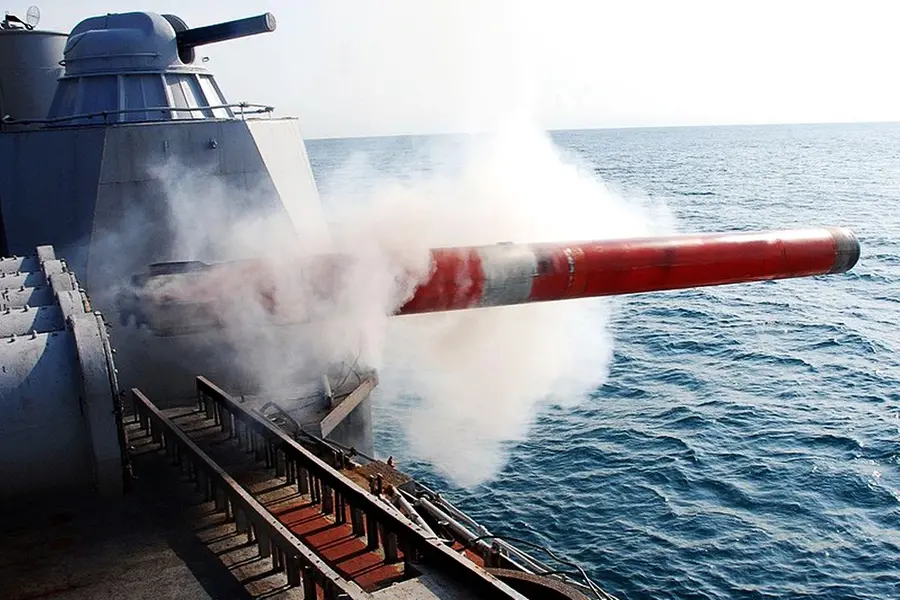
As underwater threats intensify across the Indo-Pacific, India's premier naval research laboratory is engineering a dramatic upgrade to its homegrown torpedo technology -- one that could reshape the balance of power beneath the waves.
The Naval Science and Technological Laboratory (NSTL), part of the Defence Research and Development Organisation (DRDO), is developing an improved version of its Indian-made Lightweight Torpedo.
While maintaining the proven 25 km operational range, the new model will feature major internal upgrades designed to outpace and outlast enemy submarines in the increasingly contested waters of the Indian Ocean.
Understanding the Weapon
A torpedo is a self-propelled underwater weapon used by submarines, ships, or aircraft to hit and destroy enemy vessels. It moves through water autonomously and explodes on impact, making it one of the most critical tools in modern naval warfare.
The Current System: Shyena's Legacy
The foundation for this upgrade is the Shyena system, developed in 2012 as India's first indigenous lightweight torpedo by NSTL in Visakhapatnam. Manufactured by Bharat Electronics Limited (BEL), this torpedo represents a significant milestone in India's quest for self-reliance in defense technology.
The Lightweight Torpedo, also called the Advanced Lightweight Torpedo (ALWT), serves as a vital weapon for the Indian Navy in anti-submarine warfare. It can be launched from aircraft, helicopters, or ships, offering a powerful combination of speed and accuracy.
The current system weighs about 300 kg, measures 533 mm in diameter, and carries a 50 kg high-explosive warhead. It uses both active and passive acoustic homing to find targets in deep and coastal waters, even under strong countermeasures. Active acoustic homing means the torpedo sends out sound pulses and listens for echoes to locate targets; passive acoustic homing means it silently listens for noises -- like propeller sounds -- from ships or submarines.
Its current top speed is about 33 knots (≈61 km/h), a capability NSTL now plans to dramatically improve.
Why This Upgrade Matters Now
This project supports India's goal of self-reliance in underwater warfare, especially as tensions grow with China and Pakistan in the Indo-Pacific region. China's Navy (PLAN) is deploying advanced submarines, such as the Type 039A Yuan-class, and increasing its presence in the Indian Ocean, creating greater security challenges for India in protecting its maritime borders and interests.
Additionally, the Indian Navy's stock of older Italian-origin A244-S torpedoes is running low. A stronger, faster indigenous torpedo will help replace aging weapons and ensure the navy remains ready for future threats.
The Game-Changing Upgrades
According to idrw.org, the new variant will incorporate major internal changes, including advanced propulsion and battery technologies to make the torpedo faster underwater while providing longer endurance for tracking submarines and ships over extended distances.
The numbers are striking: The upgrades aim for a 42% speed increase, potentially reaching 47 knots (≈87 km/h). Despite this performance boost, the 25 km range remains unchanged, ensuring compatibility with P-8I Poseidon aircraft and HAL Dhruv helicopters.
Revolutionary Power Source
This upgrade is built on NSTL's research into high-energy Magnesium–Silver Chloride (Mg-AgCl) batteries, which produce about 100 kW of power. These batteries store more energy in less space and deliver greater power and speed for longer periods underwater.
The challenge has always been maintaining motor and sensor operation during extended searches. Current lightweight torpedoes using silver-zinc batteries deplete rapidly when the weapon accelerates or must evade threats, potentially causing loss of speed or tracking ability during long, high-energy pursuits.
NSTL's solution includes enhanced energy management systems that enable extended "powered loiter" -- allowing the torpedo to remain operational longer, actively search for quiet submarines or surface ships, and avoid premature shutdown.
Smarter Hunting Technology
Additional internal upgrades include improved acoustic homing software to distinguish real targets from decoys, and a stronger structural design to withstand high-speed underwater maneuvers. The acoustic homing software means the torpedo's onboard computer analyzes incoming sounds, filters out fake signals or background noise, and steers toward the true target.
The ALWT second-generation torpedo already features microprocessor-controlled guidance (a small onboard computer that reads sensors and steers automatically) and wire-command control (a thin cable allowing human operators to send instructions during its run). The new variant's AI-driven autonomy adds an onboard "brain" that can recognize genuine targets, ignore decoys, and make split-second decisions independently -- dramatically improving accuracy and reliability in complex underwater situations.
These enhancements build on lessons learned from over 24 developmental trials conducted between 1998 and 2005.
India's Expanding Torpedo Arsenal: Varunastra: The upgraded Lightweight Torpedo will complement the Varunastra, a 1,500 kg heavyweight torpedo also developed by NSTL and inducted into the Navy in 2016. Varunastra can travel 40 km at speeds exceeding 40 knots (≈74 km/h).
New orders for Varunastra torpedoes, approved by the Defence Acquisition Council in March 2025, demonstrate the Navy's strong commitment to Indian-made weapons. NSTL is currently developing submarine-launched versions capable of ranges beyond 50 km, further enhancing India's underwater strike capabilities.
Next-Generation Systems
NSTL's innovation pipeline extends far beyond lightweight torpedoes:
Supercavitation Torpedoes: The lab is developing ultra-high-speed torpedoes exceeding 80 knots (≈148 km/h) by creating a gas bubble around the weapon, dramatically reducing water friction. These will be tailored for Scorpène-class submarines and INS Visakhapatnam-class destroyers for rapid, high-speed strikes.
Electronic Heavy Weight Torpedo (EHWT) Takshak: Procured from France's Naval Group for ₹877 crore in December 2024 and fitted on Kalvari-class submarines, this torpedo uses advanced electronic countermeasures to detect enemy sensors and decoys, jamming or confusing them for safer, more accurate attacks.
SMART System: The Supersonic Missile-Assisted Release of Torpedo extends India's reach up to 900 km. This innovative system uses a supersonic missile to carry a torpedo close to the enemy, then releases it for a safe mid-air separation. The torpedo enters the water, activates its engine and sensors, and homes in on the target -- combining long range, high speed, and tactical surprise. Think of it like a fast delivery drone dropping a rescue boat near a stranded swimmer, with the boat then reaching the swimmer independently.
Economic and Strategic Impact
The Lightweight Torpedo's development also advances India's export ambitions under 'Make in India.' With over 95% indigenous content in systems like Varunastra, NSTL's new upgrades could attract international customers -- Vietnam was already offered Varunastra variants in 2016.
Production by BEL and Bharat Dynamics Limited (BDL) will engage small and medium industries (MSMEs), creating jobs and promoting technologies with potential civilian applications in fields like underwater robotics and autonomous systems.
The Path Ahead
As NSTL transforms into a hub for next-generation naval weapons, these parallel development efforts signal India's determination to achieve technological self-reliance in underwater warfare.
The upgraded Lightweight Torpedo represents more than just faster speeds and longer endurance -- it embodies India's strategic vision of maintaining maritime superiority in an increasingly contested Indo-Pacific region.
With Chinese submarines prowling closer to Indian waters and regional tensions simmering, these indigenous torpedo systems provide the Indian Navy with the tools it needs to protect the nation's maritime interests while reducing dependence on foreign weapons systems. The message is clear: India's underwater defenses are getting faster, smarter, and deadlier.
The author is a defence, aerospace & geopolitical analyst.
Published: 06 Oct 2025, 01:58 pm IST
Related Topics
Disclaimer: Kindly avoid objectionable, derogatory, unlawful and lewd comments, while responding to reports. Such comments are punishable under cyber laws. Please keep away from personal attacks. The opinions expressed here are the personal opinions of readers and not that of Mathrubhumi.
