
The autumn issue of the oldest film journal in English in 1952 initiated a unique parameter to define what a good film is. They asked the filmmakers and also critics to name the ten best films they saw in their lifetime. The announcement in the journals read as follows; “As a sequel to the Brussels Referendum (featured in the previous issue of Sight & Sound), in which about one hundred film directors were asked to vote for what they considered the Ten Best Films of all time, we decided to ask critics the same question. Eighty-five critics, from Britain, France, the United States, Italy, Germany, Denmark, Sweden, Belgium, Czechoslovakia, and Yugoslavia, were asked, and 63 responded; the cooperation is much appreciated.”
Since then every decade Sight and Sound the “mother of all film journals” published by the British Film Institute, across the world continues with the practice of asking filmmakers, critics, and scholars of films to rate the all-time bests in a decadal voting. What started as a group of 63 from Europe in 1952 has grown to over 1600 selected filmmakers and film writers around the world in 2022.
For Indians interestingly there is only one film that features in the list consistently, though not in the first 10 but in the first 100. That undoubtedly is the Satyajit Ray classic Pather Panchali. In the 1962 rating Ray's first film released in 1955 was 11th in the list. The film however got pushed down in the ratings in 1972 and 1982, only to emerge as No.6 all-time great in 1992, soon after Ray died after being honoured with a special Oscar. In 2002 the film disappeared from the list but came back in 2012 and 2022 when Sight and Sound expanded the list to 100 films. As per ratings of the filmmakers and scholars in 2012 the Ray film emerged as the 42nd among the 100 all-time greats and it further moved up in its rating to 35 in 2022.

Interestingly, Pather Panchali, remains the only film from India in the list of 100 all-time greats, even when they publicised only 10 odd numbers and now when expanded to 100 in the last decadal voting. Like an old vine, the first film of Ray whose 103rd birthday fell on May 2, has etched its place in the global bests along with maestros and being appreciated by connoisseurs across the globe.
Unlike in earlier decadal voting, Sight and Sound asked the participants to express their feelings about their list of best films. In 2022, adjudging Pather Panchali, as the first in his list of ten, German filmmaker Volker Schlöndorff made a very poignant remark which must make every film-loving Indian proud. “I dunno any more what a good film is, even less what the best is, but I know which ones I like best, depending on the days, in no particular order. This one for the boy, for his grandma who waters the weeds by the house, for Ravi Shankar's music, for the spotting of his complaint after his big loss, for the photography, for the sensuality of the countryside, for the sadness of childhood and all the hope of it”, Schlöndorff, poured out his emotions about the Ray film. It is obvious from his emotional outpouring that the film hit the German filmmaker hard.
Adoor Gopalakrishnan, who is considered as the worthy successor of Ray in Indian films also could not but give rave comment on the film he first saw in his college days. “The lyrical realism of the film encapsulated life as lived in a village in India with great artistry and humanity, and as never before. Indian cinema can be seen in two parts – one before Pather Panchali and the other post-Pather Panchali.” The film has been digitally mastered and reconstructed and showcased in various global classic collections now. The digital collections of USA-based Criterion enhance the visibility of the film universally now as anyone interested across countries can access a good digital print to view the film.
“An incredibly moving story of a poor Indian family. It improves with repeated viewings – a sign of a great film”, was the comment by Australian filmmaker, Bruce Beresford in the 2022 ratings. The Ray film got 22 filmmakers' votes to be honoured with a rating of 35 among the hundred ones, much above the Italian classic Bicycle Thieves of Vittorio De Sica, which was rated at 41, and yet another classic Battleship Potemkin by Russian maestro Sergei Eisenstein whose film came as 54 in the list. It seems the digitally mastered and reconstructed Pather Panchali, has touched the hearts of filmmakers and scholars across the world. The earlier celluloid and digitalised versions of the film had very many technical flaws due to its upkeep of the prints over the years, preventing a full appreciation of the film, it seems.
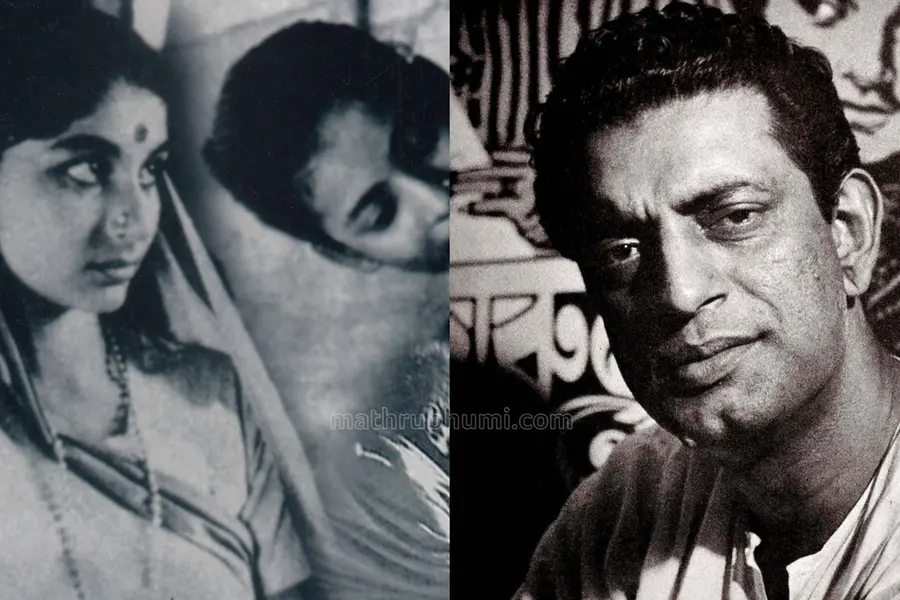
“Bengali film director Satyajit Ray was inspired by the example of Italian neo-realist films such as Bicycle Thieves (1948) to make his own low-budget, open-air drama painting a naturalistic portrait of ordinary lives. Encouraged by Jean Renoir, whom he assisted during the filming of The River (1951), Ray set to work on an adaptation of a 1929 novel by Bibhutibhushan Bandopadhyay about a young boy growing up in an impoverished rural community.
Distinct from the more commercial Hindi films of the time, Pather Panchali announced the arrival of a humanistic, Calcutta-centred Indian art cinema, ultimately paving the way for the emergence of the Parallel Cinema movement of the 1960s. Among the film’s intensely memorable moments is a scene in which Apu (Subir Banerjee) and his sister run through a paddy field to catch a glimpse of a passing train.” The Sight and Sound editors introduced Ray and placed him and his film in a global historic perspective.
What is surprising for the first film of a filmmaker is the superlative adjective that fellow filmmakers of the present generation use in the film. “One's knowledge of cinema isn't complete without having seen Satyajit Ray's Apu Trilogy”, pointed out Anthony Chen, Director, Singapore.
As the first in the 'Apu trilogy', which charts the Indian experience of and into modernity, this film is an important intervention at an important moment of defining an ‘Indian’ national cinema, commented Imruh Bakari, filmmaker/writer/lecturer, Saint Kitts and Nevis/UK, while voting for it.
The best birthday tribute to the master filmmaker Ray is to find out why and how with his very first film, he remains on the top of all the best films in a global rating throughout the decades. Ray and Pather Panchali indeed gave an Indian idiom in the global films, away from the crass commercial of his times. And filmmakers and film historians remember and pay tribute to him for that even today, not just in India, but across the globe.
(The author is a film writer and his latest book is Celluloid to Digital-India’s Film Society Movement.)
Published: 05 May 2024, 08:06 am IST
Related Topics
Disclaimer: Kindly avoid objectionable, derogatory, unlawful and lewd comments, while responding to reports. Such comments are punishable under cyber laws. Please keep away from personal attacks. The opinions expressed here are the personal opinions of readers and not that of Mathrubhumi.