
Dive into the captivating world of Central India's legendary tigers! This feature unveils the extraordinary lives of six iconic big cats
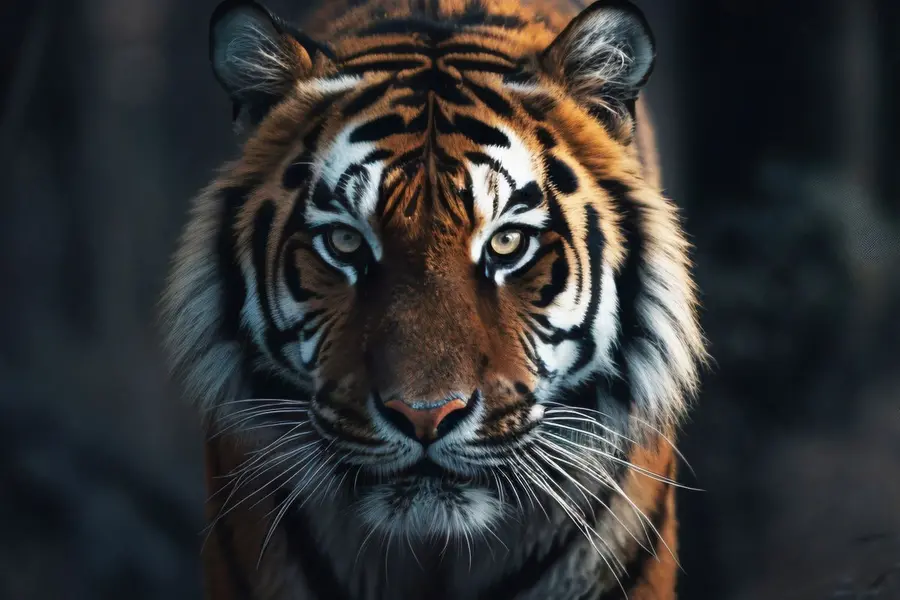
They are the faces that have defined the wild heart of Central India -- tigers whose names echo through forest trails, whispered by naturalists, celebrated by filmmakers and photographers, and remembered by tourists lucky enough to catch a glimpse. These majestic big cats are not just apex predators; they are legends in their own right.
While every tiger is iconic and important in its own way, a few have risen to global fame for their charisma, visibility, and the stories they left behind. From being widely photographed and filmed to shaping the very identity of India's wildlife tourism, these tigers have also played a pivotal role in putting the Indian wilderness on the world map. Their stories live on through the words of seasoned forest officers, renowned filmmakers, and veteran wildlife experts.
This feature dives into the tales of some of the most iconic tigers of Central India -- stories of power, lineage, and legacy that continue to captivate all who love the wild.
Charger & Sita: The royal couple of Bandhavgarh
Known as the ‘Royal Couple of Bandhavgarh’, Charger and Sita are two of the most legendary tigers of India who ruled over the Bandhavgarh Tiger Reserve in Madhya Pradesh during the mid-1990s. Founder-director of Nature Safari India and a wildlife enthusiast, Sharad Vats has seen some of the most prominent tigers of Bandhavgarh Tiger Reserve, including Charger, Sita, B2, and Rajbhera female.
Recalling his cherished memories of Charger and Sita from a time before SLRs and DSLRs existed, Sharad said, "Sita was definitely one of the most beautiful tigresses I’ve ever seen in Bandhavgarh. Charger, of course, was a very strong male tiger. He was named Charger because he would charge at vehicles. I was fortunate since I never got charged by him. I saw from atop an elephant, and I also saw him from a jeep, but he was quite peaceful at least with me. I saw Sita with her cubs. Sita passed away sometime around 1998-1999. Her one litter had three males- B1, B2, and B3. B2 also became a very legendary tiger after Charger."
"Charger and Sita were the first prominent tigers of Bandhavgarh. But during their reign in the 1990s, wildlife tourism had not really taken off. Domestic tourists barely knew anything about wildlife or tiger tourism back then. Some foreigners would go to Bandhavgarh and see the tigers. But as the population increased and as you know, B1 was seen; he was also a very big tiger, but he was partially out of the tourism zone," he added.
The 'royal' duo became prominent because "they were the first ones to establish a national park", said Sharad. He also mentioned how there continues to be a cemetery of Charger at Bandhavgarh. "He passed away at a very mature age, and the last three to four months of his life were quite sad. The old age of a tiger is very painful to see. Charger had lost its eyesight. So, while walking, he would just bump into a tree. All those things started to happen to him. He was put inside an enclosure in the last few weeks of his life and was being fed by the forest department," Sharad said.
According to Santosh Saligram, an author, naturalist, and photographer, who has heard many second-hand accounts of Charger, the tiger, "never harmed anybody but had a plucky attitude". "He had the looks to match his behaviour -- he was extremely large. The most striking feature of Charger was his mane, and he had a long beard which made him appear magnificent,” said Santosh.
Both Charger and Sita came into the limelight after they were featured in documentaries. American photographer Michael Nichols' documentary for National Geographic featured a shot of Charger jumping out of a waterhole. Michael also shot an image of Sita carrying one of her cubs, which was published as the photo cover of a National Geographic magazine. These shots of the two tigers are what made them popular, said Santosh.
Not only this, Santosh recalled another story that he was told about Charger. "He once showed an elusive relationship with his cubs. The fathers, male tigers, don't entertain their cubs much. Of course, they don't kill their own, but it was believed that they don't let their cubs come around them. This myth was broken when an image of B2 (Charger and Sita’s son) emerged in a film, which showed him cuddling and cozying up with Charger."
B2: Showmaster of the wilderness
Another prominent tiger from the wilderness of Bandhavgarh was Sita's son, B2. As per Sharad, he was mostly seen in the tourism zone, and as the cameras became more popular and the DSLRs came in, "B2 really took the show head-on. He was one of the first tourism-friendly tigers in India."
Sharad first saw B2 when he was barely a cub of three to four months. He also saw him once charging at a slot bear. "Once he was charging a sloth bear in the Chakradhara meadow (of Magadhi core zone). We happened to be the only car there. The sloth bear had a young one on top," said Sharad.
Furthermore, Sharad recalled another interesting anecdote where he came right in front of B2. “I also saw B2 once on foot while I was going up to the Bandhavgarh Fort, and he was coming down. The distance between us must be roughly 25 feet to 30 feet. We paused and looked into each other’s eyes. He left the trail and went downhill. I was frozen!"
Sharad credits B2 for starting tiger tourism in India, much before Ranthambore Tiger Reserve's Machali. "I would say that in a way, B2 started tiger tourism across India. He was around even before Machali. He became a tiger who made Bandhavgarh really popular, and people started to go to Bandhavgarh because of B2.”
B2 was one of the favourite tigers of Santosh; he has photographed the tiger multiple time over the years. He first saw B2 in April 2008, when the tiger was only six years old, and instantly fell in love with its huge appearance. Santosh was also in the park when B2 was found dead and was brought for its cremation in November 2011.
Santosh also had a very interesting encounter with B2, which made him believe that the big male cat had some human quality in him. Once, when Santosh had a head-on sighting of B2, and Santosh's vehicle wasn’t moving behind, B2 made a sound that seemed as if he was asking them to make space for him. "It was not a growl, a snarl, or any sign of aggression, just a soft 'oung' sound that he made, after which we moved back, of course," Santosh said.
Machali: ‘Queen of Tigers’
Perhaps one of the most photographed tigers in the world, officially named T-16, Machali was a favourite of wildlife enthusiasts in India and abroad, and reigned over Ranthambore Tiger Reserve in Rajasthan. The name 'Machali' was given to her by tiger conservationist late Fateh Singh Rathore due to a prominent mark on her face that appeared to be like a fish.
Machali's immense popularity came after she was photographed while killing a full-grown crocodile in the water. Recalling the iconic queen of Ranthambore, naturalist Salim Ali, said, "Once, when we were shooting a documentary for BBC called 'Danger In Tiger Paradise', Machali was seen killing a crocodile. Her photograph, clicked by Murlidhar Parashar, went viral. Since then, she became famous.”
But that was not the only thing that made Machali so popular among the visitors of the past. She was known to be a matriarch in the truest sense. "There was also an instance where she boldly fought for her cubs with a male tiger. There was a new male tiger who had come into her area and who hadn’t fathered the cubs. Machali strongly fought against the male to safeguard her cubs," said Salim.
During her lifetime, she was a subject of many wildlife documentaries, including 'Queen of Tigers' and 'World's Most Famous Tiger'. Not just Machali, but her lineage also gained popularity and played significant roles in shaping wildlife tourism and conservation efforts.
Her son, Broken Tail, also became very famous. He left Ranthambore and walked all the way to Darrah National Park in Kota. He is the one who showed the (tiger) corridor.”
While she lived a royal life in Ranthambore, there were many ups and downs in her life. Salim said, "When she was ruling the lakes, poaching was very high at that time, and very few tigers were left in Ranthambore back then. In fact, I am not sure, but it is said that Machli had seen her other son from another little, Slant Ear's death. After that, she became very shy. The tigeress who would walk between 10 cars had now become someone who would run after seeing one car. Slowly, she again got back to her normal self. Several times, she had fights with sloth bears, which have also been documented. Of course, the big crocodile kill that she made is one of the top moments of her glorious life. Machli had also killed quite a few leopards."
Munna: Boldest out there in the wild
Kanha Tiger Reserve, one of the oldest parks in MP, was home to Munna, one of the world's most photographed tigers. His prominent ‘CAT' and 'PM' marks on his forehead made him easily recognizable. Though extremely bold in his appearance and demeanor, Munna was a tourist favourite in Kanha, as he walked along parked safaris, giving some of the most incredible sightings.
Dr Sanjay Shukla, a retired senior officer of the MP forest department, was one who had a couple of unforgettable moments with Munna during the time he was posted in Kanha as the field director in 2017.
The first time the officer encountered Munna was on his way down from the Kanha Ghat when the tiger decided to royally block his way. "Munna was one of the boldest male tigers I have ever seen. He eliminated many male tigers in territorial fights. I still remember that for the initial two to three months (of my posting), Munna was not sighted, maybe because of the monsoon. There were also rumours that he is no more. But once, when I was returning from night patrolling, I had almost reached the end of Kanha Ghat, my driver told me that there was a tiger. I was in an open gypsy. We suddenly saw that it was Munna, since it was easy to recognize him. It was my first sighting of Munna," said Sanjay, mentioning that the 'sighting of almost 40 to 45 minutes'.
But the most striking sighting of Munna that Sanjay had was when he was seen eating a cub. About this, Sanjay said, "I also saw him once eating a tiger cub which was fathered by another male tiger. He had almost eaten half of the cub when I saw him, and it was my first encounter of seeing a tiger eating a cub. I had heard about cannibalism (among tigers), but it was my first sighting."
With time, this once-dominant male of Kanha was pushed out of the core area by other young male tigers. Munna then started to live mostly in the buffer area where he had easy cattle prey available. But once, when he had a conflict with the villagers and allegedly killed a girl, Munna was captured and translocated to Van Vihar National Park in Bhopal.
Sanjay remembered Munna's passing away, since he happened to be at Van Vihar at that time. "Incidently, I was also posted in Van Vihar. I remember taking my father-in-law to Van Vihar. And that is when I spoke to Dr Atul Gupta, since Munna wasn't keeping well, enquiring about Munna's health. He told me Munna wasn't keeping well, and when I went to see him in the enclosure where he was kept, I found that he passed away five minutes before my arrival," said Sanjay.
Munna roared for more than a decade in the jungles of Kanha before breathing his last in November 2021, inside an enclosure in Van Vihar.
Collarwali: Lived like a queen, died like one too
One of the wildlife filmmakers who followed the journey of Collarwali is Nishant Kapoor. Nishant is also one of those who filmed the last moments of the legendary tigress. When asked to recall his moments with Collarwali, he penned his thoughts as follows: "In the forest of Pench, the summers of 2004 seemed like their usual hot and dry - except, under the cool shade of a lone Khair tree beside a dying burbling rivulet, lay 4 tiny cubs. And one of them, the most unassuming one, grew up to be revered as Mataram (or Supermom)."
"No tiger is special unless their story is told. Collarwali is one such tiger. People of science would argue that she is not the first and definitely not the last to give birth to nine litters (a total of 29 cubs). But what makes her extraordinary is the way she touched the lives of all wildlife lovers across the world. First featured in the BBC documentary ‘Tiger: Spy In The Jungle’ as a young cub, it was only most befitting and poetic how Even her last moments were captured on camera," he wrote.
As he recalled her last moments, Nishant wrote: "So when the day came, I was there to film her walking across the meadow beside Bhuradutt Naala. It felt like the forest had transformed into a temple. Vines dangling from a banyan tree like bells at an ancient shrine, the freezing wind and light drizzle crafting a surreal atmosphere. There were chital deer - at least 40 of them, standing totally stunned. No alarm calls or stomping of feet, as if they had seen a demigod emerge from the woods. And while I was filming her, I was joined by the veterinary officer at Pench, who shared his observations and his admiration for her. I had tears in my eyes hearing his words, but somehow continued filming because I knew how important it was to capture these moments. Everyone should see that even in sickness and pain, she was calm and dignified."
Collarwali breathed at last on January 15, 2022, at the age of 16. "Everyone's beloved Collarwali breathed her last that evening. The 16-year-old, mother to 29 cubs, left us with a lot of stories -- and a void. In the past few weeks, she had grown weak from old age. Her extraordinary life is proof of the protection she has had from hard-working individuals. She did not have any injury or disease; she succumbed to just old age. There was nothing to be done - and why do anything? T-15 lived like a queen and died like one.
Even in her last moments, she was regal, confident, and maintained her demeanour. A misty winter sunset, before leaving her body, she chose a spot close to a beautiful stream. The herd of chital finally approached her without caution to pay their regards. She moaned a few times, then passed into the void. We will remember her for how she lived, and also how she died.”
Arrowhead: Tigress with a powerful legacy
The wildlife community continues to mourn the loss of Ranthambore Tiger Reserve’s beloved tigress, Arrowhead, who passed away on June 19. A direct descendant of two legendary big cats -- daughter of Krishna and granddaughter of the iconic Machali -- Arrowhead carried forward a powerful legacy and was one of the most prominent and closely followed tigers of Ranthambore.
Pre-eminent wildlife filmmaker, Shivang Mehta, has mentioned Arrowhead in his book 'A Decade With Tigers'. He also recalled her as a "60-day-old stripped ball" in an obituary post that he put up for her on his social media handle.
Shivang highlighted one of the many similarities that Arrowhead had with her grandmother, Machali, in his post. "She had grown up a bit, and her stripes were more distinct. One mark that caught my attention was a fork mark on her left flank. A fork mark that reminded me of her legendary grandmother,r Machali and I instantly called her Machali Junior," he wrote.
Another similarity that Arrowhead shared with Machali was her aquatic combat skills -- Arrowhead, too, was famous for hunting crocodiles and turtles. Days before her death, Arrowhead was sighted killing a crocodile. But there was also a moment when she was almost drowned by the crocodiles in the water.
Reflecting on the incident, Salim said, "A few years ago, she once charged at a crocodile inside the water. However, to her surprise, she was attacked by three to four crocodiles, who almost drowned her in the water. She was inside the water for around 10 seconds. I think when her legs touched the ground, that is when she jumped out of the water and came back to the ground."
P151: Calm, graceful, breathtaking
Panna Tiger Reserve in Madhya Pradesh stands out as a remarkable example of successful wildlife conservation. After the reserve lost all its tigers, a reintroduction programme was launched by the Forest Department in 2009, leading to the revival of the tiger population in the region. Among the many celebrated tigers of Panna is the tigress P-151.
Born into a legendary lineage that played a pivotal role in the revival of Panna’s tiger population, P-151 is the daughter of T1 -- the pioneering tigress reintroduced from Kanha Tiger Reserve to Panna in 2009, at a time when the reserve had tragically lost all its tigers.
Wildlife filmmaker Farhan Khan recalled his first encounter with the tigress in 2017 as one of the most important moments that led him to make a film on the tiger reserve. "My first visit to Panna was in mid-2017, and that’s when I saw her, tigress P151. She was calm, graceful, and breathtakingly beautiful, walking through the Madla Zone like she owned the forest. That moment left a lasting impression on me. Her presence, combined with Panna's raw and rugged landscape, inspired me to return, explore its stories, and eventually create a documentary on the reserve - 'Panna - The Jewel in the Crown', which was released in 2020," he said.
Recalling her legendary lineage, Farhan said, "Born in 2016 as the fifth litter of tigress T1, P151 is one of the most famous tigresses of Panna, known for her calm nature and strong lineage. Over the years, she has given birth to nine cubs and played a crucial role in repopulating the park with tigers, helping shape Panna into one of India's greatest conservation success stories."
Farhan also credited P151 for the increase in tourism in Panna. "She is a prominent tigress who doesn’t shy away from the tourists. There have been regular sightings of P151, which has added to her popularity. It wouldn’t be wrong to say that she is one of the leading factors behind an increase in tiger tourism in Panna in recent times," said the filmmaker, adding that just like the mother, P151's cubs also grew to become tourist-friendly tigers. P-151 is the sole surviving tiger among those featured in this article.
Published: 01 Jul 2025, 02:52 pm IST
Related Topics
Disclaimer: Kindly avoid objectionable, derogatory, unlawful and lewd comments, while responding to reports. Such comments are punishable under cyber laws. Please keep away from personal attacks. The opinions expressed here are the personal opinions of readers and not that of Mathrubhumi.
