
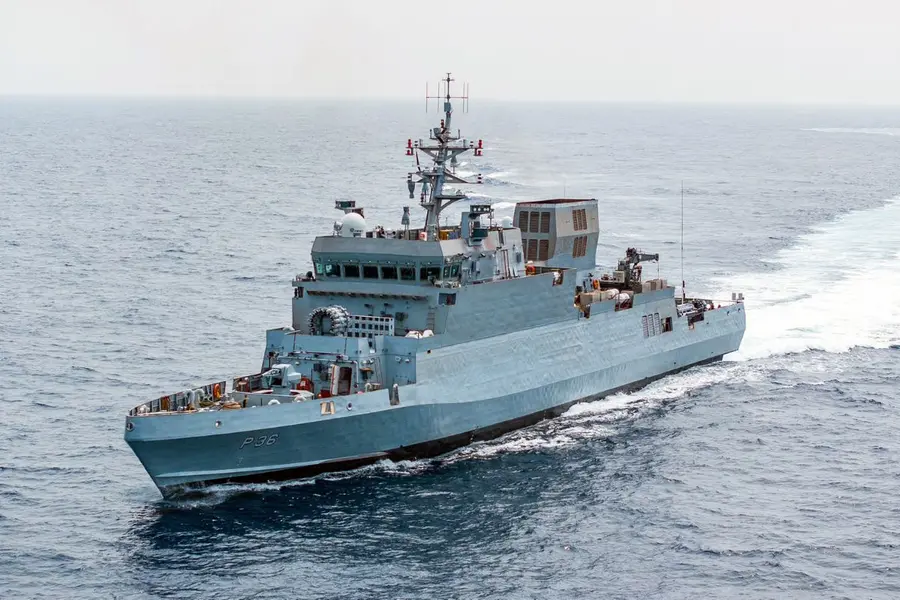
On June 21, the Indian Navy welcomed three brand-new ships into its fleet, and each one has a very different job to do. One is built to fight enemy forces far out in the deep sea, the second can study and map the ocean floor, and the third is made to quietly hunt down enemy submarines hiding near our coastline. Prime Minister Narendra Modi officially commissioned these three vessels — INS Dunagiri, INS Sanshodhak, and INS Agray — in Kolkata. All three were proudly built by Garden Reach Shipbuilders & Engineers (GRSE). This is part of the Navy's steady effort to grow its fleet, with many new ships joining since January 2025.
Let us first meet INS Dunagiri, the biggest and most heavily armed of the three. It is a frigate, which is a warship smaller than a destroyer but still strong enough to travel far away from the coast and complete missions in the open ocean. It is part of the Navy's Project 17A, under which India is building a fresh generation of stealth guided-missile frigates. Now, "stealth" does not mean the ship turns invisible. It simply means the ship is harder for enemy radars and detection systems to spot and follow.
INS Dunagiri carries BrahMos surface-to-surface missiles and a Medium-Range Surface-to-Air Missile system to strike both ships and aircraft. It also has clever sensors like the MFSTAR radar, which detects targets, tracks them, and even guides weapons towards them. Along with sonar, electronic warfare gear, and anti-submarine weapons, it can sense danger both above and below the water. A serving Navy officer explained that such ships work in a "blue water" environment, meaning they operate deep in the ocean, far from land. They can face old-style threats like enemy warships, and also handle newer problems such as piracy, smuggling, terrorism, and disaster relief.
Next is INS Sanshodhak, which is a Survey Vessel Large. Its main job is to study and map the sea — measuring water depth, examining the seabed, finding safe routes to ports, and gathering useful ocean data. To do this, it uses smart tools like Autonomous Underwater Vehicles, Remotely Operated Vehicles, and Multi-Beam Echo Sounders, which collect information from both the surface and the depths below. Why does this matter? Because the sea is not flat and empty. It is full of hidden hills, valleys, strong currents, reefs, and busy shipping routes. Knowing all this helps ships sail safely, lets submarines pick the smartest paths, keeps port maps updated, and helps the Navy plan operations wisely. A Navy officer who served on such ships said this work also supports commercial shipping, disaster relief, ocean research, and coastal development. INS Sanshodhak is the fourth and final ship of the Sandhayak-class series, whose contract was signed back in October 2018.
Finally, we have INS Agray, the smallest ship but with a very special mission. Think of it as a submarine-hunter — built to find, track, and attack enemy submarines hiding in shallow coastal waters near ports, naval bases, and important sea routes. It belongs to the Arnala-class of warships and comes armed with lightweight torpedoes, Indian-made anti-submarine rocket launchers, and sonar systems. Hunting submarines close to the shore is surprisingly tricky.
These "littoral waters" are crowded with fishing boats, commercial ships, and underwater features, all creating background noise that makes submarines very hard to detect. That is exactly why ships like INS Agray are specially designed for this tough job. Submarines are among the hardest things to catch, since they can stay hidden underwater for very long periods.
So why were all three ships commissioned together on the same day? The beauty is that they bring three completely different strengths to the Navy at once — power in the deep ocean, better understanding of the sea, and strong protection of our coastline. As the Indian Ocean grows more competitive, with China and Pakistan increasing their naval activity, India's duties now stretch across the Arabian Sea, the Bay of Bengal, our island territories, and the wider Indo-Pacific. A Navy officer said this shows how the Navy is building strength in layers — big warships for far-off missions, survey ships to understand the ocean, and small hunters to guard the coast.
There is also a proud "Made in India" message here. All three ships have over 75% Indian-made parts, and more than 200 small and medium enterprises helped build them — a clear sign of our growing shipbuilding strength.
(Girish Linganna is an award-winning science communicator and a Defence, Aerospace & Geopolitical Analyst.)
Published: 22 Jun 2026, 11:30 am IST
Related Topics
Disclaimer: Kindly avoid objectionable, derogatory, unlawful and lewd comments, while responding to reports. Such comments are punishable under cyber laws. Please keep away from personal attacks. The opinions expressed here are the personal opinions of readers and not that of Mathrubhumi.
