
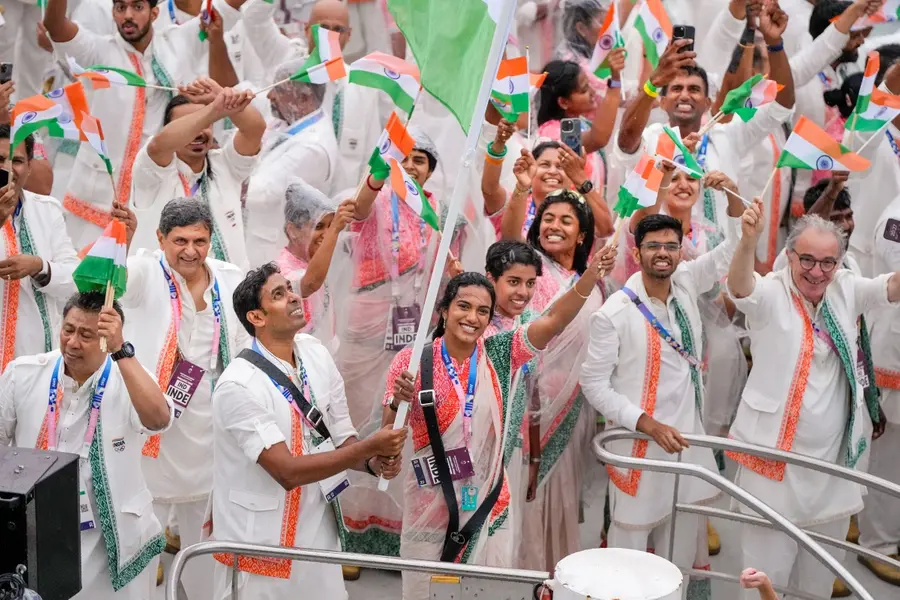
India has, so far, managed to secure three bronze medals in the 2024 Paris Olympics. As a country of over 1.4 billion people, to find itself at the bottom rung of the medals tally at the Olympics begs for some critical soul-searching.
According to long jumper Murali Sreeshankar, who missed the flight for Paris owing to knee injury, the journey to becoming an Olympic champion begins at the grassroots level.
Speaking to Mathrubhumi English, Sreeshankar, who is currently an Olympics Expert for JioCinema and Sports18, shared his insights on how India can enhance its prospects in the global sporting arena.

He emphasised the need for robust grassroots programs, substantial investment in sports education and an overarching cultural shift towards recognising sports as a viable career path.
Sreeshankar highlighted the importance of grassroots development in building a strong foundation for future athletes. "When I visited other countries for training, one thing I commonly observed is their strong grassroots level training programs," he noted.
He stressed that investment in sports education from the school level to the university level is crucial, a practice that is significantly more prevalent in other countries compared to India.
"Not many parents in India encourage their kids to pursue sports as a career. In other countries, sports is considered a profession, much like being an engineer or a doctor," he added.
To change this mindset, Sreeshankar advocates for the inclusion of physical education as an essential part of the school curriculum, highlighting its importance alongside other academic subjects.
Sreeshankar pointed out that the introduction of initiatives like the Target Olympic Podium Scheme and Khelo India Games by the government marks a positive shift towards developing athletes capable of winning Olympic medals.
However, he pointed out the need for patience and continued investment in grassroots programs, educating coaches and building proper infrastructure.
"Excelling at the Olympics is a long-term process," he remarked, "but these efforts will ultimately help in nurturing athletes who can bring more medals for the country."
Reflecting on the achievements of athletes like Neeraj Chopra, who secured a gold medal in athletics, Sreeshankar acknowledged the changing landscape of Indian sports.
"The way the Athletics Federation of India (AFI) and the Sports Authority of India (SAI) are supporting athletes by covering all major aspects of training like sports science, nutrition and psychology is truly commendable," he said. This comprehensive support has already begun to show results and Sreeshankar believes the number of athletes representing India at the LA 2028 Summer Olympics will rise significantly.
Despite the progress, Sreeshankar is candid about the challenges Indian athletes face, particularly in track and field events.
Competing against countries with a long legacy in athletics requires significant investment in grassroots programs, coaching and talent development. "It is difficult to get medals in Track and Field as our athletes have just started in this discipline," he explained.
However, he remains optimistic that, with continued support and investment, Indian athletes will soon make their mark on the global stage.
Sreeshankar also touched upon the importance of celebrating every achievement, no matter how small. When asked about the significance of Manu Bhaker's bronze medal in the Women's 10m Air Pistol Shooting event, he replied, "Yes, the bronze medal has to be celebrated as we ended a 12-year medal drought. The pressure is immense when participating in the Olympics and Manu's consistency and form are truly commendable."
He added that Bhaker's attitude and determination to win more medals reflect the spirit that Indian athletes need to succeed. Furthermore, Sreeshankar underscored the need for better infrastructure and support systems for athletes.
Drawing comparisons with facilities abroad, he mentioned his visit to Texas Tech University, where he observed a setup far superior to what is available in India.
"The investment in a university training centre in the USA is much greater than any national-level training facility in India," he noted. Sreeshankar called for similar investments in India to provide young athletes with the necessary resources to excel.
Despite the setback of his knee injury, which forced him to opt out of the Olympics, Sreeshankar remains positive about the future. He believes that with continued dedication and support, Indian athletes can achieve significant success on the global stage.
Published: 06 Aug 2024, 12:49 pm IST
ABOUT THE AUTHOR
Related Topics
Disclaimer: Kindly avoid objectionable, derogatory, unlawful and lewd comments, while responding to reports. Such comments are punishable under cyber laws. Please keep away from personal attacks. The opinions expressed here are the personal opinions of readers and not that of Mathrubhumi.