
Strait of Hormuz — a narrow sea passage through which nearly one-fifth of the entire world's oil travels — has been effectively blocked
Imagine waking up one day and finding that petrol prices have shot up by ₹20 overnight. Your auto-rickshaw fare goes up. Your vegetable vendor charges more because his delivery truck costs more to run. Your monthly budget falls apart. This is not a nightmare. This could become India's reality very soon — and here is why.
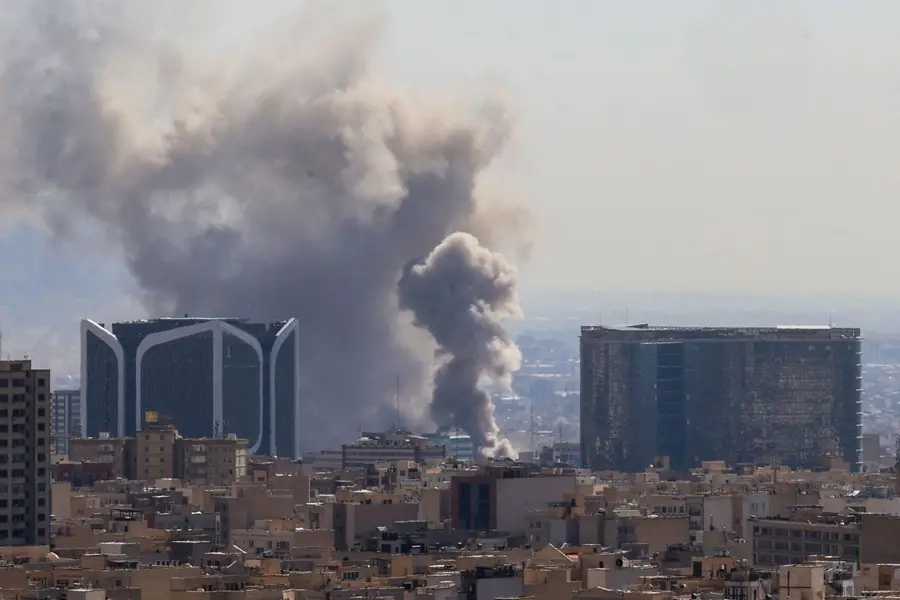
A serious conflict has broken out in the Middle East after the United States and Israel launched strikes on Iran. As a result, the Strait of Hormuz — a narrow sea passage through which nearly one-fifth of the entire world's oil travels — has been effectively blocked. Think of it like a main highway being shut down. Every country that depends on oil coming through that route is now in trouble. And India is in the most trouble of all.
Here is the hard truth. India imports about 55% of its crude oil from the Middle East — nearly 2.74 million barrels every single day. That is the highest dependence India has had on Middle Eastern oil since late 2022. And why did this happen? Because India reduced buying cheaper Russian oil due to pressure from Washington. So now we are more exposed than ever before.
But the real danger is not how much we buy. The real danger is how little we have stored. India currently has only 20 to 25 days of usable oil stock. Read that again — just 20 to 25 days. That means if oil stops coming into India tomorrow, this country runs out of fuel in less than a month. That is it. No buffer, no cushion, no safety net beyond that.
Compare this to our neighbours and competitors. China has oil reserves stored away for at least six months. Japan has enough for 254 days. South Korea has enough for 208 days. And India? Twenty to twenty-five days. This alarming figure was confirmed by refining industry sources and highlighted by Ajay Parmar, Director of Energy and Refining at ICIS, who spoke to Reuters. Oil Minister Hardeep Singh Puri told Parliament that India has storage capacity for 74 days — but capacity and actual stored oil are two completely different things. Having a big water tank means nothing if it is barely filled during a drought.
On Monday, 2 March, global Brent crude oil prices jumped about 7% in a single day. If this war stretches on and the Strait of Hormuz stays blocked, prices will keep climbing. "If the war continues for a long period and the Strait of Hormuz remains closed, countries around the world will compete fiercely for every available barrel of oil," warned Ajay Parmar. In plain language — every country will be desperate, and prices will go through the roof. For India, with only 20 to 25 days of stock in hand, that desperation arrives faster than anywhere else.
The Union Oil Ministry posted on X that the government will take every necessary step to keep fuel available at reasonable prices. That is reassuring, but the real question is — where will India find the oil from? Going back to Russian oil is one option, but Washington has not yet confirmed whether it will allow that without slapping back the 25% tariffs on Indian imports. U.S. Secretary of State Marco Rubio has hinted that measures to control rising energy prices will be announced soon, but details are still not known.
Now let us understand how this hurts the whole world. Asia buys nearly 90% of all oil exported from the Middle East. Japan and South Korea are heavily dependent too, but their massive reserves give them time to adjust. Europe does not buy much Middle Eastern crude directly, but it gets about 45% of its jet fuel — the fuel that flies aeroplanes — through ships from the Middle East Gulf. So if those ships stop moving, European flights become expensive too. The United States, now the world's largest oil producer, imports less than 900,000 barrels per day from Gulf countries and is better protected. But higher global prices still hurt everyone.
The bottom line is this — when the Middle East catches fire, the whole world feels the heat. But India, sitting with just 20 to 25 days of oil backup, is the most dangerously exposed country of them all.
Every litre of petrol, every cooking gas cylinder, every truck that carries food to your market — it all depends on that one small sea passage.
And right now, that passage is in danger.
(The author is an award-winning science communicator and a Defence, Aerospace & Geopolitical Analyst)
Published: 04 Mar 2026, 05:38 pm IST
Disclaimer: Kindly avoid objectionable, derogatory, unlawful and lewd comments, while responding to reports. Such comments are punishable under cyber laws. Please keep away from personal attacks. The opinions expressed here are the personal opinions of readers and not that of Mathrubhumi.
