
Beginning June 1, 2026, international transit passengers travelling through Delhi, Mumbai, Bengaluru and Hyderabad airports will be required to use DigiYatra's facial recognition-based biometric system.
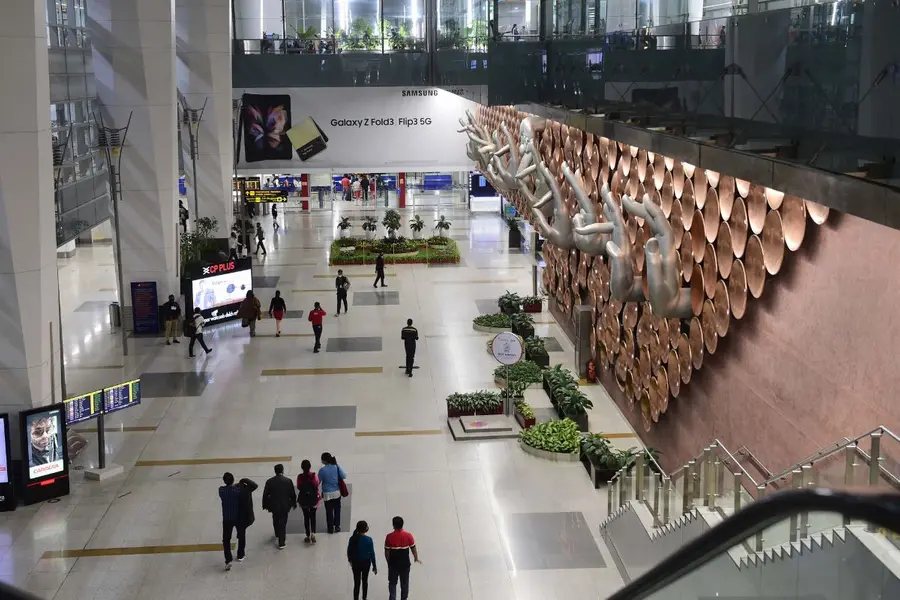
Imagine you are running late for your flight. You reach the airport and see long queues at the entrance, passengers fumbling for boarding passes and identity cards, and security personnel checking documents one by one. Then you notice another lane. Instead of pulling out papers or scanning multiple documents, you simply walk up to a camera, your face is recognised in seconds, and the gate opens automatically.
You move through the airport almost effortlessly and make it to your boarding gate without the usual stress.
This is exactly the experience DigiYatra is trying to create for millions of air travellers across India.
Beginning June 1, 2026, international transit passengers travelling through Delhi, Mumbai, Bengaluru and Hyderabad airports will be required to use DigiYatra's facial recognition-based biometric system, marking another major step in India's journey towards fully digital and contactless air travel.
What is DigiYatra?
DigiYatra is a biometric travel platform that uses facial recognition technology to verify a passenger's identity at different points inside the airport.
Instead of repeatedly showing a boarding pass and identity documents, passengers can use their face as a digital identity token. Once verified, they can pass through designated checkpoints quickly and securely.
The system has already become familiar to many domestic travellers across India. Now, its use is being expanded to international transit passengers at some of the country's busiest airports.
The goal is simple: reduce waiting times, eliminate unnecessary paperwork and make airport journeys smoother.
Also read: India eyes up to 200 Russian regional aircraft: Will it really make airfares cheaper?
How does it work?
The process starts before travellers leave for the airport.
Passengers need to download the DigiYatra app and upload an Aadhaar-verified selfie along with their boarding pass details. This should ideally be completed at least 48 hours before travel.
Once they arrive at the airport, dedicated DigiYatra e-gates use facial recognition cameras to match the live image of the passenger with the encrypted information stored in the system.
After successful verification, the gates open automatically, allowing passengers to proceed through designated areas without repeated document checks. The entire process takes only a few seconds.
Making airport travel less stressful
For many passengers, airport travel often means standing in queues, searching for documents and repeating the same verification process multiple times. DigiYatra aims to remove much of that hassle.
At large airports such as Delhi, Mumbai, Bengaluru and Hyderabad, passenger traffic has grown rapidly over the past few years. During peak travel periods, queues can quickly build up at entry gates, security checkpoints and boarding areas.
By automating identity verification, airports hope to move passengers through terminals much faster while maintaining high security standards.
For travellers, this means less waiting and more time to relax before boarding.
A growing trend around the world
India is not alone in adopting biometric travel technology. Airports across Europe, North America, the Middle East and Asia have increasingly turned to facial recognition systems to speed up passenger processing.
Many global airports already use biometric technology for security checks, immigration clearance, baggage drop and boarding procedures. India's DigiYatra initiative is part of this broader global trend towards paperless and contactless travel experiences.
Why airports are embracing technology
India's aviation sector is expanding at an extraordinary pace. More people are flying than ever before, and airports are under pressure to handle increasing passenger numbers efficiently. Rather than simply building bigger terminals, airport operators are also investing in smarter technologies that can improve passenger flow.
Biometric systems such as DigiYatra help airports process more passengers without increasing congestion.
For airport operators, it improves efficiency. For airlines, it helps ensure smoother departures. For passengers, it reduces stress and saves valuable time.
Airlines are preparing passengers
Several airlines have already begun informing travellers about the new requirements. Major Indian carriers including Air India, IndiGo and Vistara have updated their passenger communications to explain the DigiYatra process. International airlines operating through India have also issued guidance to their airport teams to help travellers adapt to the new system. As awareness grows, airport authorities expect more passengers to embrace biometric travel as part of their routine journey.
What travellers need to remember
While DigiYatra simplifies the airport experience, passengers must complete the necessary setup before arriving at the airport. This includes creating a DigiYatra profile, uploading the required information and ensuring all travel details are correctly entered in advance.
A little preparation before departure can significantly reduce waiting times once at the airport.
The future of flying
According to official figures, DigiYatra has already facilitated more than 10 crore passenger journeys since its launch. The platform is currently operational at multiple airports across India, and the government plans to expand it to 27 additional airports by 2027.
What began as an optional convenience is gradually becoming an integral part of the airport experience.
For passengers, the biggest benefit is not the technology itself but the time and convenience it offers. The ability to move through an airport with fewer interruptions, fewer document checks and shorter queues can make travel significantly more enjoyable.
As India's airports become smarter and more connected, the future of air travel may simply involve looking at a camera and walking through. For travellers rushing to catch a flight, that future has already arrived.
Published: 04 Jun 2026, 08:36 pm IST
ABOUT THE AUTHOR

Disclaimer: Kindly avoid objectionable, derogatory, unlawful and lewd comments, while responding to reports. Such comments are punishable under cyber laws. Please keep away from personal attacks. The opinions expressed here are the personal opinions of readers and not that of Mathrubhumi.