
India unveils the Hansa-3 NG, a game-changer for pilot training! Discover the affordable, indigenous trainer aircraft that`s set to boost Indian aviation. Click to learn more!
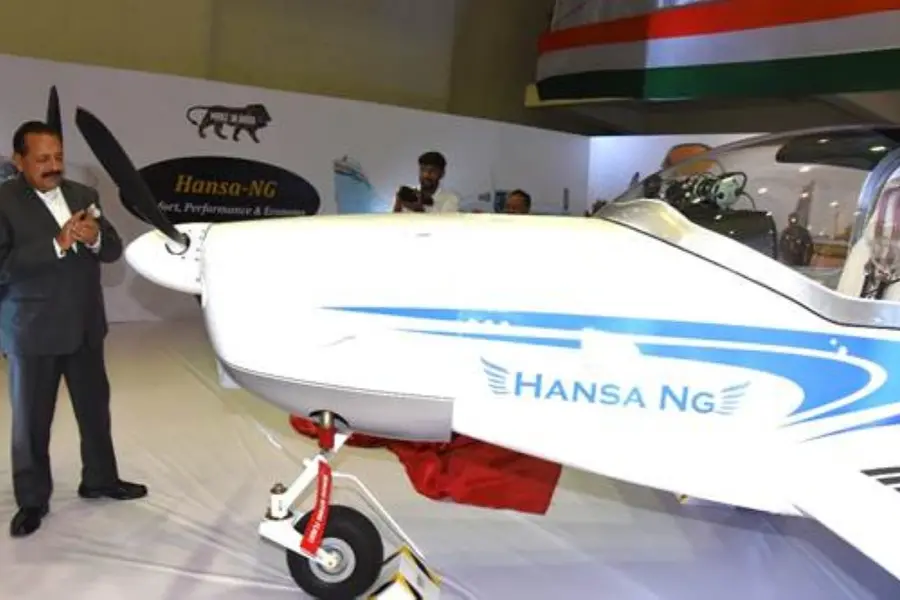
Imagine walking into a classroom where, instead of books and blackboards, you have aircraft controls and a view of the endless sky. That's exactly what thousands of young Indians will experience soon, thanks to a brand-new training aircraft that India just launched. On Saturday, November 29th, the CSIR–NAL in Bengaluru unveiled the production version of the Hansa-3 (NG) or Hansa-3 Next Generation, a two-seater trainer aircraft that marks a historic moment for Indian aviation.
After three decades of hard work and development, this is India's first indigenous civil aircraft being handed over to a private company for manufacturing. A Mumbai-based firm called Pioneer Clean Amps will now produce these planes at its impressive ₹150 crore facility in Kuppam, Andhra Pradesh. They're aiming big—planning to manufacture 100 aircraft every year once they hit full capacity. The first commercial aircraft should roll out in about 18 to 20 months.
But why is everyone so excited about this plane? Well, cost is a huge factor. Currently, flying training schools must import aircraft from abroad, which costs around ₹6 crore per plane. The Hansa-3 (NG) will cost only ₹3 crore—that's half the price! This makes pilot training much more accessible and affordable for aspiring aviators across the country.
Think about India's aviation sector today. We have commercial planes zooming across our skies constantly, connecting cities and carrying millions of passengers. Right now, there are 37 flying training schools spread across 54 locations in India. But here's the thing—the government plans to establish 50 more flying training schools in just the next five years. Each school needs at least three aircraft to operate properly. Getting them from foreign countries takes time, involves complex procedures, and drains our foreign exchange. The Hansa-3 (NG) solves this problem by providing a home-grown alternative that's readily available.
The numbers tell an interesting story about India's future in aviation. We currently have around 6,000 to 7,000 commercial pilots. However, experts predict that India will need approximately 30,000 pilots in the next 15 to 20 years. Why such a massive jump? Because Indian airlines have placed orders for over 1,700 new aircraft! Currently, India operates 840 commercial aircraft. Each narrow-body plane—that's a single-aisle aircraft with one walkway inside and typically three seats on each side, used for short and medium flights—requires 15 to 20 pilots. Each wide-body aircraft—the twin-aisle planes with two walkways, bigger seating arrangements used mainly for long international journeys—needs 25 to 30 pilots. So the math is simple: more planes mean we desperately need more pilots.
The Hansa-3 (NG) comes packed with modern features that match international standards. It has fuel-efficient engines that consume less fuel while delivering the same performance. The balloon canopy is a larger, curved transparent cover that gives pilots and trainees better visibility and comfort. Instead of old-style dial instruments, there's a glass cockpit with digital screens showing all flight information clearly. Electric flaps move automatically with electronic controls, making flying easier and smoother. These upgrades put the Hansa-3 (NG) on par with aircraft made by leading global manufacturers.
Let's talk specifications. The aircraft weighs 550 kilograms empty and can carry up to 200 kilograms of payload—that includes the instructor pilot, trainee, fuel, and any small luggage. It can stay airborne for seven hours, travel 620 nautical miles (approximately 1,150 kilometers) with one pilot, and climb up to 8,000 feet (roughly 2.4 kilometers) high. Its cruise speed is 98 knots, which equals about 181 kilometers per hour.
Pioneer Clean Amps will initially produce 36 aircraft annually, later ramping up to 72 per year. Already, NAL has received over 110 Letters of Intent from flying training schools nationwide, showing strong demand. Since the technology transfer is non-exclusive, other companies can also manufacture this aircraft design in the future.
Meanwhile, CSIR–NAL is already working on their next big project—the SARAS Mk 2, a 19-seater aircraft for civilian and military purposes. It will feature pressurised cabins, digital avionics, autopilot systems, and command-by-wire controls, further strengthening India's position in aviation manufacturing.
The Hansa-3 (NG) represents more than just an aircraft—it's India's commitment to building a world-class aviation training ecosystem using indigenous technology and manufacturing capabilities.
The author is a Defence, Aerospace & Geopolitical Analyst
Published: 30 Nov 2025, 11:11 am IST
Related Topics
Disclaimer: Kindly avoid objectionable, derogatory, unlawful and lewd comments, while responding to reports. Such comments are punishable under cyber laws. Please keep away from personal attacks. The opinions expressed here are the personal opinions of readers and not that of Mathrubhumi.
