
Countries like India and Indonesia are prioritizing "strategic autonomy," engaging with both the West and East to suit their own national agendas.
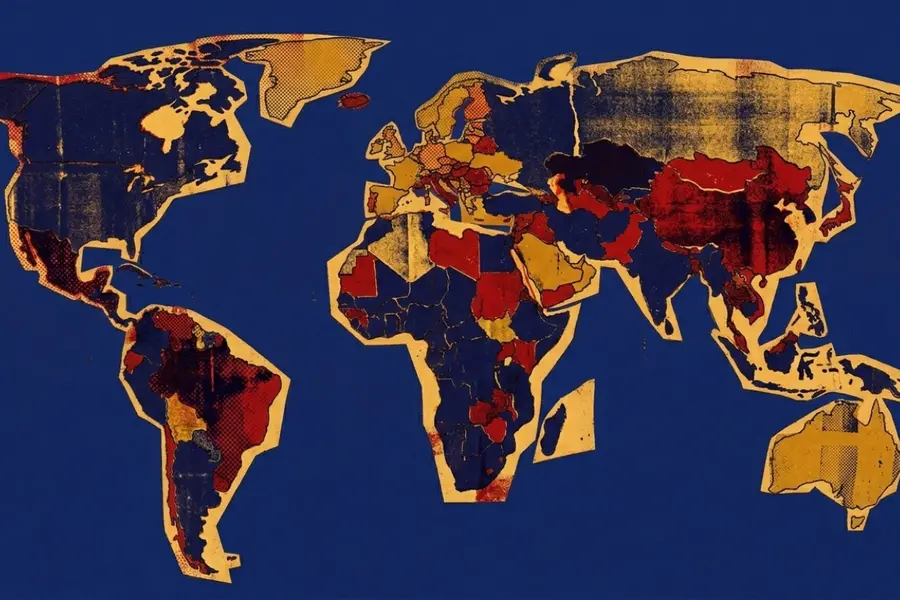
Canada's Prime Minister Mark Carney recently said something which made many world leaders sit up and think. He said that the global system, which means the rules and ways through which countries deal with each other, is getting badly damaged because of the steps taken by Donald Trump in the United States. According to him, the medium-sized countries, which are not superpowers but still strong, should now hold hands together and protect this rule-based system before it breaks completely.
This raises one big question. In this changing situation, what role will the Global South play? The Global South simply means the developing countries of Africa, Latin America, Asia, and parts of the Middle East. Earlier this year, Finland's President Alexander Stubb said in an Indian conference that the Global South will actually decide the shape of the future world. He explained that the balance of power has shifted because these countries now have huge populations and fast-growing economies. The days when only Western countries controlled everything are slowly ending, even if the West takes time to accept this truth.
But here is the tricky part. The term "Global South" itself is confusing. The name suggests southern countries, but many of them, like India and China, are actually located north of the equator. Meanwhile, Australia and New Zealand, which are truly in the south, are counted as part of the rich Western world. So the term is more about economic level and history of being colonised, not about geography.
Another big problem is that the Global South has no single leader. China tries to build influence through its policy of not interfering in other countries' matters. But India, which has good ties with Western nations, will never accept China as its boss. So, unity is missing.
Take BRICS, the group which now has ten members, including Iran and the UAE. Even when Iran was attacked recently, this group could not speak in one voice. China and Russia openly criticised the American and Israeli attacks. India, on the other hand, played it safe and only requested that both sides reduce tension. As experts told The Conversation, BRICS countries are divided on many serious matters, and they have no strong system to settle their differences.
The Iran war has shown how each country thinks only about its own interests first. China is worried because if the Iranian government falls, it will lose an important partner. Iran is also a member of the Shanghai Cooperation Organisation, which China uses to build a system away from Western control. Plus, China gets a lot of its oil through the Strait of Hormuz near Iran, so peace there is very important for its factories and homes.
Pakistan has quietly stepped forward as a mediator between America and Iran, hoping to gain a bigger name in world politics. It also wants to keep its friend Saudi Arabia safe, because under their defence pact, Pakistan must help Saudi Arabia if attacked.
India is following its old policy of "strategic autonomy", which means it will not blindly join any camp. Foreign Minister S. Jaishankar has clearly said that India is neither with the West nor against it. This smart approach allows India to remain a close partner of America while also buying oil from Iran whenever needed.
In his book The Triangle of Power, Alexander Stubb says the world is now divided into three groups. The Global West is led by America. The Global East is led by China and Russia. And the Global South is the group of middle and smaller nations which can tilt the balance to either side. According to him, if the West wants to save the rule-based world system, it must first win the trust of these Global South countries.
But the reality is more complex. Most Global South countries do not want a world controlled by just one or two superpowers. They prefer a "multipolar world", where power is shared among many. Many of these nations were colonised by Western powers in the past, and they still feel that old injustice continues even today. South Africa, for example, has taken Israel to the International Court of Justice over the Gaza war, which shows that these countries are now speaking up boldly.
In today's broken world, smart countries are choosing flexibility over loyalty. Indonesia recently signed a big defence deal with America, and within the same month, President Prabowo Subianto flew to Russia to meet Vladimir Putin. This is the new style: shake hands with everyone, depending on what suits the nation's interest.
The Global South is clearly rising. How exactly it will use this new power is the real story of our times.
(Girish Linganna is an award-winning science communicator and a Defence, Aerospace & Geopolitical Analyst. He is the Managing Director of ADD Engineering Components India Pvt. Ltd., a subsidiary of ADD Engineering GmbH, Germany.)
Published: 27 Apr 2026, 12:49 pm IST
Related Topics
Disclaimer: Kindly avoid objectionable, derogatory, unlawful and lewd comments, while responding to reports. Such comments are punishable under cyber laws. Please keep away from personal attacks. The opinions expressed here are the personal opinions of readers and not that of Mathrubhumi.
