
Malabar’s cuisine is deeply layered--blending colonial influences, local traditions, and global connections
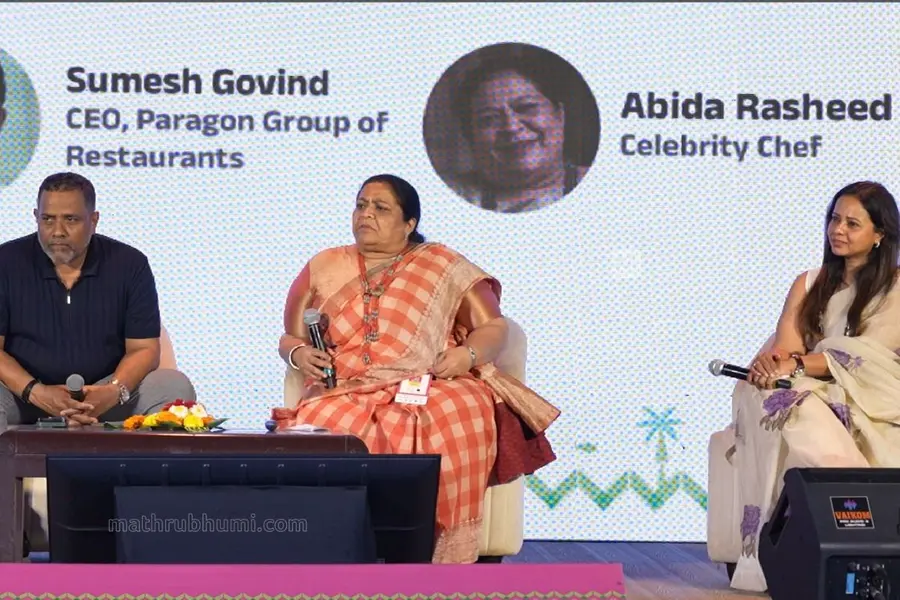
Kozhikode: Malabar’s culinary heritage is more than just a treat for the palate--it’s a story waiting to be told on the global tourism stage. That was the central message at Mathrubhumi Tourism Conclave 25: Gateway to Malabar Tourism, held at The Raviz Kadavu, where chefs, entrepreneurs, and tourism leaders gathered to discuss how food could become the region’s next big attraction.
“Where do we get this?”: Abida Rasheed on the missing link in Kerala Tourism
Celebrity chef Abida Rasheed, who has been championing Malabari cuisine across India, spoke candidly about the lack of visibility for the region in Kerala’s official tourism material.
“I went to Delhi to showcase Malabar food. People ate it and loved it. But they asked, ‘Where do we get this?’ I approached Kerala Tourism about this. But even their brochures at the time had no mention of Malabar beyond Thrissur. That shouldn’t be the case,” she said.
For Abida, food and hospitality are deeply linked:
“People came here centuries ago for spices. But they stayed for our warmth. They got food to their heart’s content and found people worth remembering.”
She described Malabar as a “non-commercialised virgin place,” adding:
“There is no other place in Kerala that people come primarily looking for food.”
“Not just spices, it’s history”: Renuka Mambally on the legacy of baking
Fifth-generation baker Renuka Mambally Bala, from Thalassery’s historic Mambally family, offered a different slice of the food story—one baked into tradition.
“It’s not just about spices. We have a culture of history. The Chinese, the Portuguese, the British—everyone left something behind on our table.”
She traced the iconic Kerala plum cake back to a British planter who adapted a traditional English recipe using local ingredients.
“People these days don’t just eat—they want to know the journey behind what’s on the plate,” Renuka said.
Having worked closely with travel companies, she also emphasised the power of narrative:
“What stood out to me was the stories they build around food. We have so many—we just need to tell them better.”
“Authenticity isn’t rocket science”: Sumesh Govind on reinventing tradition
Sumesh Govind, CEO of the Paragon Group, highlighted how small innovations can break culinary conventions—without losing authenticity.
“Vellayappam is considered a breakfast item in Kerala. When we began serving it in the evening, people rejected the idea. But they slowly grew into it,” he said.
Govind further argued that the emotional quality of service matters just as much as food:
“You don’t just serve food—you touch hearts. Sometimes, mediocre food with excellent service leaves a bigger impact than excellent food with poor service.”
He also reflected on the international food scene:
“A great Italian dish may just be familiar ingredients—but it’s the cut of the fish, the chef’s training, the sauce—everything comes together for that final experience.”
“We need to build platforms for women”
The panelists agreed that for Malabar’s food tourism to grow, more support for women and community-driven initiatives is essential.
“Women of today should get the portal to develop their skills,” Abida urged.
Renuka pointed to Mumbai’s Bohri Kitchen—a successful home-dining experience—as a model worth replicating in Kerala.
“We need similar initiatives that build around local homes and stories,” she said.
“People come back to it”: Malabar food’s emotional pull
Despite exposure to global cuisines, Sumesh reaffirmed that regional food holds a unique emotional connection:
“There’s always a pull toward our own food. People come back to it.”
He noted the success of Malabari cuisine across geographies, referencing international customers who became loyal patrons.
“There’s something definitely special about Malabari food. I had a US couple who ate our cuisine every day for six months.”
“Food is our story—We just need to tell it”
As the session concluded, all three speakers echoed the same sentiment: Malabar’s food is a living archive—a blend of migration, memory, and modern reinvention.
“Malabar isn’t just a region—it’s a flavour map,” said Renuka. “We just need to serve the story with the food.”
And with a touch of humour, Sumesh Govind closed the session:
“These days, many women don’t cook as much—and that’s been great for the restaurant business! Honestly, I hope that trend continues.”
Published: 23 Aug 2025, 10:50 pm IST
Related Topics
Disclaimer: Kindly avoid objectionable, derogatory, unlawful and lewd comments, while responding to reports. Such comments are punishable under cyber laws. Please keep away from personal attacks. The opinions expressed here are the personal opinions of readers and not that of Mathrubhumi.
