
Pune-based Nibe Limited has successfully completed free trial demonstrations of its home-grown loitering munition system, Vayu Astra-1, for the Indian Army at Pokhran and Joshimath
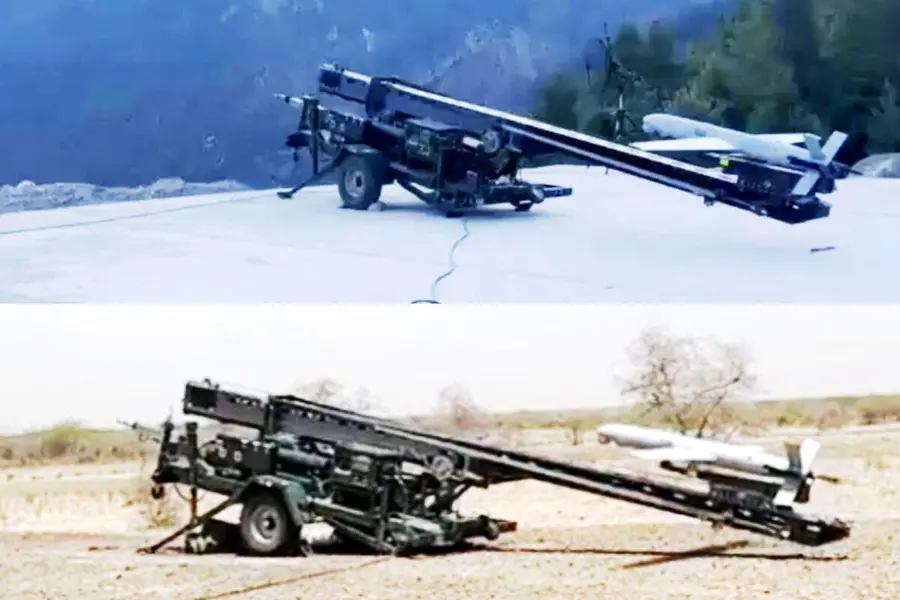
Pune-based defence technology company Nibe Limited has achieved something truly remarkable. The firm successfully carried out free trial demonstrations of its home-grown loitering munition system, Vayu Astra-1, for the Indian Army.
These important tests happened in April at two challenging places -- the Pokhran firing range in Rajasthan and the high hills of Joshimath (Malari) in Uttarakhand. What makes it special is that the Army did not have to spend any money or commit to buying it. This free demonstration shows how much faith the company has in its own creation.
Now, what exactly is a loitering munition? Imagine a smart drone that can circle in the sky like a patient eagle, searching for the enemy. Once it spots the target, it dives in like a suicide attacker to destroy it.
On April 18 and 19, Nibe tested the anti-personnel version at Pokhran. This one is meant to take on enemy soldiers. Equipped with a 10-kg warhead, the Vayu Astra-1 covered a full 100 kilometres and destroyed its target in a single perfect attempt. It achieved a Circular Error Probable, or CEP, of less than one metre.
In easy words, CEP tells us how close the weapon lands to the exact spot it aims for. Less than one metre means it hit almost spot on, like throwing a dart right into the centre every time.
The system also proved it could stop an attack in the middle and try again if needed. This abort and reattack feature gives soldiers better control in real battle situations. The company shared that Vayu Astra-1 uses a base platform from Israel but has been carefully changed and improved to fit Indian requirements. This mix of ideas makes it stronger and more suitable for our brave forces.
During the same trials, the team showed an exciting night attack on armoured vehicles using an infrared camera. These special cameras pick up heat from targets even when it is pitch dark outside. The loitering munition struck the target accurately in one go, with a CEP of just two metres.
This night-fighting ability is very useful because modern battles do not stop when the sun sets. Another big achievement was transferring control of the weapon from the main Ground Control Station to a Forward Control Segment 70 kilometres away. This means operators can guide the munition safely from a distant and protected location during the mission.
The high-altitude tests at Joshimath (Malari) on April 26 and 27 were equally impressive. In the thin air and freezing cold of the mountains, the system stayed flying for over 90 minutes at heights above 14,000 feet.
Many of our border areas are at such heights with tough weather. These trials proved that Vayu Astra-1 can work reliably in difficult mountain conditions near our frontiers.
After finishing its job, the munition came back safely to base. This reusable nature is a game-changer because the same system can be used again instead of being lost after one use. It saves money and gives more options to our troops on the ground.
Just before these tests, on May 18 and 19, Nibe Limited had also successfully fired its Indian-made Suryastra rockets at the Integrated Test Range. These rockets hit targets at distances of 150 kilometres and 300 kilometres, showing powerful long-range strike capability.
All these successful demonstrations of Vayu Astra-1 bring real hope for stronger national security. They show how Indian engineers and scientists are working day and night to build advanced weapons that can protect our borders.
The system's pinpoint accuracy, ability to fight at night, performance in high mountains, and reusability make it a valuable tool for the Indian Army. It marks a proud step towards making India self-reliant in defence technology.
Published: 22 May 2026, 03:45 pm IST
Related Topics
Disclaimer: Kindly avoid objectionable, derogatory, unlawful and lewd comments, while responding to reports. Such comments are punishable under cyber laws. Please keep away from personal attacks. The opinions expressed here are the personal opinions of readers and not that of Mathrubhumi.
