
India's Project 75I submarines will use Air-Independent Propulsion (AIP), allowing them to remain underwater for weeks while reducing detection risks.
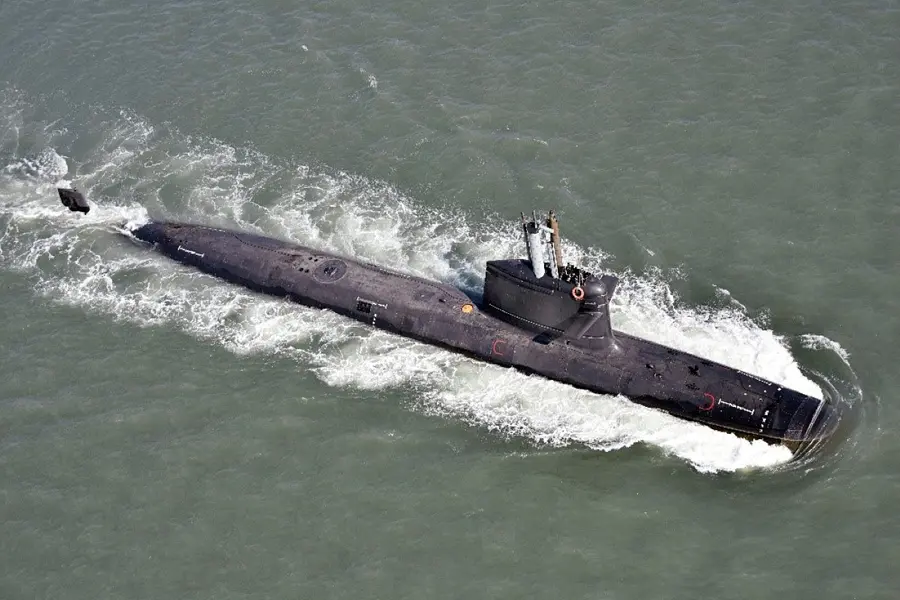
India has taken a big step to make its Navy stronger under the sea. The Union Finance Ministry has approved a huge ₹70,000 crore deal to build a new generation of conventional submarines right here in India. This proposal will now move to the Cabinet Committee on Security (CCS), which is headed by the Prime Minister, for the final go-ahead. Once cleared, this deal will boost India's underwater strength in a big way.
According to senior officials, who spoke on condition of anonymity, the CCS is expected to review the plan soon. The project is called Project-75I, and under it, six advanced submarines will be built. The final contract is likely to be signed under the new Navy chief, Admiral Krishna Swaminathan, who takes charge on May 31. He replaces Admiral Dinesh K Tripathi, who is retiring after four decades of service. One of Swaminathan's main goals will be to modernise the Navy and keep it ready for any challenge.
Who will build these submarines?
Mazagon Dock Shipbuilders Limited (MDL) and the German company thyssenkrupp Marine Systems (tkMS) will join hands to build them in Mumbai. This partnership will give a strong push to India's own submarine-making skills. Interestingly, MDL and tkMS won this project by beating their only rival, the Larsen & Toubro–Navantia team from Spain.
The first submarine is expected to join the Navy seven years after the deal is signed. After that, one new submarine will be delivered every year. These advanced machines are based on the famous HDW Class 214 design and will be fitted with a special technology called Air-Independent Propulsion, or AIP. Under the deal, tkMS will also share its submarine design and technology with India, helping our country become more self-reliant in making its own defence equipment.
So what exactly is AIP?
Air-Independent Propulsion is a smart technology that lets a non-nuclear submarine run underwater without coming up to the surface for air. With AIP, a submarine can stay hidden under the sea for two to three weeks at a stretch. This makes it very, very hard for enemies to find it.
To understand this, think of a submarine like a person swimming underwater. A normal diesel submarine is like a swimmer who keeps popping his head above the water to breathe. This is because its engines need oxygen from the air to burn fuel and make electricity. So the submarine has to come up near the surface again and again. And every time it does, it risks being spotted by the enemy.
AIP changes this completely. It works like a diver carrying his own oxygen tank on his back. Instead of taking air from outside, the submarine carries its own supply of oxygen and fuel sealed safely inside. It then combines these to make electricity quietly, deep under the water, without ever reaching up for air. This clever trick is what allows it to stay hidden for weeks instead of just a few days.
Why is this electricity so important?
The electricity made by the AIP system is what keeps the whole submarine alive and moving. It powers the electric motor, which spins the propeller and pushes the submarine forward through the water. It runs the sonar and radar, which help the crew "see" and sense what is around them in the dark depths. It also powers the computers and communication systems used for navigation and staying in touch. And very importantly, it keeps the lights, cooling systems, and life-support running, so the crew stays safe, comfortable, and able to breathe.
Here is the simplest way to picture it. If the submarine were a human body, then electricity would be both its heart and its nervous system. The heart pumps energy everywhere, and the nervous system keeps every part working together. AIP is the hidden power source that keeps this "body" running silently under the sea. In short, AIP gives a submarine the gift of patience, the ability to wait, watch, and move unseen for weeks. In war, staying undetected is a huge advantage.
This project also has clear goals for self-reliance. The first Project-75I submarine must have at least 45% Indian-made content, and this will rise to 60% by the sixth one. The Navy dreams of becoming fully self-reliant by 2047, when India will mark 100 years of independence. Right now, around 60 warships are being built at different shipyards across the country.
This deal comes at a time when India and Germany are growing closer in defence. In April, both nations signed a defence cooperation roadmap to jointly develop and build weapons and defence systems. It was signed when Defence Minister Rajnath Singh met German Defence Minister Boris Pistorius in Berlin, marking a strong new friendship beneath and above the waves.
The author is a defence, aerospace & geopolitical analyst.
Published: 30 May 2026, 10:58 am IST
Related Topics
Disclaimer: Kindly avoid objectionable, derogatory, unlawful and lewd comments, while responding to reports. Such comments are punishable under cyber laws. Please keep away from personal attacks. The opinions expressed here are the personal opinions of readers and not that of Mathrubhumi.
