
The film is backed by a solid script, beautiful visuals of pockets in Kashmir including indoor scenes in Hamid’s home, and aesthetic beauty with situational music, a wonderful sound score punctuated by sounds of gunshots and bombs amid Kashmiri music, and of course, natural acting
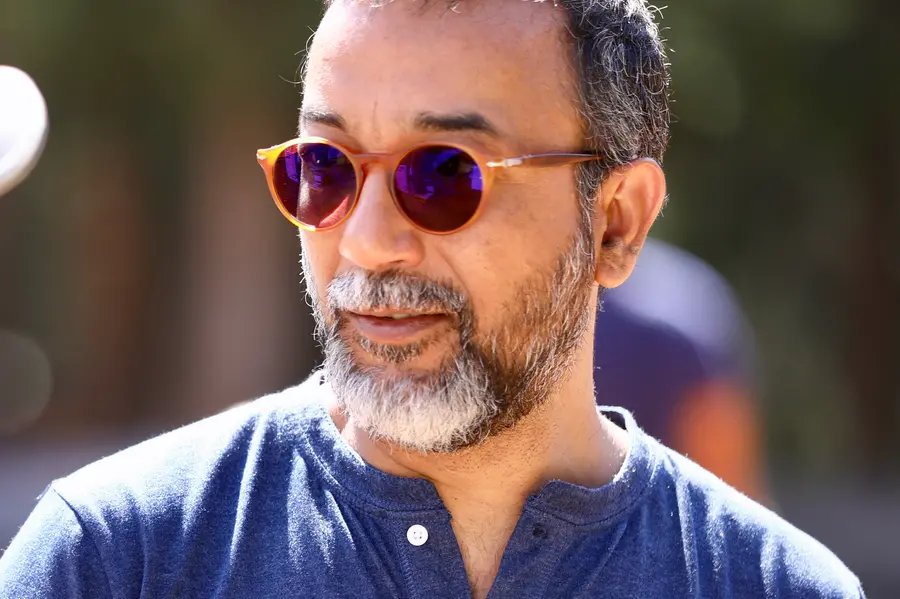
Hamid is the name of an Urdu film directed by Aijaz Khan which featured in the 2nd Edition of the Bhuvaneswar Film Festival last month among a collage of National Award-winning films from different regional sections. The story is about a small boy of eight, named Hamid (Talha Arshad Reshi), who misses his father, Rehmat (Sumit Kaul), who, captured randomly in an attack by the CRPF, is believed dead. Hamid had heard from his teacher that 786 is God’s number and decides to reach out to God by dialing this number. He wants to talk to his father who, his mother (Rasika Dugal) tells him has gone to Allah. One fine day, someone answers his call and his life changes from the black hole of hopelessness and defeat to one of light and hope. The man at the other end of the line is not Allah but a rough, short-tempered and short-tempered young CRPF Jawan named Abhay (Vikas Kumar). The surprised Jawan pretends to be Allah for some time and a strange bonding evolves between this small boy and the hard-knuckled Jawan whose nature changes through this bonding. Hamid also accepts the reality of his life and returns to finish painting the boat his father had begun to work on but could not finish.
The film is backed by a solid script, beautiful visuals of pockets in Kashmir including indoor scenes in Hamid’s home, and aesthetic beauty with situational music, a wonderful sound score punctuated by sounds of gunshots and bombs amid Kashmiri music, and of course, natural acting. This is a merit of the film which tackles brutal scenes of shooting, capturing locals by CRPF battalions and also by the groups of terrorists supporting POK. Amidst this, we discover the grief of the women who lost their men to the political conflict and the grief of a young widow who removes the wool from the red sweater she was knitting for her husband. Yet, the spine of the film lies in the little boy’s innocent belief that he will be able to talk to his father through Allah, not knowing the man he is talking to is a member of the ‘enemy.’
Hamid won two National Awards in 2019. One went to Talha Arshad Reshi who played the title role of Hamid while the other went to the film for the Best Urdu Film of the year. Asked about the two National Awards his film had won, Aijaz Khan says, “The success of Hamid was truly heartwarming, especially since it wasn't entirely expected. Receiving the National Award, one of India's most prestigious honors, was particularly thrilling. The film's global recognition, with awards at various festivals, further amplified the excitement. This widespread acclaim not only validated the team's efforts but also underscored the film's universal appeal and impact.” The film has won awards at four other renowned festivals in different categories.
Before he directed Hamid, Aijaz Khan had made three full-length feature films that covered varied genres. He elaborates thus, “My filmmaking journey began with ad films, where I assisted and later directed. I then transitioned to short films before making my feature film debut with The White Elephant. This sparked my passion for non-commercial storytelling. Though my next project, Dwija, faced hurdles, I explored commercial cinema with Baankey Ki Crazy Baraat, a comedy. However, Hamid allowed me to tap into human emotions, revealing my strength in non-commercial storytelling. I have also ventured into web series like Out of Love and Duranga, exploring new formats. That's my film journey so far.”
Explaining the trigger that set him off with the idea of Hamid, Khan says, “The idea occurred during a chance conversation with a gentleman from Kashmir. He narrated the poignant incident of how his eight-year-old nephew, after having lost his parents in a bomb blast dialed 786 and asked God to help him speak to his parents. Ever since I heard about this true story, Hamid’s world began to take shape in my mind. Stylistically, I chose to shoot the film in a natural manner as if the camera does not exist. Hamid speaks on behalf of the families torn globally due to conflict.”
Khan elaborated that they shot the film in Badarkot, a beautiful but remote village about thirty kilometers from Tangmarg in Kashmir. The shooting spanned 18 days and, like any production in a sensitive region, came with its share of logistical and emotional challenges. The entire crew had to stay alert and flexible. That said, the local community was incredibly warm, helpful and cooperative, which made a world of difference. The experience underscored the realities of working in complex environments - but also the power of storytelling and the commitment of a team that believes in the film’s purpose.
Khan goes on to add: “I was influenced by Roberto Benigni's, Life is Beautiful and another film, Bekas. These films inspired my approach to storytelling in Hamid. We decided to capture the innocence and unique perspective of a child, showcasing how they view the world in a simple, secular way, unaffected by the complexities and biases that often develop with age. This approach allows the audience to see the world through the eyes of a child, highlighting the purity and simplicity of their perspective. The influence of Life is Beautiful is particularly notable, as that film also explores themes of innocence and perspective, although in a different context. By drawing inspiration from such films, we crafted a narrative in "Hamid" that emphasizes the importance of viewing the world with a child's fresh and unbiased perspective.”
Explaining his choice of the boy for the title role, Khan says, “Casting for Hamid was difficult. I and my team had made a conscious decision not to fully script the character of Hamid before casting. Instead, we wanted the actor to organically bring his own personality and traits to the role, allowing the character to evolve through the performance. To achieve this, we auditioned around 12-15 kids, brought in an acting coach from Mumbai to train them, and ultimately chose Talha, who delivered a fantastic performance. This approach ensured that the character of Hamid felt authentic and genuine, shaped by the actor's interpretation rather than a preconceived mold.”
Khan goes on to add, “For me, storytelling is organic. Ideas come to me, and I let them unfold naturally. With Hamid, the story just happened, and I was drawn to its child-centric perspective. My approach is to let the audience interpret and decide. I didn’t want to impose my viewpoint, I wanted viewers to take from the film what they need and arrive at their own understanding. That’s the approach I like to maintain in all my work. To let stories breathe and resonate in a way that feels personal to each person watching.”
Elaborating on his process of directing his team, Aijaz explains, “For Hamid, we had extensive script readings, workshops, rehearsals, and technical rehearsals—mainly because we were working with a tight 18-day shooting schedule. That preparation really helped streamline the process and made the shoot far more efficient. A lot of credit goes to my DOP, John Wilmor, who was involved in the creative process right from the beginning. We were working in very constrained spaces, with little room to position the camera or lights. During our tech recces, he meticulously planned how to light these tight locations in creative ways, and that is evident in the film’s visual quality.”
When queried about whether his not falling into the category of the hard-core filmmaker who throws his weight about, talks loud, and rushes for publicity. Was a drawback or a merit, Aijaz says,”I am not sure if it is an advantage or a disadvantage, but I know that staying calm and grounded is what matters most to me. As a director, your energy sets the tone on set - it trickles down to every member of the crew. If you bring chaos, the environment reflects that. I prefer to create a space that feels focused, steady and fun. That’s how I work best, and I believe it brings out the best in the team too.”
Among filmmakers he considers to be his ideological model and mentor, Aijaz mentions the names of Guru Dutt, Shyam Benegal, Satyajit Ray, Mehboob Khan, Raj Kapoor, V. Shantaram, Bimal Roy, Hishikesh Mukherjee, Basu Chatterjee and more.
He has not made too many films. Is it because he chooses to take it easy? Or is it because getting producer/financiers for his kind of film is a big problem? His respond is, “I actually have a lot of ideas and several scripts ready to go. But the process of finding producers and financiers - especially for the kind of films I make is often slow and challenging. It takes time to find people who believe in the story as much as I do. That said, I’m committed to this path and hope to keep making films for as long as I can. The pressure to fit commercial expectations can be stifling for filmmakers. It's tough when producers and platforms prioritize marketability over creative storytelling. Hopefully, we can find a balance and the industry becomes more open to diverse narratives and innovative filmmaking, allowing for more artistic freedom and experimentation.”
Explaining the reason he chose to become a filmmaker, a very risky profession compared to other secure creative occupations, Aijaz says, “born into a film family makes it easier to consider a career in this field. It's a challenging profession financially. Though filmmaking is a high-risk field, growing up in it has its advantages. Witnessing my family's struggles and experiences actually prepared me and encouraged me to pursue this path and it was the only path I envisioned for myself."
He sums up by saying, “my biggest influence is my father, a director who worked with Mehboob Khan and made around 8-10 films. Growing up surrounded by cinematic legends like my uncles Nariman Irani (National Award-winning cinematographer) and Anwar Siraj, and my grandaunt Ismat Chughtai and granduncle Shahid Latif, film was always in my blood." With that, we call it a day.
Published: 07 Jul 2025, 11:13 am IST
Related Topics
Disclaimer: Kindly avoid objectionable, derogatory, unlawful and lewd comments, while responding to reports. Such comments are punishable under cyber laws. Please keep away from personal attacks. The opinions expressed here are the personal opinions of readers and not that of Mathrubhumi.
