
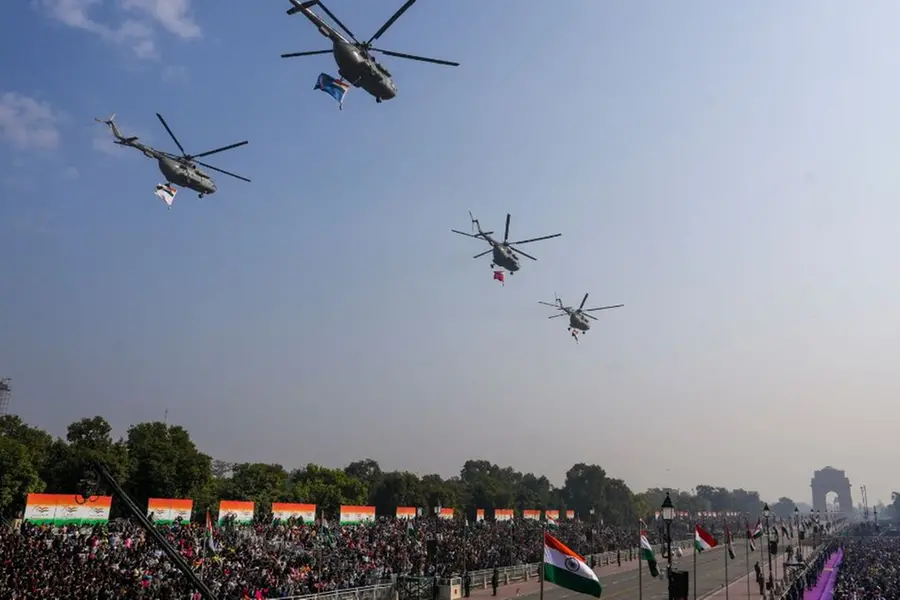
As India prepares to celebrate its 76th Republic Day on January 26, 2025, the Kartavya Path is alive with rehearsals for one of the nation's most iconic events. The annual Republic Day Parade will showcase India's rich cultural heritage, military might, and technological advancements, promising to captivate millions of viewers across the globe.
This year's parade theme, 'Swarnim Bharat: Virasat aur Vikas' (Golden India: Heritage and Development), reflects the nation's remarkable journey through history, blending traditions with modernity. From majestic marching contingents to cutting-edge indigenous defence technology, the 2025 Republic Day Parade is poised to highlight India’s resilience, diversity, and aspirations.
Marching to Glory: Honoring Tradition and Valour
The backbone of the Republic Day Parade is the resplendent display of marching contingents, epitomising the valour, discipline, and history of the Indian Army. This year, six iconic regiments will participate, each carrying forward a rich legacy:
Brigade of The Guards: Established post-independence, this regiment was the first to embrace the concept of 'all-India, all-class' recruitment, symbolizing national integration. Known for their unmatched professionalism, the Brigade of The Guards has been part of several pivotal operations and holds numerous battle honors.
The Mahar Regiment: Known for its origins in central India, this regiment has a storied history dating back to World War II. Renowned for its gallantry, it has participated in various operations, including the 1965 and 1971 wars, and has earned accolades for its service in challenging terrains.
The Jat Regiment: One of the oldest regiments in the Indian Army, the Jat Regiment boasts a history of exceptional bravery and service, tracing back to the early 19th century. Their motto, "Sangathan Va Veerta" (Unity and Valour), reflects their indomitable spirit.
The Garhwal Rifles: Representing the warriors of Uttarakhand, this regiment is famed for its role in various conflicts, particularly during the World Wars and India’s post-independence wars. Known for their discipline and courage, they hold a place of pride in the Indian Army.
The Jammu and Kashmir Rifles: A regiment with roots in the erstwhile princely state of Jammu and Kashmir, it exemplifies the integration of diverse communities within the armed forces. The regiment has been pivotal in safeguarding India’s northern borders.
The Corps of Signals: Dubbed the "Nerves of the Army," this corps is responsible for maintaining seamless communication during operations. Their technical expertise ensures that the modern battlefield remains interconnected and coordinated.
Accompanying these contingents, the 61st Cavalry Regiment, the world's last operational mounted cavalry unit, will grace the parade. Their majestic horses and gallant riders symbolize the enduring traditions of the Indian Army. This regiment continues to carry forward the heritage of cavalry warfare, even in an era dominated by mechanization.
The pride of the Army's marching contingents is complemented by the precision and harmony of the Army Band, which will perform a repertoire of martial music and patriotic anthems, leaving the audience spellbound.
Showcasing India's defence might
One of the most eagerly anticipated segments of the parade is the display of military equipment, reflecting India’s technological prowess and operational readiness. The parade will feature an array of advanced weapon systems, each playing a crucial role in the nation’s defence capabilities:
T-90 Bhishma: This main battle tank, co-developed with Russia, is equipped with cutting-edge firepower, enhanced armor, and a robust engine, making it a formidable force on the battlefield. Its combat performance has been a game-changer in the Army’s armored corps.
ICV BMP-II (Sarath): An infantry combat vehicle known for its agility and versatility, the Sarath enhances the mobility and firepower of mechanized infantry units. It is capable of operating in diverse terrains and is integral to rapid-response operations.
NAMIS (Nag Missile System): A highlight of India’s indigenous weaponry, the NAMIS is an advanced anti-tank guided missile system. Its fire-and-forget capability and precision strike potential make it a key asset in modern warfare.
Pinaka Rocket System (Agnibaan): Developed by the DRDO, this multiple launch rocket system is known for its precision and lethality. It has played a crucial role in artillery modernization and is recognized for its ability to deliver a high volume of fire in a short time.
Akash Air Defence System: This medium-range surface-to-air missile system is a vital part of India’s air defence network. Capable of neutralizing aerial threats, the Akash system underscores India’s focus on self-reliance in defence production.
BrahMos Missile System: A product of India-Russia collaboration, the BrahMos is one of the fastest supersonic cruise missiles in the world. Its versatility allows it to be launched from land, sea, and air, making it a critical component of India’s strategic deterrence.
Battlefield Surveillance Systems (Sanjay): These advanced systems provide real-time situational awareness, enabling commanders to make informed decisions on the battlefield. Their integration enhances the Army’s operational efficiency.
Light Strike Vehicles (Bajrang): Designed for tactical operations in challenging terrains, these vehicles combine agility and firepower, making them ideal for reconnaissance and quick-strike missions.
All-Terrain Vehicles (Chetak): Built for rugged landscapes, these vehicles ensure operational efficiency in areas with extreme weather and terrain conditions.
The inclusion of these systems underscores India’s focus on indigenization under the ‘Atmanirbhar Bharat’ initiative, showcasing the success of the domestic defence manufacturing industry.
Cultural Heritage of India
The Republic Day Parade is incomplete without the vibrant tableaux that showcase the country’s cultural and developmental achievements. This year, state tableaux will depict themes ranging from India’s ancient heritage to its modern innovations, reflecting the unity in diversity that defines the nation.
The "Nari Shakti" contingent, featuring women officers across the armed forces, will symbolize the growing role of women in defence, a tribute to their contributions to the nation’s security.
This year’s celebrations will see increased public participation, with 10,000 special guests from diverse walks of life invited to witness the parade. These guests include beneficiaries of government schemes, grassroots achievers, and individuals who have made significant contributions to their communities.
Adding an international dimension, Indonesian President Prabowo Subianto will be the chief guest, reflecting the deep-rooted cultural and strategic ties between India and Indonesia.
As the 76th Republic Day approaches, the parade stands as a powerful reflection of India’s journey -- celebrating its past, embracing its present, and looking toward a future of limitless possibilities.
The author of this article is an award-winning Science Writer and a Defence, Aerospace & Political Analyst based in Bengaluru
Published: 25 Jan 2025, 10:19 am IST
Related Topics
Disclaimer: Kindly avoid objectionable, derogatory, unlawful and lewd comments, while responding to reports. Such comments are punishable under cyber laws. Please keep away from personal attacks. The opinions expressed here are the personal opinions of readers and not that of Mathrubhumi.
