
Using examples from negotiation history, especially with China, Balachandran described how diplomatic method and psychological framing matter as much as formal positions
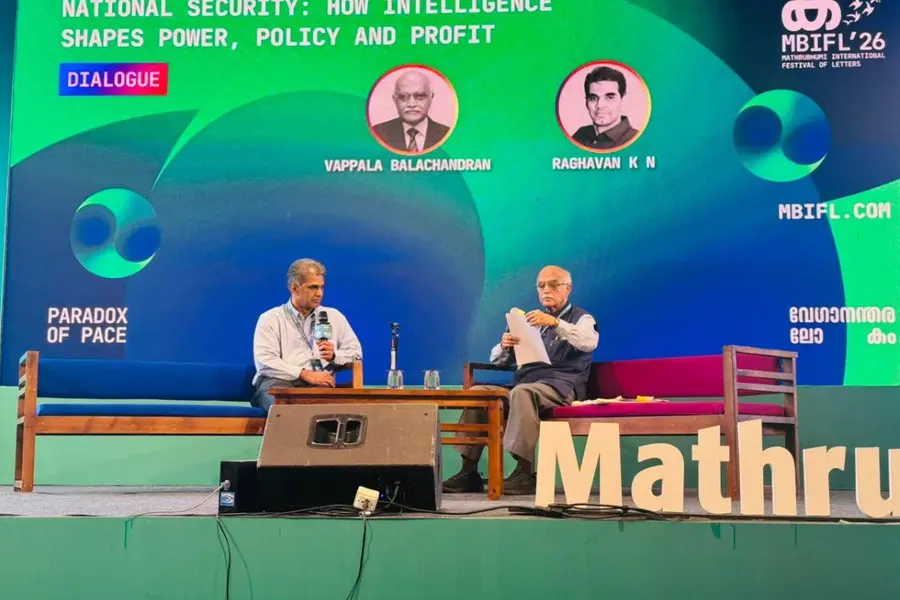
Intelligence work is not about cinematic heroics or covert glamour, but about imagination, verification and strategic patience- that was the core message from former intelligence officials Vappala Balachandran and K.N. Raghavan during the session “National Security: How Intelligence Shapes Power, Policy and Profit” at MBIFL 2026.
Drawing from decades inside India’s security and intelligence establishment, the conversation moved from China strategy and negotiation culture to intelligence failures, misinformation in popular media, and why trade, not just confrontation often becomes the practical path forward.
Balachandran, reflecting on his experience during the Rajiv Gandhi era and key diplomatic engagements with China, said intelligence must function as a decision-support system, not a dramatic strike force. “No intelligence agency should have a Rambo culture,” he said, warning against action-driven myths that distort the discipline’s real purpose.
He stressed that one of the biggest gaps in modern intelligence systems -including in advanced countries is imagination: the ability to anticipate danger before it fully forms. Citing the 9/11 inquiry findings, he noted that signals often exist before major events. Strategic intelligence, he suggested, remains underdeveloped when governments fail to invest in deep expertise and long-horizon thinking.
Using examples from negotiation history, especially with China, Balachandran described how diplomatic method and psychological framing matter as much as formal positions. Countries like the United States, he noted, built long experience studying Chinese negotiation styles. Engagement requires patience and structural awareness, not rhetorical toughness.
The discussion also touched on how intelligence is misrepresented in popular culture. Balachandran recalled being asked to review a series on Netflix that portrayed Pakistan’s nuclear infrastructure as having been destroyed by Indian intelligence — a claim he described as factually wrong. The gap between “reel and real,” he said, often creates public misunderstanding of how intelligence operations actually work.
On India–China relations, both speakers leaned toward pragmatic engagement. Despite border tensions and strategic rivalry, trade channels and working relationships remain necessary stabilisers. Balachandran pointed out that even during earlier high-level exchanges, Chinese leadership had emphasised maintaining trade ties despite disputes — a line he sees echoed in current trends.
Published: 01 Feb 2026, 09:27 am IST
Related Topics
Disclaimer: Kindly avoid objectionable, derogatory, unlawful and lewd comments, while responding to reports. Such comments are punishable under cyber laws. Please keep away from personal attacks. The opinions expressed here are the personal opinions of readers and not that of Mathrubhumi.
