
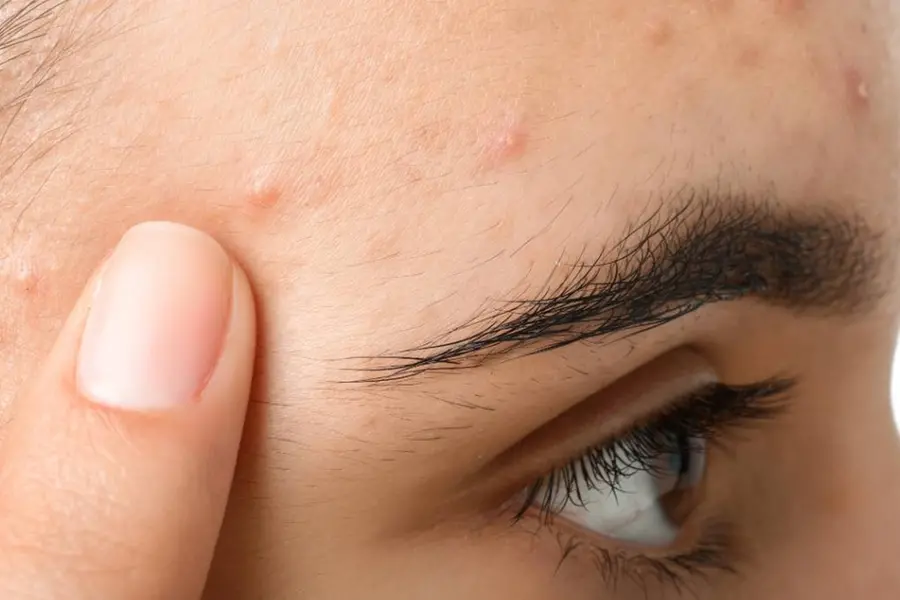
It won’t be an exaggeration if we say the skin is the mirror of the body. It reflects a lot of internal diseases, especially those due to hormonal imbalances. Some of the symptoms are:
Acne
Acne seen due to hormonal conditions such as polycystic ovary syndrome (PCOS) and Cushing Syndrome may be more severe than usual and may not respond to normal medications.
Black Spots
Acanthosis nigricans may look like a black, velvety discolouration that appears around the neck. It can be found on the armpits and thighs, and rarely on the face and palms as well. It is commonly seen in people with diabetes, a condition in which the pancreas creates little or no insulin, obesity, and polycystic ovary syndrome (PCOS). Another symptom seen in these people is small bumps or skin tags.
Dry skin
Although dry skin is generally hereditary, it can be a symptom of thyroid disease in a few individuals. Dry skin is more likely when you have diabetes. Dry skin also causes itchiness.
Thin, frail skin
Thin or frail skin can be seen in Cushing Syndrome, along with obesity and facial swelling. As the skin becomes very thin, the blood vessels may be clearly visible. In pregnant women, stretch marks can occur on the abdomen due to the thinning of the skin.
Black/brown patches or spots
Dark spots are seen in many conditions, including melasma, and are commonly seen on the face, mainly on the cheeks and under the eyes. It develops during menopause and,in some cases, during pregnancy. Although it is hereditary, changes in female hormones also contribute to it.
Dark spots on the body can be a symptom of Addison's Disease, caused by underactive adrenal glands. Areas that are naturally dark, like the mucus membrane inside the mouth, the creases or folds on the hands, the genitals, and the nipples, become darker. A deficiency of vitamin B12 can cause darkening in finger creases.
Dandruff
Chronic or severe dandruff can be a symptom of certain rare hormone-producing tumors.
Hair loss
Hair loss can be a symptom of thyroid disorders. The hair follicles can become dry and weak. In women with hereditary baldness, a decrease in estrogen due to menopause or surgical removal of the ovaries may develop baldness.
Other skin problems
Other skin conditions associated with thyroid disorders include autoimmune diseases such as herpes simplex, alopecia areata, which causes hair loss in small circular patches, and urticaria, which causes itchy skin. Persistent skin infections (bacterial infections with pus, fungal infections in the groin, armpits, and nipples in women) and bruises that take longer to heal can be signs of diabetes.
When faced with such skin problems, tests should be done to determine the underlying hormonal disorders, and appropriate treatment should be taken.
The writer is an assistant professor in the Department of Dermatology at Kottayam Govt. Medical College.
(Published in Arogya Masika)
Published: 21 Mar 2024, 12:54 pm IST
Related Topics
Disclaimer: Kindly avoid objectionable, derogatory, unlawful and lewd comments, while responding to reports. Such comments are punishable under cyber laws. Please keep away from personal attacks. The opinions expressed here are the personal opinions of readers and not that of Mathrubhumi.
