
From American diners to menus around the world, smashburger has become a popular burger style known for its thin patty, crisp edges and intense griddle-seared flavour. The term has also become increasingly common in food culture and everyday conversation.
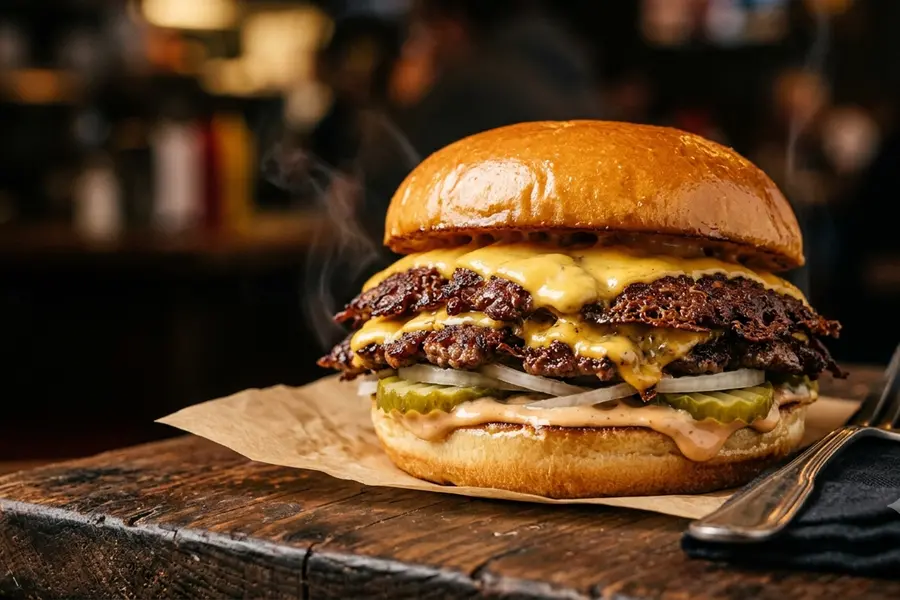
Word of the Day: SMASHBURGER
Pronunciation: UK: /ˈsmæʃˌbɜː.ɡə/ or US: /ˈsmæʃˌbɝː.ɡɚ/
Meaning:
A smashburger (or smash burger) is a style of hamburger where a ball of ground beef is firmly smashed flat onto a searingly hot griddle or cast-iron pan using a heavy spatula or press. This rapid, intense pressure creates a thin patty with craggy, ultra-crispy caramelized edges while keeping the center juicy.
Also Read

Example for daily usage:
- "Instead of a thick, pub-style patty, I prefer a double smashburger because the crispy, caramelized edges add so much texture."
- "They fired up the outdoor griddle on Saturday afternoon to cook smashburgers for the entire garden party."
Origin and history:
While thin, pressed patties date back to 1930s American diners and Depression-era tricks to stretch ground beef, the legendary origin story of the modern smash technique points to a diner called Dairy Cheer in Ashland, Kentucky, during the 1960s.
As the story goes, a line cook discovered that smashing a beef ball onto the griddle with a heavy No. 10 bean can produced a far crisper, more flavor-packed patty. The technique maximizes the Maillard reaction—the chemical reaction between amino acids and reducing sugars that gives browned food its complex, savory taste. While fast-food chains and independent diners kept the technique alive for decades, the name and culinary style erupted into a global fast-casual phenomenon during the 2000s and 2010s.
ALSO READ | Word of the Day, August 8: 'Pandemonium’
Cultural significance and modern usage:
In recent years, the smashburger has transformed from humble diner fare into a dominant global trend in casual gastronomy. Food critics and home cooks favor the method because it relies on culinary science (maximizing surface-area browning) rather than sheer size. It is commonly served on a toasted potato bun with melted American cheese, pickles, and a tangy burger sauce.
Interesting facts:
The Golden Window: Professional chefs emphasize that a burger should only be smashed within the first 30 seconds of hitting the hot griddle. Smashed early, the fat is still cold and locks in; smashed late, you squeeze out all the melted juices, leaving the meat dry.
High-Fat Ratio: The ideal smashburger requires ground beef with a higher fat content (typically 70/30 or 80/20). The rendered fat acts as the frying agent on the flat-top grill, creating the iconic lace-like, crispy crust.
Examples from food literature & journalism:
- "Squash them flat, pile them high: the rise and rise of the smashburger has redefined fast-casual dining." — The Guardian (2024)
- "The magic of a true smashburger isn't in the size of the beef, but in the crackling, lacy crust forged by iron and extreme heat." — George Motz, Hamburger America (2016)
- "In every bite of a smashburger, the contrast between the tender interior and the craggy, seared perimeter creates absolute texture perfection." — Food Network Magazine
Synonyms:
- Smashed patty
- Diner burger
- Flat-top burger
- Griddle burger
Antonyms:
- Pub burger
- Bistro burger
- Thick-cut patty
Read more Word of the day here.
Published: 10 Aug 2026, 08:00 am IST
ABOUT THE AUTHOR
Related Topics
Disclaimer: Kindly avoid objectionable, derogatory, unlawful and lewd comments, while responding to reports. Such comments are punishable under cyber laws. Please keep away from personal attacks. The opinions expressed here are the personal opinions of readers and not that of Mathrubhumi.