
Kannada writer Banu Mushtaq`s "Heart Lamp" wins the 2025 International Booker Prize, making history as the first Kannada work to receive the award.
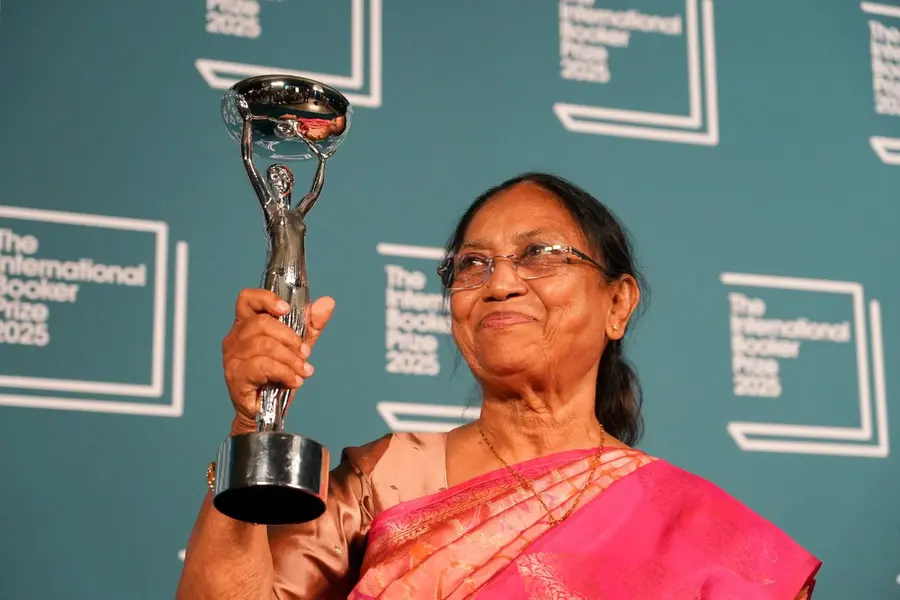
Banu Mushtaq just made history. At 77, the writer, lawyer and activist became the first Kannada author to win the International Booker Prize, sharing the honour with translator Deepa Bhasthi. Their book, ‘Heart Lamp’, not only brought global recognition to Kannada literature but also became the first short story collection to ever win this prestigious award.
But who is Banu Mushtaq? Here’s everything you need to know about the woman behind this remarkable achievement.
The book that lit up the world
‘Heart Lamp’ is a collection of 12 short stories written between 1990 and 2023. These stories focus on the everyday lives of Muslim women in Karnataka.
Speaking at the award ceremony in London, Banu described the win as a “thousand fireflies lighting a single sky – brief, brilliant and utterly collective.”
She dedicated the prize to her language and her community.
From small-town girl to literary icon
Banu Mushtaq grew up in a small town in Karnataka. Although her first language was Urdu, she was enrolled in a convent school where she had to learn Kannada. Over time, Kannada became the language of her writing, even though it was once unfamiliar.
She began writing at a young age, but her journey was far from easy. After marrying the man of her choice at 26, her life quickly changed. She was expected to wear a burqa, stay at home, and give up her dreams. She later opened up about suffering from postpartum depression and how writing became her escape.
A voice for the marginalised
Banu started writing seriously during the 1970s and 1980s, a time of major social movements in Karnataka. From Dalit struggles to environmental protests and women’s rights, these events influenced her deeply. She said in an interview with The Booker Prize that working with “marginalised communities, women and the neglected” gave her the courage and inspiration to write.
Her stories often speak about the pain and challenges women face in society, especially when religion and culture are used to silence them. Banu believes that the suffering she witnessed, both in real life and in the media, shaped the emotional core of her work.
Not just a writer
Banu Mushtaq isn’t just a literary voice—she’s a trained lawyer, a former journalist, and a two-time member of the Hassan City municipal council. Her diverse career reflects her lifelong commitment to justice, equality, and change.
One of her stories, Kari Nagaragalu, was turned into the award-winning film Hasina by director Girish Kasaravalli. Her works have also been translated into Urdu, Hindi, Tamil, and Malayalam—Heart Lamp is her first full-length work translated into English.
A life of resistance
Banu has never shied away from speaking her mind. In fact, she once faced death threats and a fatwa after supporting women’s right to pray in mosques.
In an interview, she also revealed a dark moment from her past, where she nearly set herself on fire during a period of despair. It was her husband’s intervention—and the sight of their baby—that stopped her.
Despite the challenges, she continued to write and speak up for women. Her courage and commitment have made her not just a celebrated author but a symbol of strength and resilience.
A win for Kannada and beyond
Banu Mushtaq’s Booker Prize win is a proud moment for Indian literature and a major breakthrough for Kannada writing. It shows that even stories rooted in small towns and local experiences can reach global audiences when told with honesty and heart.
In her words: “What a beautiful win this is for my beautiful language.”
(Agency inputs)
Published: 21 May 2025, 09:46 am IST
Disclaimer: Kindly avoid objectionable, derogatory, unlawful and lewd comments, while responding to reports. Such comments are punishable under cyber laws. Please keep away from personal attacks. The opinions expressed here are the personal opinions of readers and not that of Mathrubhumi.
