
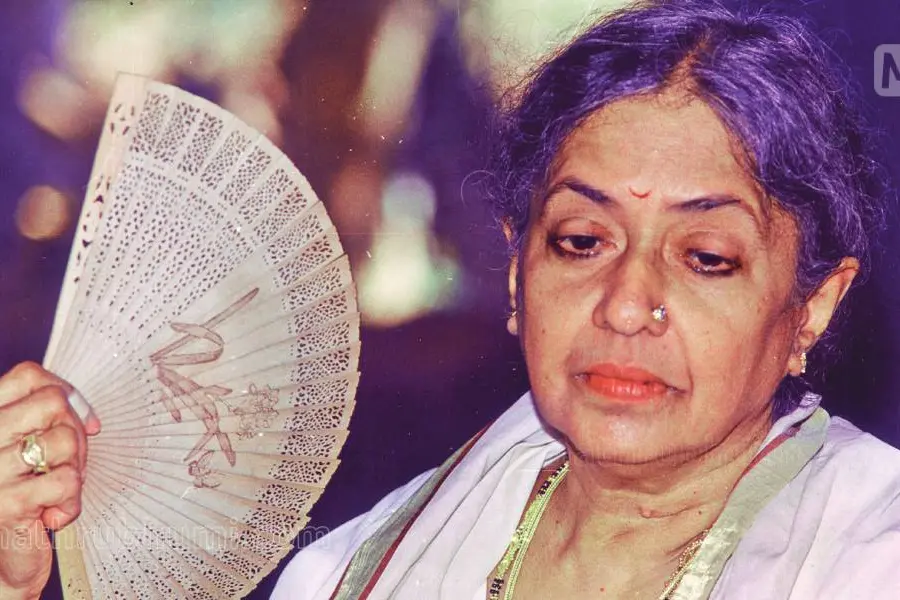
Kamala Das, Malayali’s own Madhavikutty, passed away fifteen years ago, on May 31, 2009. Kamala, later identified as Kamala Suraiyya, is known to the world as a confessional writer. Often compared to American poet and writer Sylvia Plath, Kamala has never shied away from portraying her innermost emotions and convictions through her literary oeuvre.
Born on March 31, 1934, as the daughter of celebrated Malayalam poet Balamaniyamma and editor V Madhavan Nair, Madhavikutty started venturing into the world of literature at a very young age. Even though she spent most part of her early years in Kolkata, she always longed to be with her grandmother at the ancestral house at Nalapat, whom she loved more than anyone. Her works, especially her poems like ‘My Grandmother’s House’, delves deep into her nostalgic psyche, yearning to go back to the past and be with her grandmother. Kamala strongly believed that no one could love her like her grandmother.
Kamala was married by the age of 15 to Madhav Das, a bank officer. It was also the age which apparently created a shift in her narratives which started dealing with more sophisticated feelings of a woman’s psyche. Kamala primarily wrote poems and short stories, the former in English and the latter in Malayalam. She has also penned non-fiction pieces predominantly drawing attention to women’s issues, child care, and others.
Kamala’s works are able to reopen infected wounds, only to remove the infection, thereby healing the injury altogether. She explored vulnerable truths and was one among the first woman writers in India to write for women about women. Écriture féminine (women’s writing) was her forte. She wrote what women hardly dared to write or speak at the time.
If born at the wrong place at the wrong time, Kamala would have been branded a witch for her explicit and raw style of writing. Malayali readers, especially men, were the most uncomfortable and irritated by her narratives as they saw a persona of an author hardly attempting to imitate the content of men who wrote about women. The notion of an ideal woman, whose emotions are unilateral and never reciprocated, were idealised by writers up until then. Kamala not only attempted but also succeeded in breaking this system.
Her major works include ‘My Story’, ‘Childhood Memories’, ‘Summer in Calcutta’, ‘Descendants’, ‘A Doll for the Child Prostitute’, and others. Kamala was also shortlisted for the Nobel Prize in Literature in 1984.
Published: 31 May 2024, 12:43 pm IST
Related Topics
Disclaimer: Kindly avoid objectionable, derogatory, unlawful and lewd comments, while responding to reports. Such comments are punishable under cyber laws. Please keep away from personal attacks. The opinions expressed here are the personal opinions of readers and not that of Mathrubhumi.
