
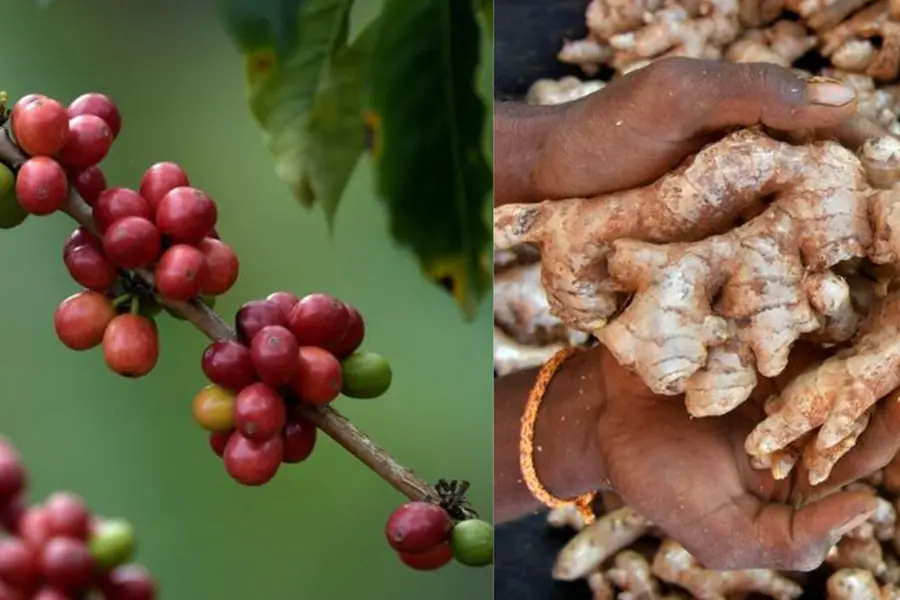
Wayanad (Kerala): As the harvest season reaches its peak, coffee farmers in Wayanad district of Kerala, who have faced years of market crashes, are witnessing an upward trend in prices, bringing renewed hope. Last year, during the same period, the price of cherry coffee hovered around ₹14,000 per quintal. It later surged rapidly to ₹22,000 per quintal. Although the price briefly dipped to ₹18,000, it quickly rebounded and has remained stable at ₹22,000 for an extended period.
Typically, prices of all agricultural products decline during the harvest phase. However, this time, coffee prices not only avoided a drop, but continued to climb further. Currently, the price of cherry coffee in various parts of Wayanad stands between ₹28,000 and ₹28,500 per quintal. As a crop relied upon by most farmers in the region, coffee remains central to the agricultural economy.
Coffee: The foreign exchange leader
Coffee is now among the highest foreign exchange earners for the region, making it a key focus. The Coffee Board provides numerous incentives to promote cultivation, resulting in an expansion of coffee farming. However, due to climate change, Wayanad’s coffee production has notably declined compared to previous years.
On a global scale, there are projections of a coffee shortage this year, making farmers reluctant to sell their stocks. This has supported steady price levels, with expectations of further increases in the coming days.
Yet ginger prices bring pain to ryots
In stark contrast, ginger farmers have faced unrelenting price declines since the start of the season. The price, which stood at ₹4,500 per sack in Wayanad last year, has now plummeted to ₹1,400—marking a sharp fall from the ₹10,000-per-sack price two years ago. This season, ginger production has been robust in Wayanad and neighbouring Karnataka, where production has nearly doubled compared to the previous year.
This dramatic increase in availability, coupled with stagnant retail demand, is the primary cause of the steep price drop. In previous instances, excessive production following a surge in prices has led to similar market crashes. This year, cultivating one acre of ginger costs between ₹5,00,000 and ₹8,00,000, with seed ginger prices exceeding ₹8,000 per quintal and labour and lease costs doubling. These skyrocketing expenses have exacerbated the financial burden on farmers.
Black pepper also faces challenges
Although pepper prices have seen a slight increase, the market remains fraught with challenges. Unregulated imports and the influx of foreign produce into the domestic market continue to cause frequent fluctuations. This year, pepper production in Wayanad has been negligible, with most farmers refusing to sell even the limited quantities they have. As a result, black pepper is scarcely available in trade markets.
This situation is mirrored in Idukki and Karnataka’s main pepper-producing districts, including Kodagu, Hassan and Chikmagalur. Currently, black pepper prices in Wayanad are around ₹62,000–₹63,000 per quintal.
Mild improvements in rubber and banana markets
Rubber prices have shown minor progress in recent days. After dropping from ₹22,000 per quintal in August–September to ₹16,000, prices have now recovered to approximately ₹18,000. The end of the rainy season and reduced production have contributed to this improvement.
Nendran bananas, which recently fetched a favourable price of ₹5,500 per quintal, have now dropped to ₹4,800. Meanwhile, yam prices have remained steady at ₹2,600 per quintal for some time. With farmers shifting to alternative crops, yam production in Wayanad and surrounding areas has declined drastically, resulting in good prices over the past few seasons.
Published: 06 Jan 2025, 08:26 am IST
Related Topics
Disclaimer: Kindly avoid objectionable, derogatory, unlawful and lewd comments, while responding to reports. Such comments are punishable under cyber laws. Please keep away from personal attacks. The opinions expressed here are the personal opinions of readers and not that of Mathrubhumi.
