
Private mills in Kerala are demanding up to 5% discounts on government paddy procurement, causing financial losses and concerns for local farmers
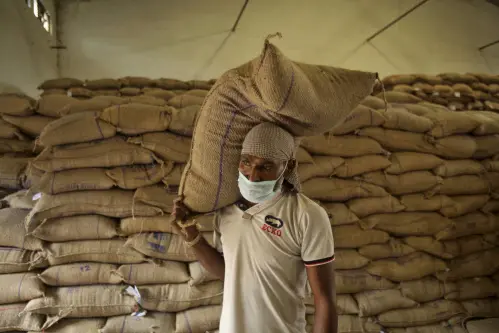
Thrissur: Private rice mills are demanding deductions of up to five per cent from farmers in government paddy procurement, compared with one or two per cent last year, raising fears of substantial losses for cultivators. The additional deductions are being justified in the name of moisture content and perceived poor quality. The plight is such that even if overall paddy production increases, farmers may not benefit from the higher yields.
Supplyco, the state-run procurement agency, has approved 17 per cent moisture in paddy. However, even when the moisture content is 14 or 15 per cent, deductions are still being applied. Most farmers are currently seeing deductions of around 2.5 per cent, whereas last season paddy was collected from many farmers without any deductions. Collection without deductions has now become extremely rare.
Also Read| Hidden danger of Iran war: Fertiliser crisis that could send food prices soaring
Deductions are also being increased based on the paddy variety. Farmers report that millers are citing low market demand for the Ponmani variety as justification.
Under the current rules, paddy procured through Supplyco should be processed into rice and distributed through ration shops. Farmers argue that since paddy seed and fertilisers are distributed by the Agriculture Department, they should not be blamed over the paddy variety. Some millers reportedly delay harvesting as much as possible to maximise deductions. In several areas, paddy harvested at the end of January has still not been collected.
One farmer, who produced 6,590 kg of paddy, lost 164 kg due to a 2.5 per cent deduction, amounting to a financial loss of roughly Rs 4,940. The farmer faced a deduction even when the paddy was sold after being dried in the sun following harvesting.
Also Read| Coconut prices plunge sharply; crisis deepens for Kerala farmers
Farmers face practical limitations in switching to private mills that demand additional deductions. Filing a complaint against one mill and arranging another takes at least a week, and leaving paddy in the field that long is risky.
Consequently, farmers often feel powerless to protest the deductions. Many are even hesitant to raise concerns, fearing delays in harvesting or further penalties. Even in areas where there are no deduction issues, millers frequently arrive late after holidays to collect the paddy.
Published: 10 Mar 2026, 10:04 am IST
Disclaimer: Kindly avoid objectionable, derogatory, unlawful and lewd comments, while responding to reports. Such comments are punishable under cyber laws. Please keep away from personal attacks. The opinions expressed here are the personal opinions of readers and not that of Mathrubhumi.
