
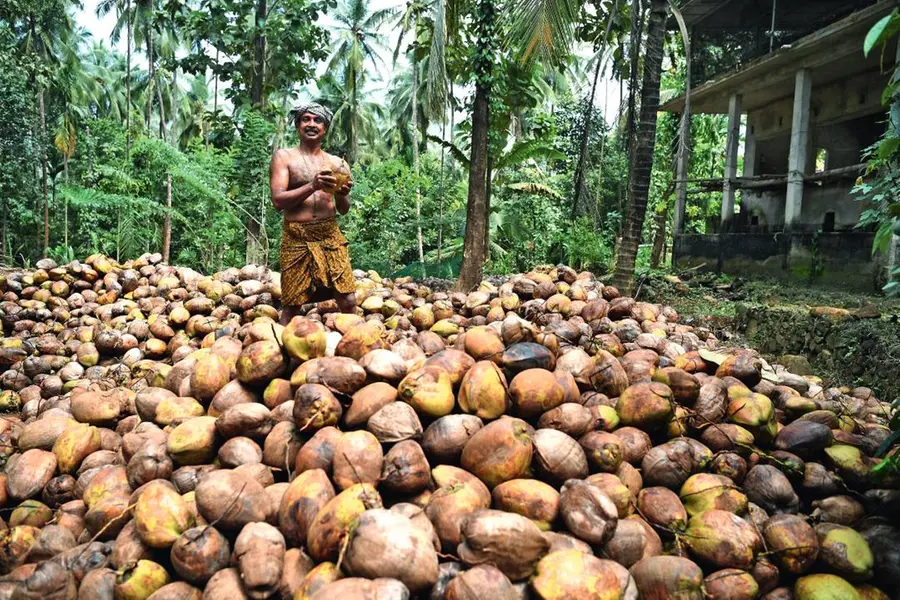
The dwindling size of farmland across India presents a critical challenge to the long-term viability of agriculture, threatening both food security and farmer livelihoods. However, in Kerala, innovative approaches such as Integrated Farming Systems (IFS) are offering promising solutions to this pressing issue.
IFS represents a holistic approach to farming, where various crops, animals, and subsidiary enterprises are interlinked to maximize resource utilization, profitability, and sustainability while minimizing environmental impact. One particularly successful implementation of IFS in Kerala revolves around coconut farming, a staple of the region's agriculture.
Through a collaborative effort involving farmers and technological interventions, coconut-based integrated farming models have been established, tailored to the needs of local communities. These models incorporate diverse cropping systems, including both cash crops and food security crops, with the aim of ensuring year-round income for farmers.
Key components of these integrated systems include intercropping to optimize land use, the integration of animal husbandry for additional revenue streams, and value addition through product diversification. Additionally, waste biomass is efficiently recycled through vermicomposting, contributing to sustainable agricultural practices.
The results speak for themselves: by diversifying crops and incorporating subsidiary enterprises, farmers have witnessed a remarkable 83% increase in income compared to traditional coconut farming alone. When factoring in activities such as livestock rearing and value addition, this income surge climbs to an impressive 195%.
These successful models, pioneered by the Central Plantation Crops Research Institute (CPCRI) and embraced by farmers across Kerala, offer a beacon of hope amidst the challenges facing agriculture. By promoting productivity, profitability, and environmental stewardship, integrated farming systems are not just transforming Kerala's agricultural landscape but also serving as a blueprint for sustainable farming practices nationwide.
Published: 06 Apr 2024, 10:01 pm IST
Related Topics
Disclaimer: Kindly avoid objectionable, derogatory, unlawful and lewd comments, while responding to reports. Such comments are punishable under cyber laws. Please keep away from personal attacks. The opinions expressed here are the personal opinions of readers and not that of Mathrubhumi.
