
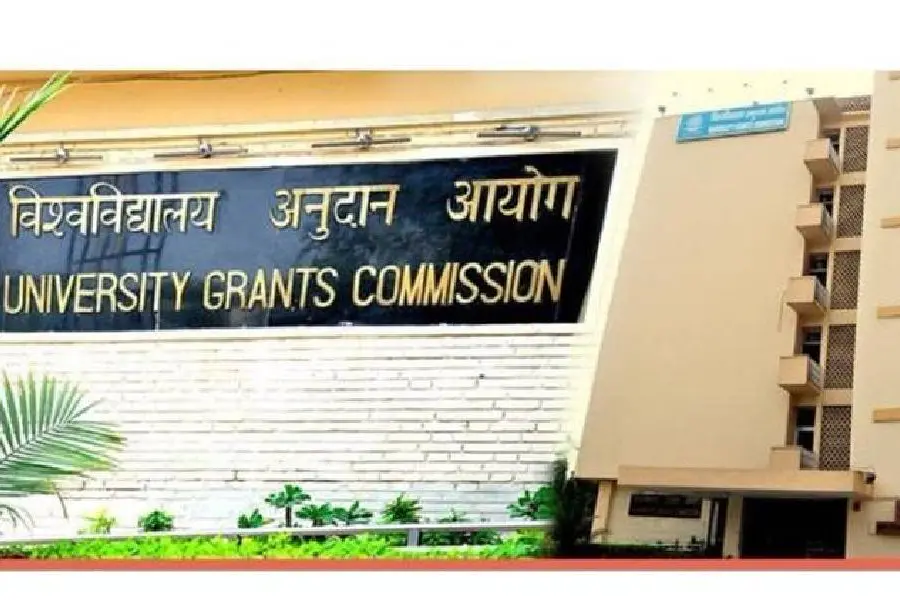
The University Grants Commission (UGC) has proposed draft regulations for establishing Equal Opportunity Centres (EOC) in higher education institutions (HEIs) to ensure policies and programmes for disadvantaged groups are implemented effectively. The move follows a Supreme Court directive on January 3, instructing UGC to notify new regulations within six weeks to address caste-based discrimination and student suicides in HEIs.
The directive came in response to a 2019 petition filed by Radhika Vemula and Abeda Salim Tadvi, mothers of Rohith Vemula and Payal Tadvi, who allegedly died by suicide due to caste discrimination. The petition highlighted widespread caste-based discrimination in universities and sought strict enforcement of existing regulations.
The Draft UGC Promotion of Equity in Higher Education Institutions Regulations, 2025 aims to eliminate discrimination based on religion, race, sex, place of birth, or caste, with particular focus on Scheduled Castes (SC), Scheduled Tribes (ST), socially and educationally backward classes, and economically weaker sections (EWS). The goal is to promote equity and inclusion across HEIs.
UGC has invited public feedback on the draft by March 28.
How will the Equal Opportunity Centres function?
Each EOC will be headed by the institution’s head as the ex-officio chairperson. A permanent professor with a demonstrated commitment to the welfare of disadvantaged groups will serve as the EOC coordinator and member secretary.
A 10-member Equity Committee will oversee the centre’s operations and address discrimination complaints. This committee will be chaired by the institution’s head and include:
- Four senior faculty members
- Two civil society representatives
- Two student special invitees (selected based on merit, sports, or co-curricular achievements)
- At least one woman and one SC and ST member must be included. While committee members will serve for two years, special invitees will have a one-year term.
The draft mandates the formation of Equity Squads to monitor and prevent discrimination on campuses. These mobile teams will visit vulnerable areas and report concerns to the EOC coordinator. Additionally, every unit, department, faculty, school, hostel, library, and facility must appoint an Equity Ambassador to promote equity and report violations.
A 24/7 Equity Helpline will be set up in every institution to assist individuals facing discrimination. Reports can be submitted anonymously, with confidentiality maintained upon request. Complaints may also be filed through an online portal, and cases involving penal laws will be referred to the police.
The Equity Committee must convene within 24 hours of receiving a complaint and submit its report within 15 working days. If the complaint involves the institution’s head, the EOC coordinator will chair the committee, and the report will be forwarded to a higher authority. False complaints may result in a fine, as determined by the Equity Committee.
What are the consequences of non-compliance?
Failure to comply with these regulations may lead to UGC investigations. Penalties for violations include:
- Debarment from UGC schemes
- Restrictions on degree programmes and online courses
- Removal from the UGC list
What led to the Supreme Court's intervention?
The Supreme Court has been actively addressing caste-based discrimination and suicides in IITs and IIMs. On Friday, a bench of Justices Surya Kant and N Kotiswar Singh termed the situation “extremely unfortunate” and pledged to develop a robust mechanism to prevent further tragedies.
Senior advocate Indira Jaising informed the court that 18 suicides had occurred in IITs and IIMs over the past 14 months. She argued that many universities and colleges had not submitted complete data on campus suicides, despite previous court orders.
The petitioners claimed that since 2004, over 50 students—mostly from SC/ST backgrounds—had taken their lives in IITs and other institutions due to caste-based discrimination. They urged the court to enforce strong disciplinary actions against victimisation and to establish EOCs with representation from SC/ST groups, NGOs, and social sector experts.
The Supreme Court has directed UGC to consider suggestions from stakeholders before finalising the regulations. Jaising sought a hearing before finalisation, but Solicitor General Tushar Mehta opposed it, stating that all suggestions should be submitted online instead.
Published: 01 Mar 2025, 11:03 am IST
Related Topics
Disclaimer: Kindly avoid objectionable, derogatory, unlawful and lewd comments, while responding to reports. Such comments are punishable under cyber laws. Please keep away from personal attacks. The opinions expressed here are the personal opinions of readers and not that of Mathrubhumi.
