
Today's word is dumpling, a word that has travelled far beyond the pages of old cookbooks and into everyday conversations
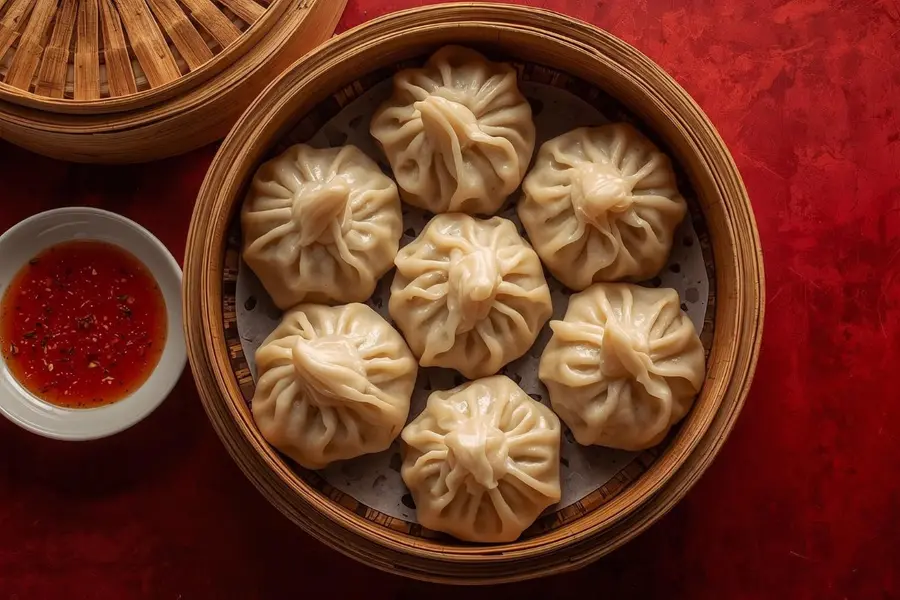
Word of the Day: DUMPLING
Pronunciation: UK /ˈdʌmplɪŋ/
US /ˈdʌmplɪŋ/
Meaning
A dumpling is a small portion of dough or pastry that is cooked, often by boiling, steaming or baking. Depending on the cuisine, it can be filled or unfilled and can be savoury or sweet. Dumplings may be served in soups and stews, or eaten as a dish on their own.
Examples for daily usage
- We ordered steamed dumplings and noodles for dinner.
- My grandmother makes soft dumplings to serve with the stew.
- These apple dumplings are best served warm.
Origin and history
The English word dumpling dates back to around the late 16th or early 17th century. Its exact origin is uncertain. Dictionaries and etymological sources have connected it with dump, possibly referring to a lump, while other theories suggest a Germanic or regional origin. The word originally referred to a mass of boiled dough or a wrapping in which something was cooked.
The food itself is much older than the English word. Similar dough-based foods developed in different parts of the world, which is why today's dumplings come in so many forms.
Chinese jiaozi, Japanese gyoza, Korean mandu, Tibetan and Nepali momo, Polish pierogi and Italian ravioli are some examples of foods that are commonly described as dumplings in English.
Also Read: Word of the Day, September 15: ‘Apprehensive’
Cultural significance and modern usage
Dumplings are closely associated with comfort food in many cultures. They can be part of everyday meals, celebrations or family traditions. In China, for example, jiaozi are strongly associated with Lunar New Year celebrations.
The word has also developed meanings beyond food. In informal English, dumpling can be used as an affectionate term for a person, while dumpling-shaped can describe someone or something that is rounded in shape.
Interesting facts
The word dumpling is much younger than the food category it describes.
Dumplings can be steamed, boiled, baked or fried, depending on the type.
Not all dumplings have a filling. British dumplings, for example, can simply be balls of dough cooked with a stew.
Apple dumplings are a sweet version in which fruit is enclosed in pastry and then baked or cooked.
Examples from literature
- “the Dumpling-Eaters are a Race sprung partly from the old Epicurean, and partly from the Peripatetic Sect” — Henry Carey, A Learned Dissertation on Dumpling (1726).
- “though something of what is called the dumpling shape; but I don't myself object to that” — Charles Dickens, The Cricket on the Hearth (1845).
Synonyms
Dough ball
Pastry
Read more Word of the Day here
Published: 17 Sept 2026, 08:00 am IST
ABOUT THE AUTHOR

Related Topics
Disclaimer: Kindly avoid objectionable, derogatory, unlawful and lewd comments, while responding to reports. Such comments are punishable under cyber laws. Please keep away from personal attacks. The opinions expressed here are the personal opinions of readers and not that of Mathrubhumi.