

This World Cup once again proves that neither wealth nor the population of a country matters much in a country’s sporting excellence
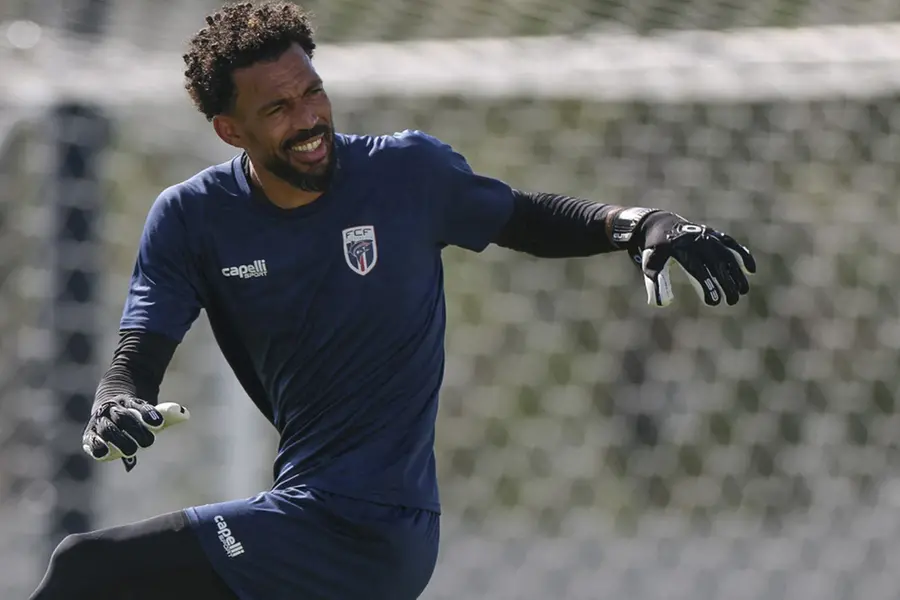
It was not just Spain—one of the strongest favourites to lift the 23rd FIFA World Cup—that was left stunned by the heroics of 40-year-old goalkeeper Vozinha. With seven extraordinary saves, including a breathtaking fingertip stop, the veteran custodian enabled World Cup debutants Cape Verde (Republic of Cabo Verde) to hold the European champions to a pulsating goalless draw at Atlanta Stadium on June 15. Almost every leading AI prediction model and sports analytics firm had given the tiny African island nation, the second-smallest among the tournament's 48 participants, only the slimmest chance of avoiding defeat. Yet, in a single unforgettable evening, Vozinha and his teammates humbled not only one of football's giants but also the seemingly infallible algorithms that had confidently forecast a Spanish victory.
The current World Cup, being held in the Americas, is not just the largest ever, with a record 48 nations competing, but also the most technology-driven championship ever. The competition among AI chatbots to secure a role in nearly every aspect of the game, including predicting outcomes, is as fierce as the tussle between competing nations. According to the China Daily, World Cup prediction has become a new battleground for AI. “Several Chinese large language models, including Qwen, DeepSeek, Kimi and MiniMax, have rolled out prediction features, turning the tournament into a new testing ground for AI-powered reasoning and data analysis”, it said.
Also Read
The historic Spain-Cape Verde match has underscored a larger truth: sport, at least in its most dynamic forms, may prove to be among the last frontiers of human endeavour to resist the relentless advance of artificial intelligence, which is rapidly transforming almost every sphere of life. This is not to overlook AI's formidable achievements. Intelligent systems already excel in many creative pursuits, from generating art and music to writing, and they have long dominated mind sports such as chess and poker. Indeed, chess has served as a benchmark of AI progress ever since IBM's Deep Blue defeated world champion Garry Kasparov in 1997, marking a watershed in the history of artificial intelligence.
Yet football remains a different proposition. The Spain–Cape Verde match demonstrated how the game's countless variables—human instinct, resilience, split-second improvisation, emotion and tactical discipline—can still defy even the most sophisticated algorithms and simulations. AI may accurately estimate probabilities, but it cannot fully anticipate the extraordinary moments that redefine them. That may remain true, at least until the RoboCup Federation—the international scientific initiative dedicated to advancing intelligent robotics—realises its ambitious goal of fielding a team of fully autonomous humanoid robots capable of defeating the human FIFA World Cup champions by 2050.
As many as nine major algorithmic models, including those specialising in sports analytics and predictions, had predicted an outright win (over 90% probability) for the European champions against the lowly African archipelago. Most of their score predictions were near-unanimous- 3-0. Among those whose predictions went terribly wrong were the mighty ChatGPT, Gemini, Perplexity, Opta Supercomputer, and Yahoo Sports AI. The most significant factor separating AI majors from reality was undoubtedly Joaimar José Evora Dias, alias Vozhinha, who became the Player of the Match. The outcome is considered the most statistically improbable result in tournament history. Google AI wrote: “The historic stalemate resulted in a total wipeout for traditional sports analytics models, mainstream LLMs and the vast majority of human bettors”. Most chatbot predictions went wrong about the outcome of the Brazil-Morocco match, too. Though most predictions overwhelmingly favoured Brazil, the match ended in a 1-1 draw.
Why did the machines fail and men win at the Atlanta stadium? The predictive mathematical models have now attributed their fiasco to several factors. 1. Over-reliance on teams’ market value. 2. Overestimation of attack and underestimation of defence 3. Failure to account for Cape Verde’s tactical discipline 4. Data gaps regarding debutant Cape Verde’s capabilities vis-à-vis Spain. Even more significant were the psychological and human factors that AI missed. Among them, the most conspicuous was the “heroic goalkeeper” variable. Platforms like ChatGPT have admitted that their code could not predict a flawless individual performance, which was beyond every data set. While the algorithm viewed Spain’s talent as an absolute advantage, it failed to account for the mounting anxiety and pressure gripping the Spanish players as time was running out.
Neither could AI foresee the unexpected kindling of the collective strength within the African players, who realised the possibility of seizing a historic opportunity. Though Vozhinha rightfully grabbed the global headlines, Cape Verde’s historic performance was a masterclass in collective defensive discipline and structural unity. Led by coach Bubista, several outfield players delivered career-defining performances to frustrate the Spaniards. They included formidable defenders like Roberto “Pico” Lopes, Edilson Borges “Diney”, Steven Moreira, and the veteran captain Ryan Mendes.
Interestingly, the outcome has now compelled some AI platforms to rethink their other predictions. Until this match, most chatbots were unanimous in picking Spain as the possible champions. They included the big three -ChatGPT, Gemini (Pro) and Perplexity- besides the highly regarded Opta Supercomputer.
Opta Supercomputer has now downgraded Spain’s chances from 16.02% to 14.97%. Some other models, such as the Gemini 3.5, have begun to move towards the Netherlands, France and Germany. While Manus favours France, a specialised model like 4C Predictions backs Portugal, the AI Dark Horse places its bet on Morocco. The criteria most platforms generally use are the squad depth, tactical consistency, historical data, and supercomputer simulations.
Though most AI models still back Spain as the “statistical favourite” and consider their shock from Cape Verde as a “statistical anomaly”, betting markets report a surge in support of Germany and France.
A spirited competition is on to predict the best player, too. Interestingly, neither of the two universal megastars -Argentina’s Lionel Messi or Portugal’s Cristiano Ronaldo- appears in any AI list to win the Golden Boots award. The top three favourites are Kylian Mbappe (France), Lamine Yamal (Spain) and Vincius Junior (Brazil).
Though it has taken a beating at the Atlanta Stadium, never before has AI’s role been as dominant in professional sports as it is in the ongoing World Cup, the largest in history, with a record 48 participating nations. The most technologically advanced tournament ever, this is the first FIFA World Cup to be held after generative AI chatbots took the world by storm, following OpenAI's development of ChatGPT in 2022. No wonder AI is playing such a major multi-layered role in the championship that FIFA calls it, using the largest live AI system ever deployed in professional sports. The most conspicuous generative AI assistant on display at the World Cup is the “Football AI Pro,” developed for FIFA by Lenovo, the Chinese tech multinational. Made available by FIFA to all 48 teams, it can analyse hundreds of millions of data points to generate insights in text, video, graphs, and 3D visualisations.
This World Cup once again proves that neither wealth nor the population of a country matters much in a country’s sporting excellence. Even a district like Thiruvananthapuram’s population (35 lakhs) is many times more than Curacao’s 1.85 lakhs or Cape Verde’s 5.43 lakhs, the smallest and the second smallest nations participating in the current World Cup. Though Curacao, a Caribbean island, ranks 56th among 197 countries by GDP thanks to its oil refineries, Cape Verde lags in wealth (172nd) too. Compare this to India, ranked fifth in GDP and first in population (1.35 billion), but which has never, except once by default during its golden era (1950), qualified to play in the FIFA World Cup, and is now ranked 138th among 211 countries by FIFA.
Published: 20 Jun 2026, 01:04 pm IST
ABOUT THE AUTHOR
Related Topics
Disclaimer: Kindly avoid objectionable, derogatory, unlawful and lewd comments, while responding to reports. Such comments are punishable under cyber laws. Please keep away from personal attacks. The opinions expressed here are the personal opinions of readers and not that of Mathrubhumi.