
If history resides in every speck of a particular land, wouldn't its hallowed past appear just normal to its people? Wouldn't only outsiders find it big enough to celebrate? Wouldn't a home of several celebrities think none of them need to be particularly memorialized? It's the simple law of supply and demand.
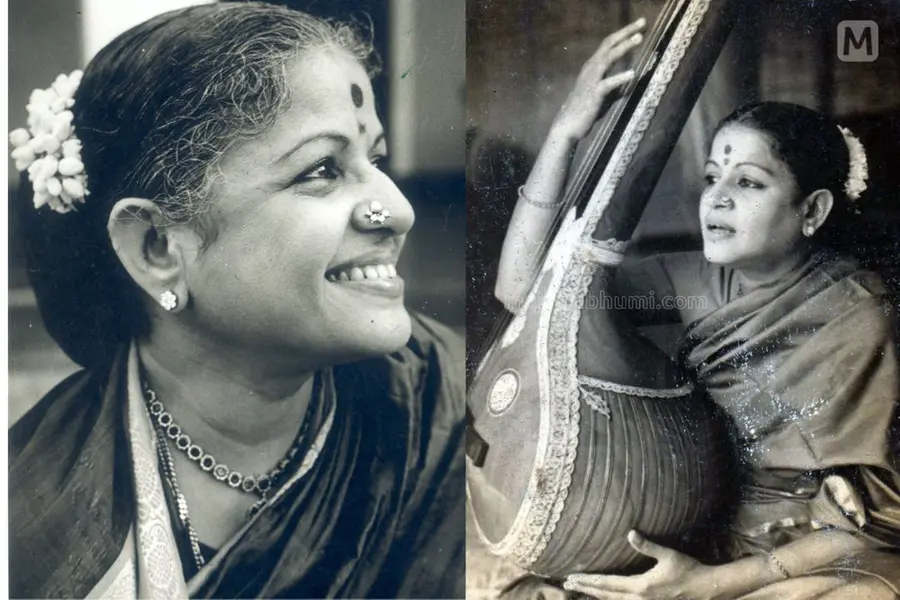
Yet, how could Madurai, the land of eternal history and countless celebrities, ignore her greatest citizen of the last century, so much? It has been nearly two decades since the passing away of Madurai Shanmukhavadivu Subbulakshmi, one of the greatest musicians humanity has known and the first singer to win India’s highest civilian honour, Bharat Ratna. TJS George starts his brilliant biography of the singer by saying Subbulakshmi was born to two mothers- Madurai and Shanmugkhavadivu- the names that formed her famous initials, MS. Hasn't she herself sung soulfully, "En thai nee andro, Meenakshi …"?
Perhaps Madurai, the abode of Goddess Meenakshi, couldn’t care less about anyone less than Her. But how could Madurai keep no trace of the memory of her famed daughter who lived here until her teens and from where she emerged a star before shifting to Chennai? The only MS memorabilia that we experienced in the city during a recent visit was the soul-soothing Venkatesa Suprabhatam, heard aloud from our hotel at dawn. The famous MS rendition awakened India’s many homes and cities every morning. Should even the “toonga nagaram” (the city that never sleeps, as Madurai was called once) need MS to awaken her?
Countless cobwebs of crowded roads and narrow alleys form concentric circles around the Meenakshi shrine. They always overflow with constantly moving people, honking vehicles, lazy cows, and foraging pigs. Lying amidst this cacophonic maze is one of the narrowest by-lanes with its heavy name- West Hanumantharayan Koil Street. Located at a stone's throw from the shrine’s imposing Western Tower, no vehicle can pass through the little lane sandwiched between the lines of tiny shops, set cheek in jowl. We parked our vehicle on the crowded outer road and negotiated our way through to the street. A few steps ahead, we saw the solitary, ancient-looking window grill jutting out from a row of relatively recent-looking concrete structures. It was on the floor atop a shop that sold bags. On its adjoining outer wall was a concrete veena motif. I had read somewhere about it as the only remaining music motif at the place where one of India's greatest musicians was born and which was frequented by many musical geniuses of the time to visit her veena exponent mother. According to TJS, the house had been recognised as a temple of music and a meeting point for music lovers. "Nagaswaram troupes that went by Hanumantharayar Street or even the West Tower Street would stop, turn towards her house and play a vigorous movement or two in her honour before passing on". Shanmugavadivu's talent overtook her socially marginal status as a devadasi.

Squeezed between the shops was a metallic door that led to the first floor. As many curious onlookers stood watching, I pushed the door open as there was no calling bell. I had also read that the present occupant was a cousin of MS. A narrow concrete staircase stared at me inside. One of the onlookers told us to call out the names of Aishwarya or Devi. I tried but got drowned in the persistent Pomeranian barking from the top floor. We waited for about ten minutes, but nobody came out. There was no option but to leave.
The biggest jolt came when we were about to leave. A young onlooker approached us and asked, “Is it some singer's place?” I was astonished. “Yes, of course,” I replied and, to stun him, added, “It's MS Subbulakshmi's home.” I waited for the guy to show some sign of embarrassment. But, he stood nonplussed. “Subbulakshmi?” he asked in response. Unable to believe that he had never even heard of the name, I asked his whereabouts. He said his name was Ashok and had been running a nearby shop for many years. I felt relieved when Ashok said he was originally from Rajasthan.
On our way back, I was thinking about a trip made five years ago to Austria when we visited Salzburg, the birthplace of the immortal musician Mozart of the 18th century. The house where the legend was born -Haagenauer Haus, No 9, Getriedgesse- looked so elegantly maintained as a pilgrim centre for music lovers from all over the world. We were fascinated by how her great-son’s memory was celebrated everywhere in the city lying on Austria’s border with Germany. Streets, cafes, cathedrals, museums, theatres, and even chocolates were named after Mozart. His amazing compositions were constantly played in several halls. Even those seeking alms on the streets played the maestro's compositions on their pianos and cellos. Mozart look-alikes donning 18th-century-costumes roamed around the streets, willing to be “selfied” by eager tourists from all over the world who visited Salzburg around the year to “re-live” Amadeus. However, there is one ray of hope. Salzburg discovered Mozart only half a century after he passed away. Maybe MS will also be discovered by a later generation that affords more value to its predecessors!
Not just MS’s birthplace but most of the historical landmarks that lie all around the region remain unattended. A particularly unfortunate victim is the breathtaking Siva temple, a UNESCO world heritage monument at Gangaikonda Cholapuram, a village in Ariyalur district, on the Jayankondam-Chidambaram National Highway and 150 km from Madurai. The great Rajendra Chola 1 built the huge rock temple with intricately carved, mammoth Chola sculptures during the 11th century after he made the village his capital to commemorate his conquests up to the regions on the Gangetic Plains. Gangaikonda Cholapuram means the land of the Chola who captured the Ganga. The Archeological Survey of India maintains the “protected” monument. Still, it has no one to take care of it, no guides, no information booklets, or even a board showing its name or a text describing its significance. Yet, scores of tourists are seen roaming around the place without a clue about the spectacular monument they were watching in awe. Indeed Kerala too is not vastly different and wonder why India as a whole treats history like this unless it can be used politically to distort and disinform.
Published: 04 Nov 2023, 08:58 am IST
Related Topics
Disclaimer: Kindly avoid objectionable, derogatory, unlawful and lewd comments, while responding to reports. Such comments are punishable under cyber laws. Please keep away from personal attacks. The opinions expressed here are the personal opinions of readers and not that of Mathrubhumi.