

No one would have faulted Adoor had he merely argued that all beneficiaries of public film funding must undergo adequate training
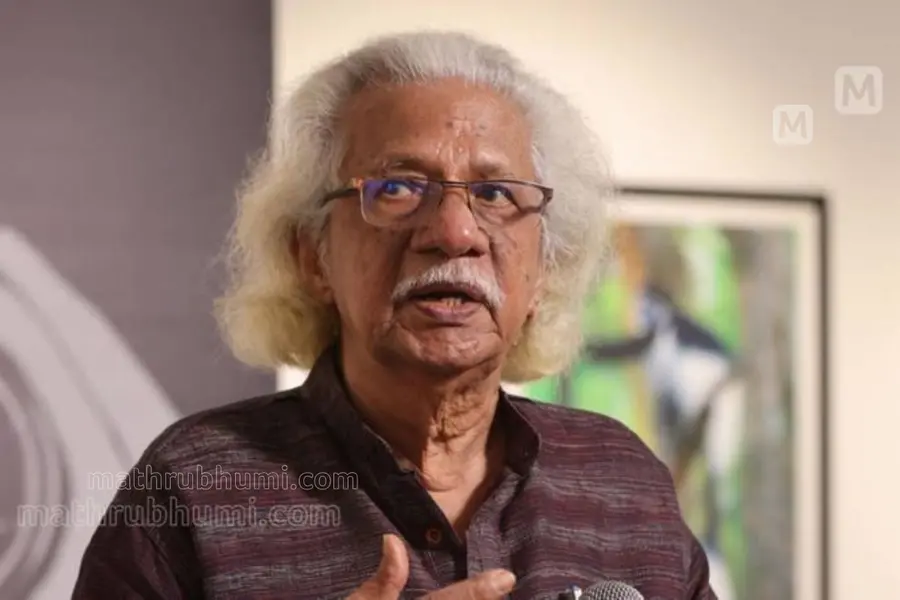
Certainly, Adoor Gopalakrishnan was terribly wrong. It isn't proper to call his views "politically incorrect" because, in today’s discourse, the phrase has lost its original moral intent and become almost pejorative. Being politically correct often implies a superficial concern for appearances rather than an honest engagement with truth. By extension, someone labelled politically incorrect may simply be challenging the dominant—but not necessarily just—narrative. History has shown that many who were once dismissed as politically incorrect were later vindicated. But it’s unlikely Adoor’s controversial remarks will be redeemed by time.
No one would have faulted Adoor had he merely argued that all beneficiaries of public film funding—irrespective of background—must undergo adequate training. It is common sense that talent alone does not make a good filmmaker. However, the Kerala government’s film funding scheme is specifically designed to support women and individuals from the Scheduled Castes —an affirmative initiative aimed at correcting historical imbalances. Adoor's error was in repeatedly referring to these groups by their caste and gender identity, suggesting they alone required training. This conflates identity with incompetence and undermines the very rationale of affirmative action. His seemingly haughty comments against Pushpavathy, a popular singer who had protested while Adoor was making the controversial opinions, further complicated matters.
His other comment, that it was "labourers from the market" who rushed to watch nude scenes at film festivals, was no less troubling. It betrayed a condescending attitude steeped in class and caste prejudice. Taken together, such remarks risk painting the maestro as casteist, classist, and misogynist.
This isn't the first time such allegations have surfaced. During his tenure at the KR Narayanan National Institute of Visual Science and Arts, several of his disciplinary actions had allegedly affected women and students from the Scheduled Castes. Though Adoor resolutely stated that most of them were not of the SCs, students held otherwise.
At 86, Adoor finds himself in the twilight of a long and illustrious career. His upbringing—rooted in an impoverished branch of a high-caste and prosperous family, raised by a single mother abandoned by his father—was marked by conflicts and struggles. He came of age during a time when feudal structures were crumbling in Kerala. Until he carved his indelible place in cinema, and even thereafter, his personal integrity and unwavering devotion to his art kept his life austere and often difficult. Yet, someone may argue that even while he might not have enjoyed the privileges of his social background, the psychological residues of that identity could still linger.
One often comes across a troubling paradox in the history of art and culture. Many celebrated artists, writers, and filmmakers who promote progressive, humanist, or egalitarian values in their works have, at times, espoused regressive, sectarian, or discriminatory views in their personal lives or public statements. Pablo Picasso, notwithstanding his great works of art which stood for freedom and peace, was accused of crass misogyny. Ezra Pound, the pioneer of modernist poetry, had openly campaigned for Fascism and Mussolini.
But, Adoor doesn't fall in this club of Janus-faced celebrities either. He may have human flaws like anybody else. Yet, having closely known Adoor professionally and personally for over four decades, I haven't come across a word or deed from him that could be labelled as communal, casteist or misogynistic.
As for his films, it is absurd to brand his body of work as feudal or casteist. From his maiden work Swayamvaram onwards, Adoor’s cinema has been rooted in a deeply humanist tradition. His characters, often trapped by social, economic, and psychological constraints, strive—sometimes desperately—for liberation. Women in his films frequently have agency and will power. They play central, resilient roles—bearing the emotional and economic burdens of families neglected by indifferent or incapable men. He has personally seen this in his own life.
Swayamvaram captures how economic and social forces crush a young couple's dream of independence. Kodiyettam chronicles the slow, painful awakening of an individual from intellectual stupor to social engagement. Elippathayam stands as one of Indian cinema’s most scathing critiques of feudal decay, portraying how such systems reduce people to helpless, perishing creatures—like rats. Mukhamukham caused a stir by depicting the erosion of values such as sacrifice and integrity in public life. Anantaram dives into the human psyche, blurring memory, guilt, imagination, and creativity. Mathilukal explores not just political imprisonment but the emotional and internal longings for freedom.
Vidheyan was a significant departure—set in a Karnataka village under the tyranny of a sadistic landlord. It is less about a megalomaniacal tyrant than about the dark psychology of subjugation—why victims often internalise and cling to the very forces that oppress them. It offers chilling insights into authoritarianism, even fascism, and the human condition under its sway.
In Kathapurushan, Adoor masterfully weaves the political with the personal, tracing one man's lifelong quest for emancipation—from family, education, ideology—and his ultimate rediscovery of creativity. One critic rightly called it both Adoor’s strongest indictment of authority and his most eloquent celebration of individual freedom.
Nizhalkuthu deepens his engagement with philosophical questions—on guilt, justice, freedom, redemption and the unjustness ingrained in capital punishment. His anthology films—Naalu Pennungal and Oru Pennum Randaanum— offer layered portrayals of women across classes and periods, all equally bound by patriarchal expectations. Even his most recent, Pinneyum—largely dismissed by critics and audiences alike—was a bleak exploration of how greed can corrupt even the most unassuming people.
To reduce such a profound body of work to a function of caste or patriarchy is intellectually lazy, even dishonest. It is not to dismiss outright that there are no regressive or dated aspects in Adoor's oeuvre that deserve critical examination. Such blots certainly are present in some of them just as one might see in certain works of any master. But to isolate such elements while ignoring the overarching humanist themes that define his oeuvre is to miss the woods for the trees. “He has always been quietly subversive in his work. So quiet that you have to magnify Adoor Gopalakrishnan's cinematic murmurs and gentle probing into the nature of oppression to understand the true import of what he is saying,” wrote critic Madhu Jain, once.
Yes, Adoor’s recent statements are deeply unfortunate and warrant critique. But they do not justify the wholesale vilification of a filmmaker whose life’s work has consistently interrogated power, probed social injustices, and honoured the complexity of the human spirit.
Published: 11 Aug 2025, 10:47 am IST
ABOUT THE AUTHOR
Related Topics
Disclaimer: Kindly avoid objectionable, derogatory, unlawful and lewd comments, while responding to reports. Such comments are punishable under cyber laws. Please keep away from personal attacks. The opinions expressed here are the personal opinions of readers and not that of Mathrubhumi.